
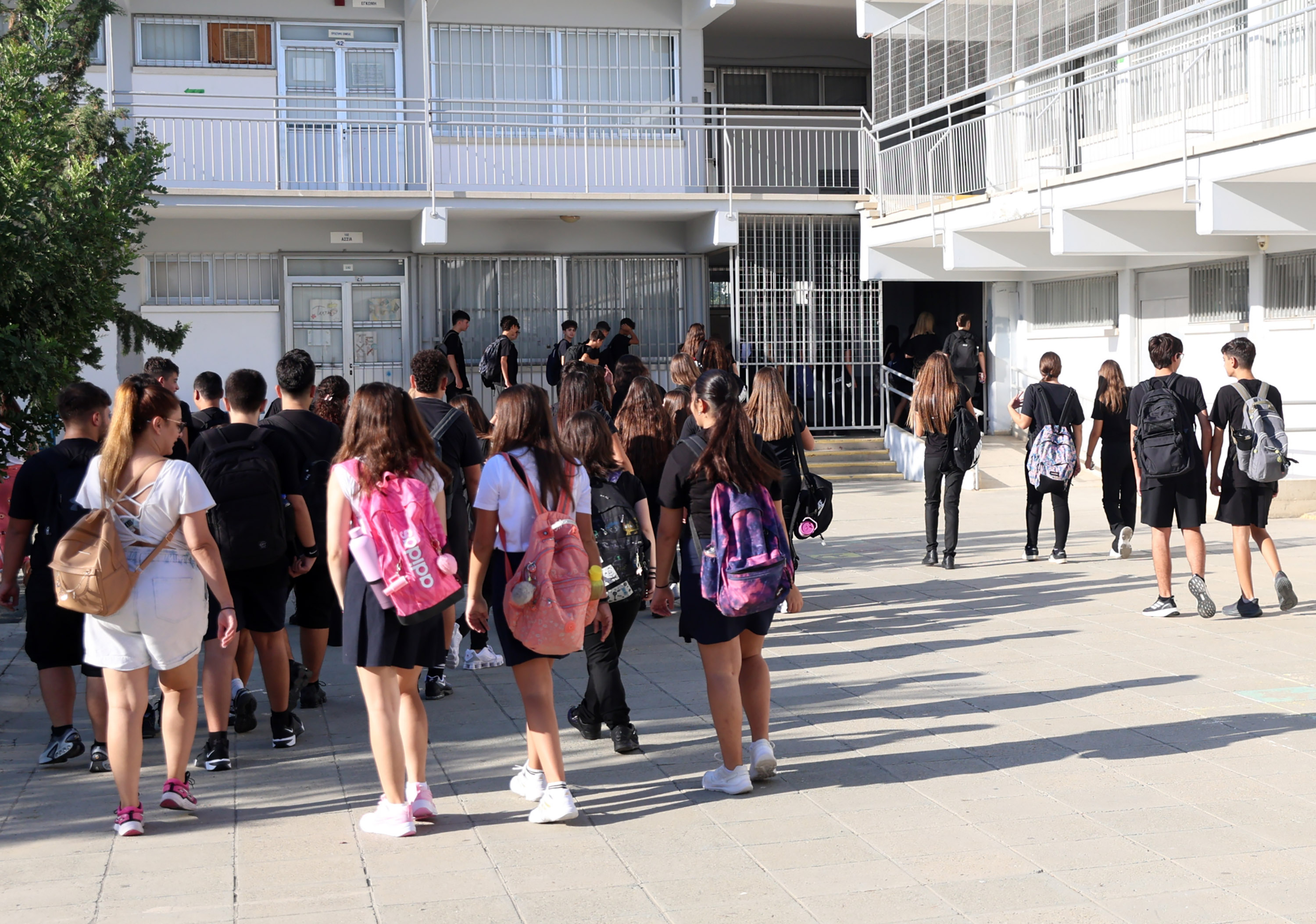
The political exploitation of school violence and the targeting of children from migrant backgrounds was condemned by Children’s Rights Commissioner Elena Pericleous on Monday after Elam linked the reported assault of an 11-year-old girl in Nicosia to illegal immigration.
The commissioner warned that such rhetoric fuels xenophobia, encourages collective blame and undermines children’s fundamental rights.
The intervention follows reports that an 11-year-old primary school pupil was severely beaten by four classmates at a school in Nicosia last week. According to the allegations, the pupils held the girl down while striking her.
The following day, Elam linked the incident to immigration.
“The consequences of illegal immigration in schools are evident. Their culture threatens ours. They cannot integrate into our society,” the party said, referring to foreign pupils.
The commissioner criticised the party’s language, saying it went far beyond condemning an individual act of violence and instead attributed collective responsibility to an entire population group.
“Every child has an inalienable right to grow up, learn and develop in a safe environment, free from fear, violence and any form of humiliation,” the commissioner said.
The protection of the girl who suffered the assault, a full investigation and measures to prevent similar incidents must be priorities, she added.
She stressed that condemning violence must not become an excuse for targeting children because of their nationality, migrant background, religion or language.
“No child can be held responsible for the actions of other children simply because they share one of these characteristics,” her statement said.
No room for ‘us’ and ‘them’ mentality
The commissioner argued that dividing children into “us” and “them” introduces an unacceptable form of selective protection that contradicts the principle of non-discrimination enshrined in the UN Convention on the Rights of the Child.
The commissioner also rejected attempts to equate children from migrant backgrounds with illegal immigration, pointing out that this group includes children from mixed Cypriot families, children whose parents legally reside and work in Cyprus, asylum seekers, refugees and unaccompanied minors.
“Even when a child does not have legal residence status, they do not cease to be a child,” Perikleous said, adding that children’s rights cannot depend on their origin or immigration status.
The commissioner warned that political statements portraying migrant children as incapable of integration raise serious concerns about hate speech.
“Parliamentary parties and individuals participating in public debate bear an increased responsibility to condemn violence without legitimising stigmatisation and exclusion,” she said.
According to the state’s Safe School Team’s annual report, 510 incidents of violence were recorded during the 2024-2025 academic year across 98 schools, representing just 13.19 per cent of all schools.
The incidents included cases involving children of Cypriot origin.
The same report recorded 53 racist incidents, of which 14 involved targeting based on national or ethnic origin. Skin colour and nationality were identified as the two most common grounds for racist behaviour.
The commissioner said these findings demonstrate that racist targeting must also be addressed as part of wider efforts to protect children from violence.
“School violence is a complex phenomenon requiring a systemic, multi-level and interdisciplinary response,” the commissioner said, stressing that protecting the rights of every child must remain central to public policy and debate, without discrimination, exclusion or collective blame.


Click here to change your cookie preferences