
By Theo Kyriacou
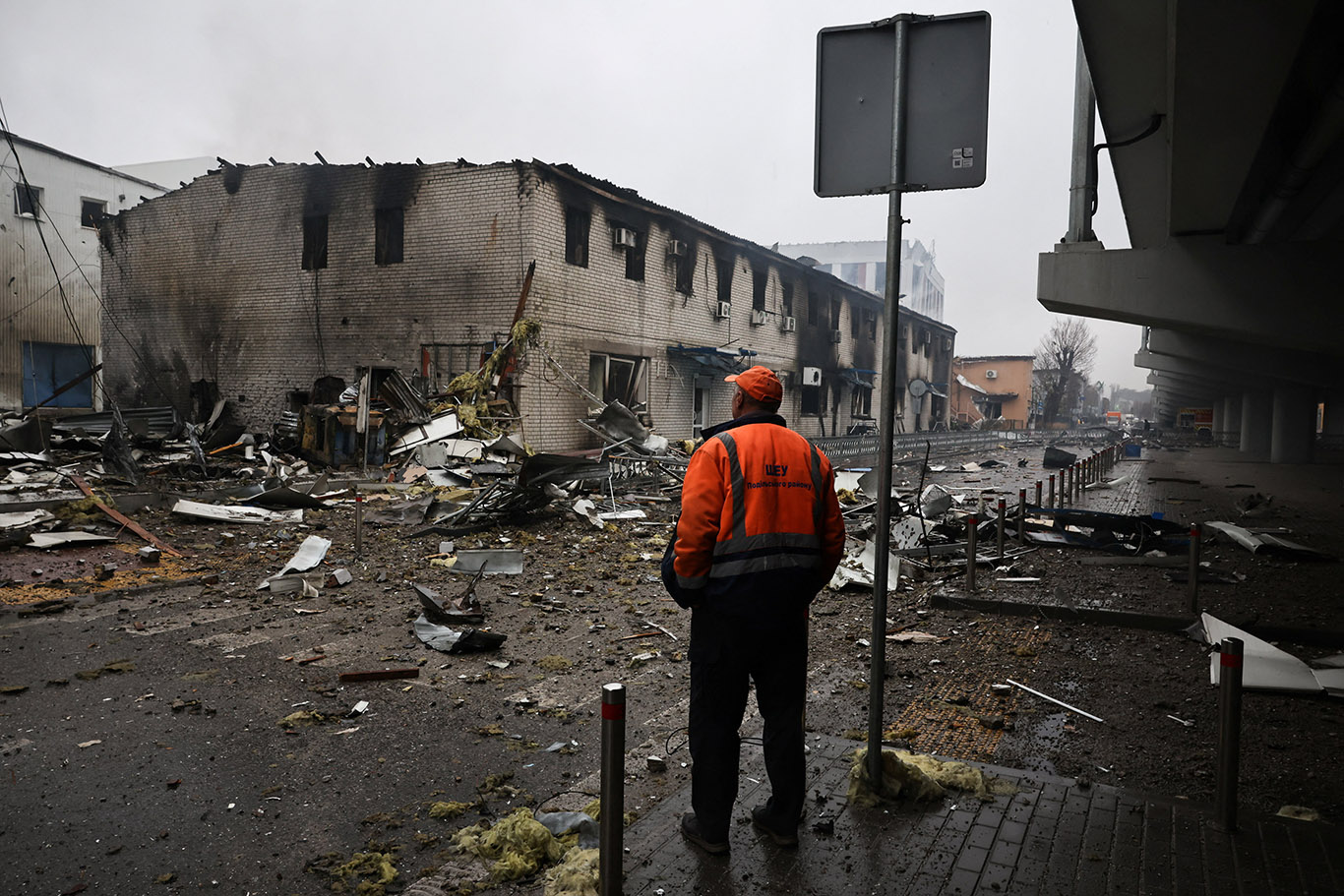
Wilfred Owen’s despondent poem ‘Anthem for Doomed Youth’ encapsulated the mood of all those who felt they were hoodwinked by the solemn promise: ‘it will all be over by Christmas’. For history buffs it’s a conspicuous reference to World War I, but turn the clock forward 100 years and the same can be said of the Ukraine-Russia war, except that four years have passed and there doesn’t seem to be an end in sight.
The people of Ukraine are despondent, weary and have little hope that peace will be achieved in the foreseeable future. Civilian and military casualties are continuing to mount, though the rate of increase is considerably lower than in the year following Russia’s invasion. The UN puts the total number of civilian deaths at around 17,000.
To make matters worse, Zelenskiy and Putin rarely talk peace. Zelenskiy is requesting ballistic missiles from the US to fire at Russia in the belief that mounting infrastructure damage will propel Russia’s population to pressure the country’s leaders to sue for peace. Russia, on the other hand, continues to believe that Ukraine is on the verge of defeat. In reality, the war has reached a protracted stalemate.
One obvious reason for this is that Ukrainian men of fighting age have been leaving, arguably fleeing, Ukraine in their droves. Their justification is along the lines of ‘who wants to fight in a war and get killed’ which does have an unmistakable rationale to it. Many see the conflict as an opportunity to up sticks and relocate to countries where wages are higher and the general quality of life is considerably better than what they were accustomed to. Before the war this remained a distant dream for the large majority of the population. Not so anymore. And there is also the old dictum that it is the poor who fight wars whilst the rich, or more specifically ams manufacturers, make money out of warfare and lots of it.
Eventually, of course, a ceasefire will be negotiated as war fatigue on both sides sets in. But what kind of peace agreement will emerge from the rubble of the conflict? What, for instance, will happen to the millions of Ukrainian refugees who have sought sanctuary in other countries-will they be forced by their host states to return? Will occupied territories be handed back to Ukraine or will they remain (de facto) part of Russia? Will Ukraine join the American led and dominated Nato military alliance or will Ukraine, like Austria, Ireland, Cyprus and Malta declare itself neutral or/and non-aligned? Will Ukraine one day rid itself of all foreign troops, whatever their country of origin? And will Ukraine join the EU once it meets the Copenhagen (entry) criteria?
On the domestic front, will the economic terms of the peace settlement be equitable and fair or will Ukraine be turned once again into a country of cheap labour and cheap raw materials readily exploited by western, principally US multinational companies?
In terms of societal relations, will Ukraine become a place that respects people of all religious faiths and those who subscribe to none, a place where all minority native tongues are recognised and celebrated, be they Romanian, Hungarian or Russian? And will Ukraine become a country that promulgates democratic values and institutions, a society which denounces rather than heaps praise on and award medals to unsavoury, proto fascist historical figures like Andriy Melnyk, who did much more harm to Ukraine than good in World War II.
Theo Kyriacou is a teacher and journalist


Click here to change your cookie preferences