
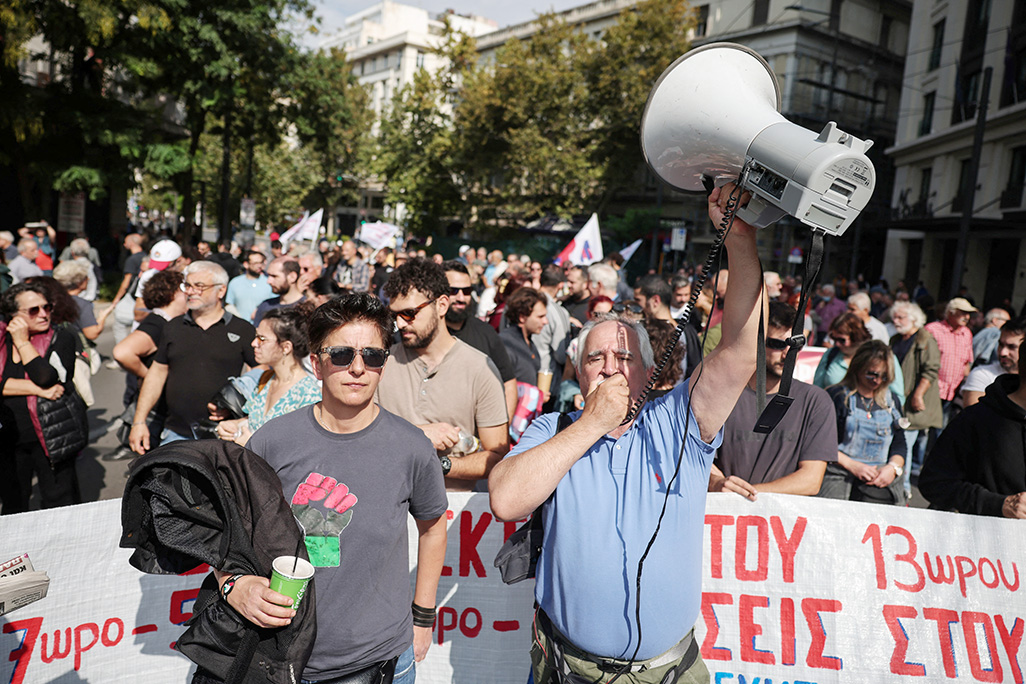
Greek public and private sector workers staged a nationwide strike demanding higher wages, the restoration of annual bonuses and increased spending on health and education, disrupting transport across the country.
Greek public sector workers and several private-sector unions staged a nationwide strike on Wednesday to demand higher wages and better public services, disrupting transport across the country.
Ferry routes to the islands and early-morning and evening metro services were halted, while flights at some regional airports were suspended, as seafarers, transport and telecommunication workers joined the strike. The action, called by Greece’s largest public sector trade union, ADEDY, sought the restoration of annual bonuses scrapped during Greece’s debt crisis and more spending on health and education.
Workers demand higher wages and restored bonuses
Civil servants, from school teachers to hospital doctors, were expected to take to the streets in the capital Athens and other cities later on Wednesday to demonstrate in support of the stoppage.
The Greek action, the third in weeks, coincided with a growing wave of youth-led protests across Europe over shabby school facilities, rising housing costs and falling living standards.
“We’re fighting for substantial pay rises that will make up for our purchasing power losses,” ADEDY said in a statement. “We will not compromise ourselves with rising prices, frozen wages, energy poverty and the dire state of public health and education.”
Rising living costs fuel discontent
Greece, one of the euro zone’s most indebted nations, has recovered strongly from a financial meltdown in the past decade that shrank its output and slashed salaries in return for bailouts worth about €280 billion ($306.49 billion).
Wages grew and taxes were cut in recent years, but many households have struggled with surging rents and rising living costs, exacerbated by higher food and energy prices stemming from the wars in Ukraine and the Middle East.
Government pledges financial support
The centre-right government of Kyriakos Mitsotakis, who was reelected in 2023 and faces national elections in spring, has announced tax breaks and subsidies worth about €2.2 billion this year to prop up low-income earners and pensioners. He has promised a €500 Christmas bonus for about 700,000 civil servants from December 2027 and an average monthly salary of €1,800 in 2030 in all sectors, up from about €1,400 now.




Click here to change your cookie preferences