
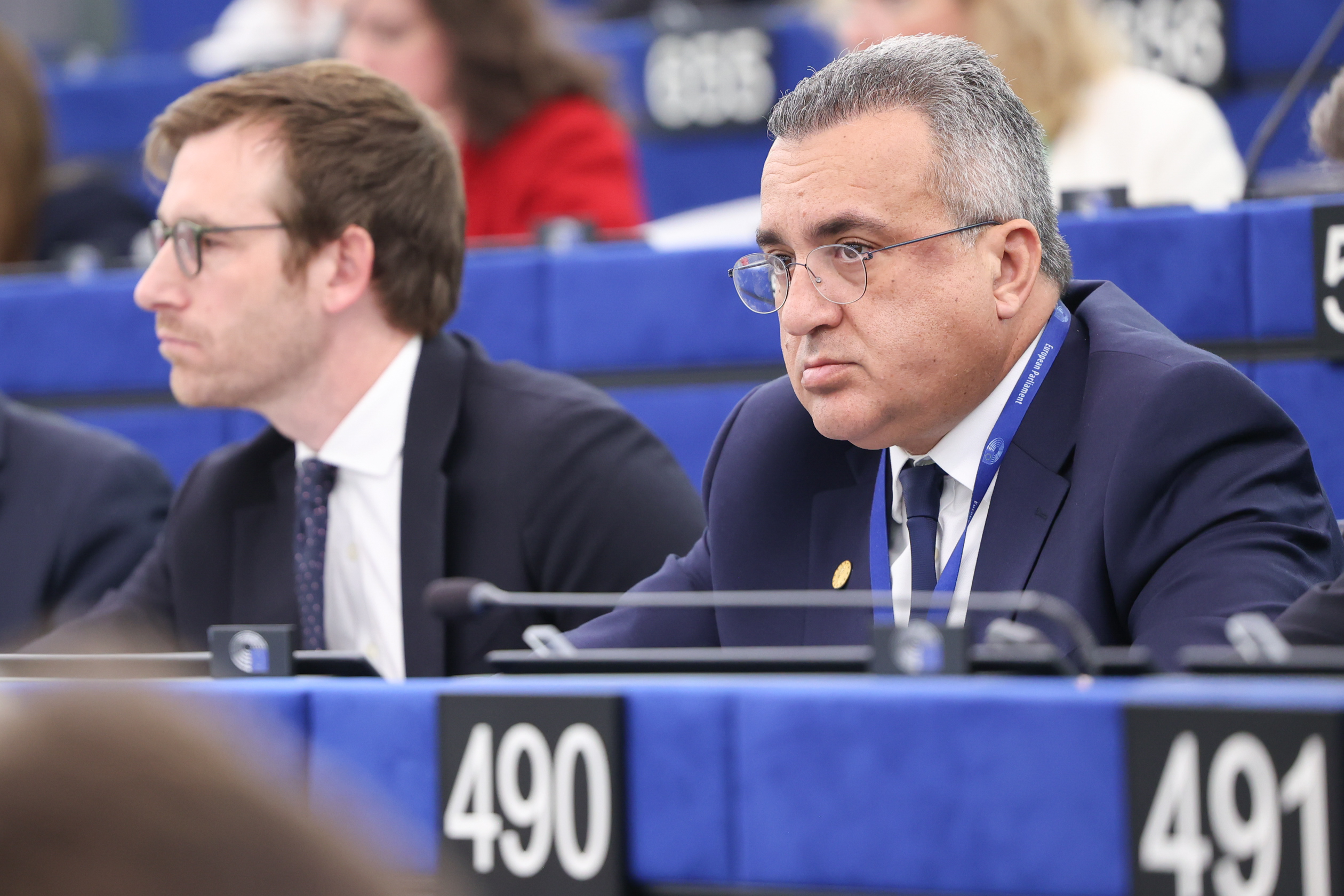
The European People’s Party, the largest political group in the European Parliament, intends to vote down the EU’s next long-term budget if the perspective deep cuts which were being discussed by European leaders on Thursday night, which may exceed €200 billion in total, are included in a budget presented to MEPs, Cypriot MEP Michalis Hadjipantela said on Friday.
His party Disy belongs to the EPP and is a substitute for the parliament’s budget committee, and when asked by the Cyprus Mail whether the group is prepared to vote down a budget which contains more than €200bn worth of cuts, he said, “that is our intention at the moment”.
Fellow Disy MEP Loucas Fourlas said that while the final decision on whether or not to approve the final budget will “be a collective one” among the EPP’s 185 members, “if I personally conclude that the budget fails to cover everything that we, as a parliament, have established as ‘red lines’, I will act accordingly”.
The two MEPs’ comments come after the leaders of the EU’s 27 member states failed at an extraordinary European Council summit on Thursday to reach a deal on the budget, known as the multiannual financial framework, which will set the EU’s spending between 2028 and 2034.
European Council President Antonio Costa had summoned European leaders to Brussels for showdown talks on Thursday and had on Saturday made a proposal for a budget which contained over €198bn worth of cuts compared to the original proposal made by the European Commission last year.
It had been hoped that Costa’s proposal would form the basis for a compromise between richer states in Europe’s north and west, which want reined in spending, and countries in the continent’s south and east, which want more spending on “cohesion” – efforts to reduce regional inequality across the EU – and agricultural funding.
‘Frugal’ states boycotted Costa’s breakout meetings
However, Thursday’s summit ended in acrimony after the leaders of Europe’s “frugal” states, Austria, Belgium, Denmark, Finland, Germany, the Netherlands, and Sweden, boycotted breakout meetings Costa had organised between small groups of leaders late into the night.
Their non-attendance of those meetings came with those “frugal” states demanding further cuts to the budget, with news website Politico quoting Costa as having suggested a final total of around €230bn worth of cuts, and Finnish Prime Minister Petteri Orpo proposing that €250bn worth of cuts be made.
In response, Greek Prime Minister Kyriakos Mitsotakis said that “if we continue to insist on further cuts to the EU budget, we can throw the Draghi report and its lofty ambitions into the dustbin of European history”.
The Draghi report, published in 2024 by former Italian prime minister Mario Draghi following a request made by the European Commission, called on the EU to make hundreds of billions’ worth of added annual investment so as to boost its competitiveness.
Mitsotakis was not alone in his position, however, with Polish Prime Minister Donald Tusk, himself a former European Council president, saying that “a cheap Europea could turn out to be a very expensive mistake”.
361 MEPs must consent for budget to pass
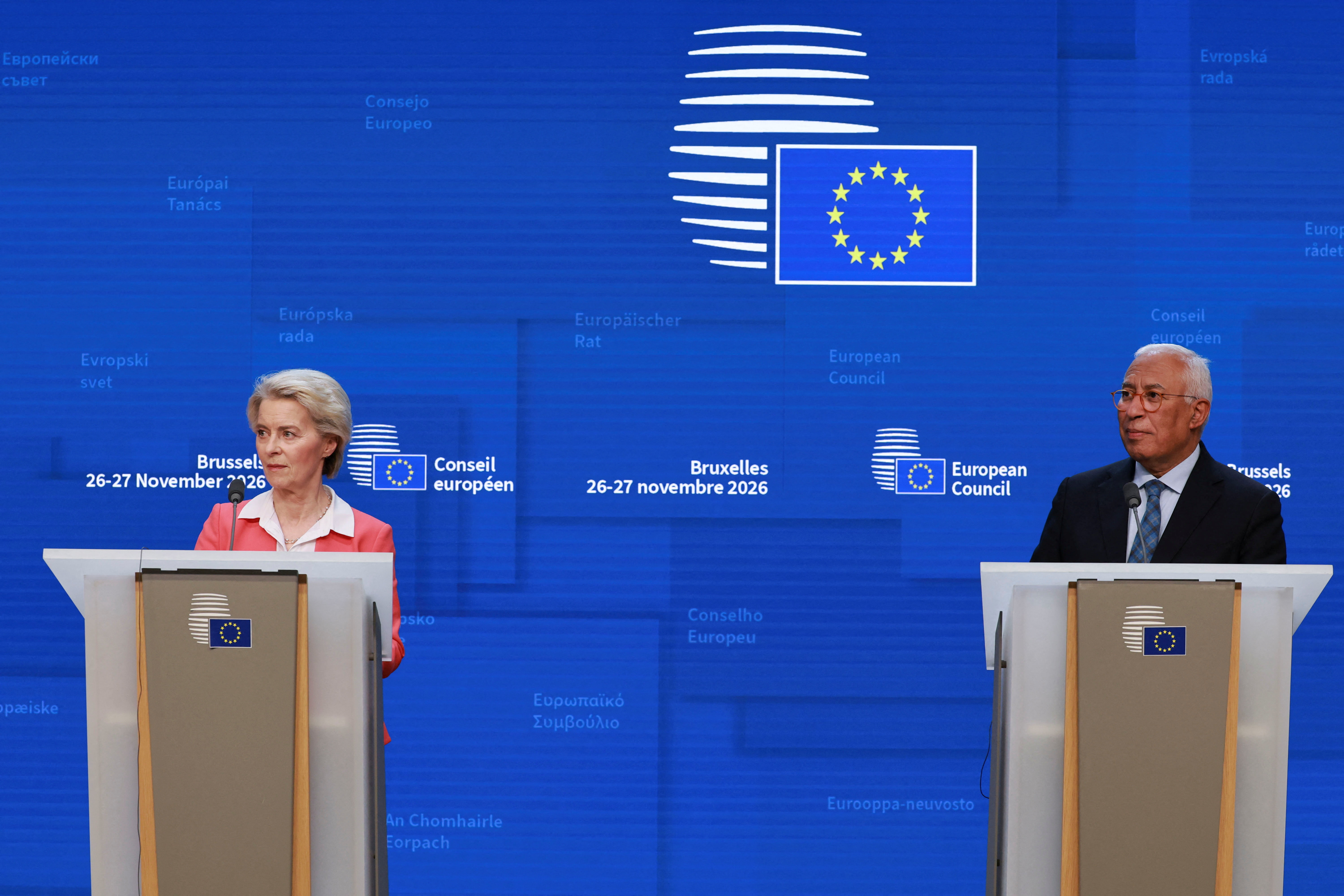
Nonetheless, even if the EU’s leaders can find a compromise, their agreement is not the end of the road, with it required that an absolute majority of the European Parliament – at least 361 of the 720 sitting MEPs – vote in its favour.
The passage of a budget along the lines of that currently being negotiated by European leaders now appears unlikely, with Hadjipantela and Fourlas’ comments coming after four high-ranking MEPs, the two co-rapporteurs and two shadow rapporteurs for the multiannual financial framework, had already criticised the state of talks.
Siegfried Muresan, of the EPP, Carla Tavares, of the second-largest group, the centre-left Socialists & Democrats, Fabienne Keller, of the fifth-largest group, the centrist Renew Europe, and Rasmus Nordqvist, of the sixth-largest group, the Greens, all described the current plans as “a smaller budget for a weaker European Union”.
“The European Parliament cannot support it. At a time when Europe faces more challenges than ever, we need a budget that gives us the means to address them. We cannot expect Europe to deliver more with less,” they said.
Together, their four groups have 451 MEPs, meaning that without the support of at least one of their groups, the budget cannot pass.




Click here to change your cookie preferences