
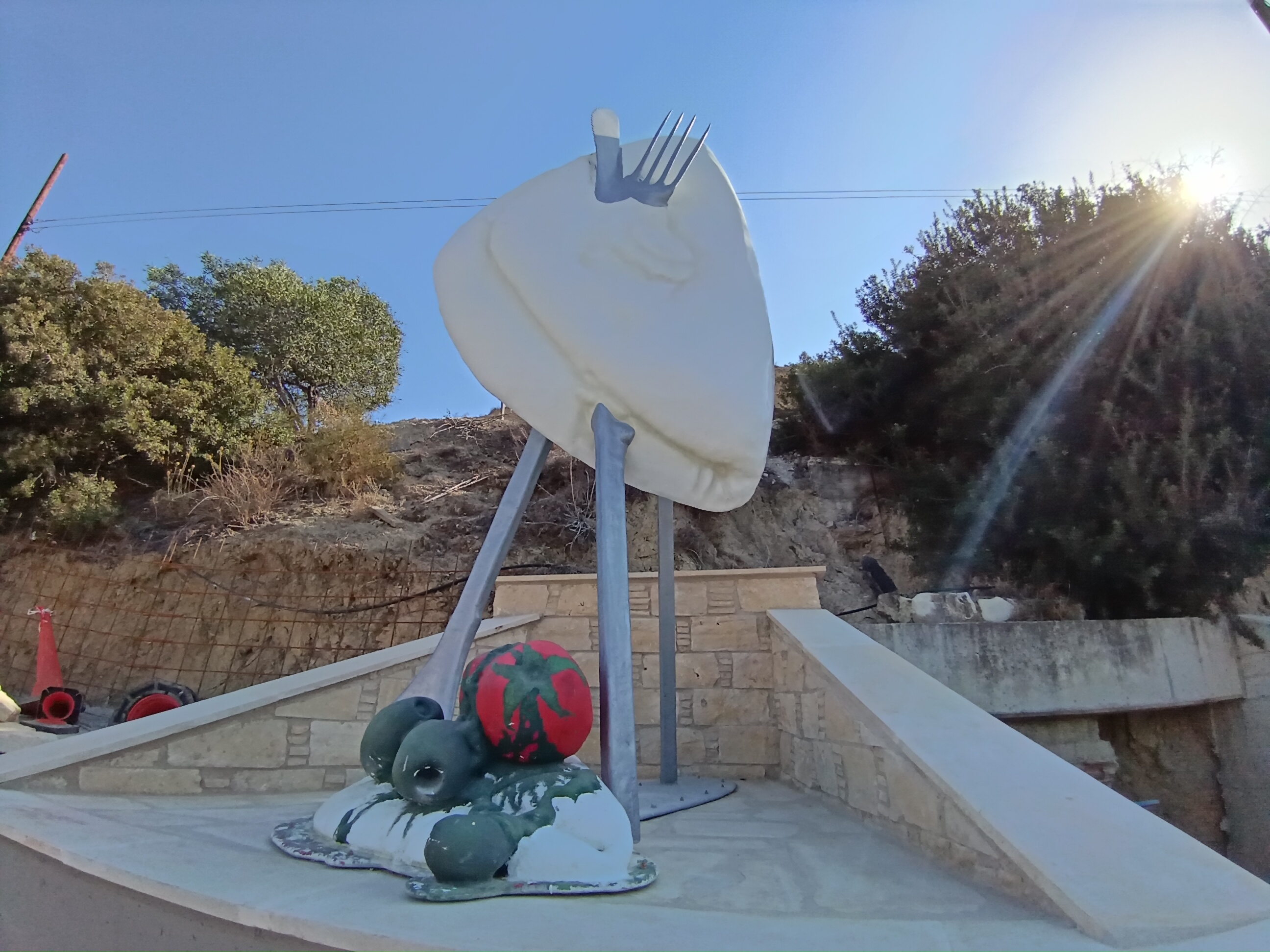
If Xylophagou can host a potato statue and Dherynia a giant strawberry, why can’t Pissouri have its tribute to halloumi?
Cyprus’ long-running debate over who can claim halloumi intensified recently after a new statue in Pissouri drew waves of online attention and revived an old dispute over the cheese’s origins.
The monument, which stands at the entrance of the village’s new House of Halloumi museum, has sparked questions over branding, heritage and whether one community can stand at the centre of a tradition shared across the island.
The argument began after producers revisited earlier complaints about the use of the name Pissourkotiko – the name used by Christis dairy for some of its halloumi cheese – which some fear gives the impression that halloumi was born in Pissouri.
The issue resurfaced when Iakovos Kesses, owner of the Kesses dairy in Avdimou near Pissouri, criticised the way the name had been used decades ago.
“Christis used the name ‘Pissourkotiko’ without asking anyone,” Kesses told the Cyprus Mail. “Halloumi didn’t start in Pissouri; it was made across Cyprus.”
Kesses said halloumi had long been produced in many parts of the island.
“In all districts, they made different kinds of halloumi: in Famagusta, Limassol, Akamas, Tylliko, Kalo Chorio, Nicosia, and Kornos,” he said.
“There was no ‘first’ halloumi of Pissouri.”
This long debate resurfaced just as Pissouri gained sudden fame for becoming the only village in Cyprus with a dedicated halloumi statue.
The monument, paired with the village’s new House of Halloumi museum, has sparked curiosity on social media and led many to ask why Pissouri became the main stage for a product rooted in every district.
Kesses said he had no role in the initiative.
“I wasn’t consulted and didn’t engage,” he said.
“There are far more serious halloumi issues to focus on than statues.”
His comments show how the debate over heritage has grown alongside global enthusiasm for the cheese, which has become Cyprus’ most successful agricultural export.
Reports of large queues outside shops in New York and strong sales in Europe have strengthened calls for Cyprus to promote halloumi more effectively.
Yet the focus on Pissouri has pushed many to stress that the cheese does not belong to one village alone.
Pissouri community leader Panayiotis Mavroudis addressed the origins directly.
“Halloumi does not start in Pissouri. Pissouri just has its own type of halloumi. Everyone in Cyprus makes halloumi,” he told the Cyprus Mail.
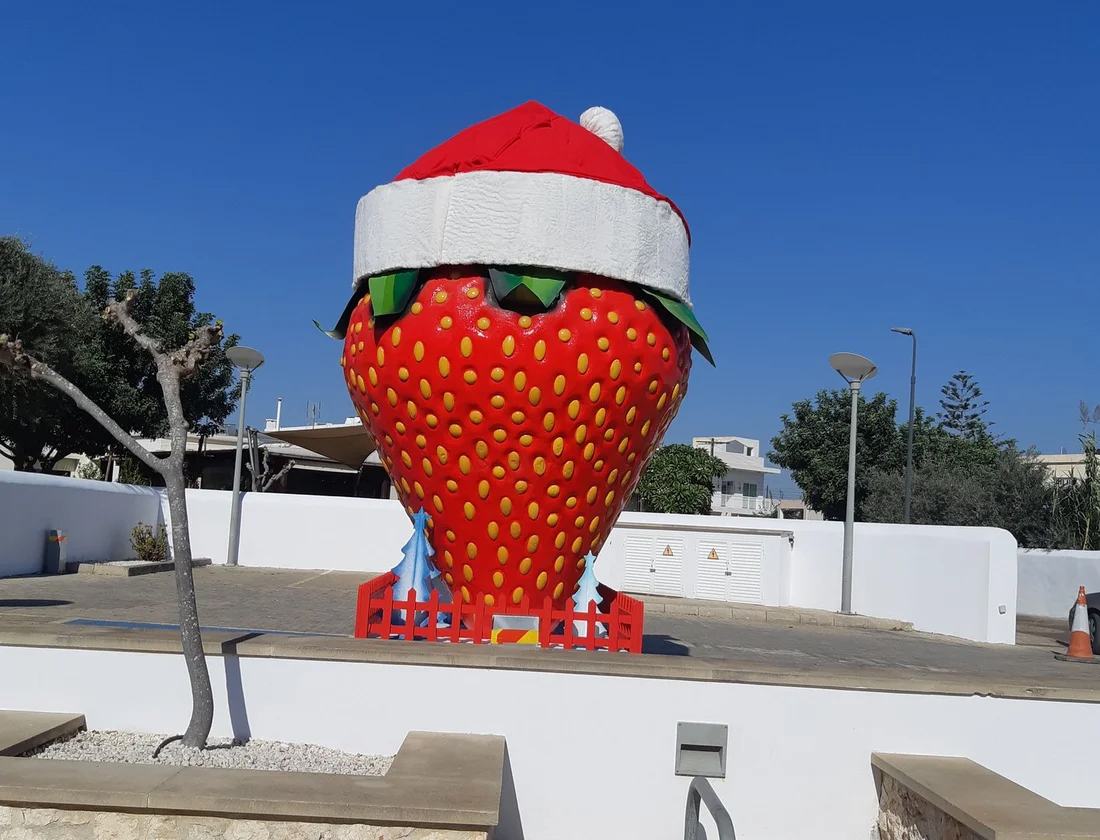
And that’s what’s causing waves about the statue. The halloumi statue recalls the social media mirth about the giant Xylophagou potato erected in 2021 swiftly followed by the giant strawberry statue in Dherynia, which was all reignited when they were both also decked with Christmas decorations. But those villages can safely be described as the main producers of those products. Not so with halloumi and Pissouri!
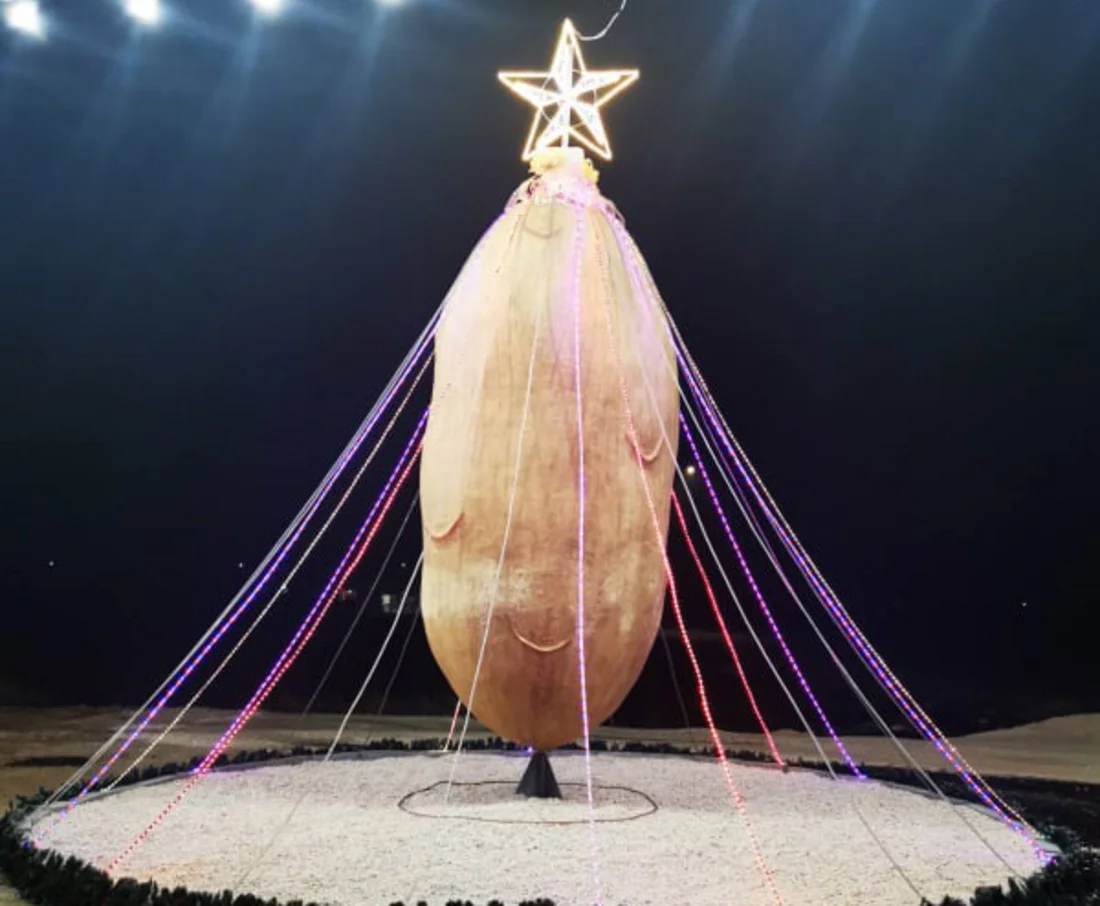
Some online users have suggested the statue might also receive festive decorations, but Mavroudis was dismissive.
“A statue or a decorated potato is not a monument for me. It does not offer anything substantial for the tourist. Christmas lights on a block of cheese? That’s not the essence of culture,” he said.
And culture and tourism are of the essence for Mavroudis. Attention should be on the work inside the new museum.
“The important thing is not the statue,” he said.
“It’s to open the workshop and have them do good work. If the workshop works nicely and visitors can go inside, see the process, and taste the halloumi, then it is worthwhile.”
The statue itself was made of fibreglass and donated by two Swedish residents, Paul and Christian, who have spent years in the village.
It now serves as a landmark, guiding visitors towards the museum, which sits above the village and offers views of the surrounding hills.
Interior designer Lia Anastasiou, who created the museum’s interior, said the aim was to offer a lively introduction to local culture.
“It is not the usual boring museum, as you can see from the huge halloumi outside,” she said.
“Designing this space, I realised that halloumi here is much more than cheese. It is history, pride, a means of living, and love for life.”
She said the experience goes beyond the exhibition.
“The House of Halloumi is also a gateway to the wider beauty of Pissouri, the nature trails along the dramatic rocks of Cape Aspro, wine tastings starting in the square, coffee under the carob trees, and recipes you can take with you,” she said.
Incoming tourism agent Maria Parperi of MTS Globe Cyprus said most travellers look for hands-on activities.
“The important thing is to open the workshop and do good work there,” she said.
“Pissouri has always been part of the Cypriot tradition, but halloumi didn’t start there.”
She argued that tasting sessions and demonstrations could make a difference.
“If the workshop works beautifully, showing how halloumi is made and offering a small tasting, then it makes sense,” she said.
Panicos Hadjicostas, halloumi production adviser at the Lefkonitziatis dairy, said Pissouri’s tradition is genuine but not exclusive.
“Pissouri has traditional halloumi production,” he said.
“Halloumi is a product that has emerged through the decades as Cyprus’ number one agricultural product.”
He said most production still takes place in larger facilities.
“Major production is done through organised dairy industries,” he said. “There are also new producers entering the sector, so exports will continue to rise.”
He said interest in the statue may grow because of the global affection for the cheese.
“Halloumi is a popular product, and it certainly attracts attention,” he said.
The rise in food monuments has also drawn national attention. Culture Deputy Minister Vasiliki Kasianidou said such structures can support cultural identity if developed carefully.
“Food monuments, like statues, can be connected to a more organised strategy of cultural identity or remain isolated initiatives,” she told the Cyprus Mail.
She pointed out that some monuments appear without official approval.
“Some sculptures, like the potato, have been community initiatives without any approval from institutional bodies,” she said.
“They have not gone through the monuments committee.”
Kasianidou said proper approval offers both legality and support.
“Approval from authorities, like town planning, the antiquities department, and the monuments committee, is necessary to cover part of the cost and ensure legality,” she said.



Click here to change your cookie preferences