
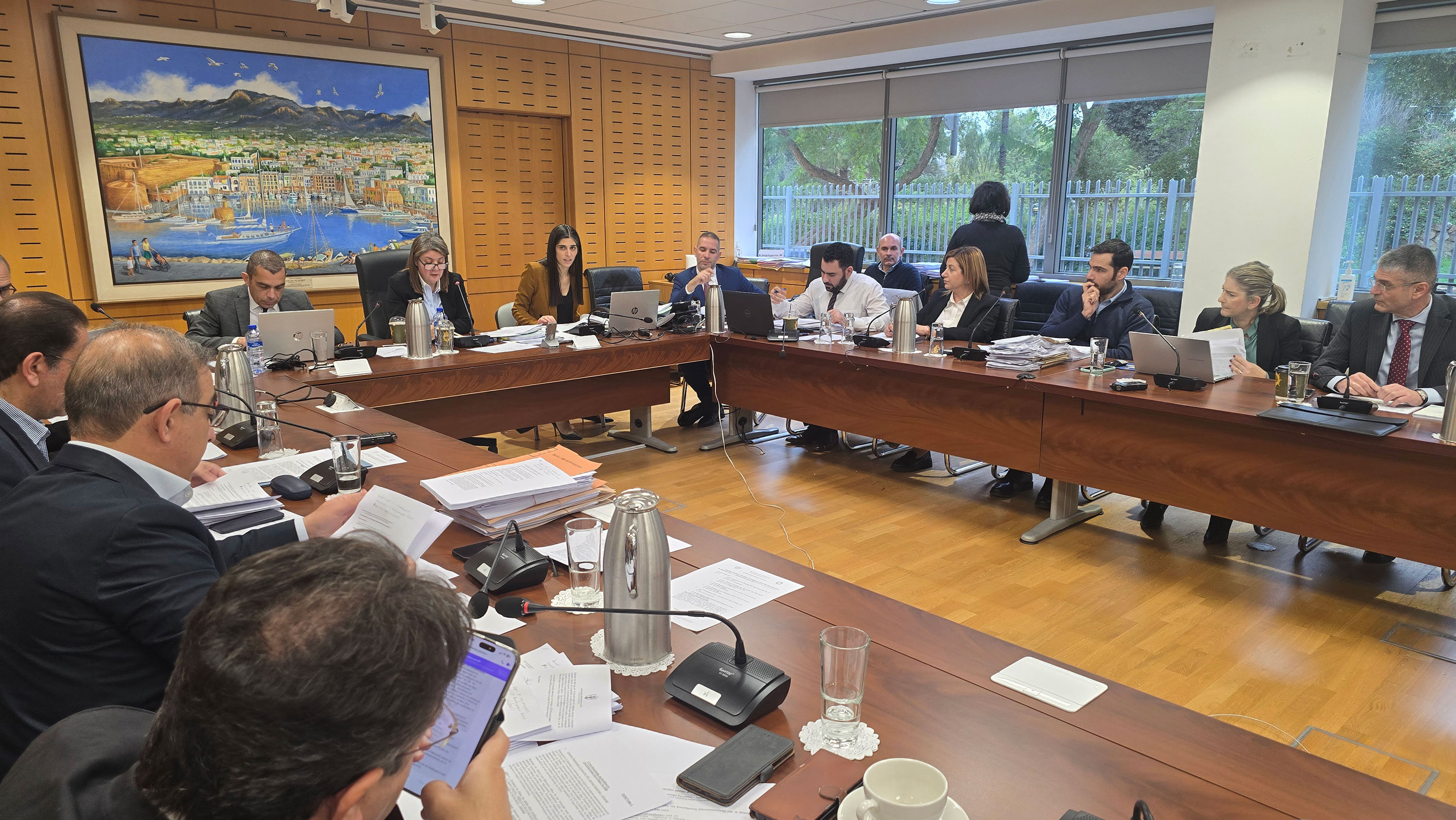
Parliament will hold a vote on the government’s tax reform next week, MPs decided on Monday.
The vote at the House plenum will take place on Monday, December 22 – cutting it very close to the end of the calendar year, before which the government is keen to have the reform enacted.
MPs on the House finance committee finished on Monday their second pass of the six government bills comprising the proposed overhaul of the tax system.
The parties are currently drafting their own amendments to the government bills.
The finance committee will reconvene for two more sessions – on Thursday and Friday – before the vote at the plenary.
This would give MPs the opportunity to discuss the ins and outs of the legislation with the Tax Commissioner, said Diko’s Christiana Erotokritou.
“The package is not just about the tax rates, the tax-free threshold or the tax credits,” she told media.
“There are also important and very detailed, complex technocratic changes, where we need to continue the discussion in the presence of the Tax Commissioner, so that we can fully understand the spirit and the letter of these laws that we will be voting on.”
Meanwhile, a consensus has been reached among the political parties to strike a clause in the government bills that provides for levying income tax on provident funds.
Currently, provident funds are generally exempt from corporate income tax, and contributions are tax-deductible for individuals.
The government wants to change that, and start taxing provident funds. The Commissioner for State Aid Control has opined that exempting provident funds from income tax is tantamount to state aid.
A provident fund is essentially a private group pension plan that some employers provide for their employees in Cyprus.
Provident fund members invest monthly a fixed percentage of their salary into a common investment pool for their retirement in much the same way as they would with social insurances.
The government says its tax overhaul will broaden the tax base, toughen enforcement and ease the burden on households and businesses.
Four parties – Diko, Edek, Dipa and Disy – have jointly proposed to raise the tax-free threshold to €22,000 from the €20,500 proposed by the government.
As to the tax brackets, they propose 20 per cent income tax for incomes from €22,001 to €32,000; 25 per cent from €32,001 to €42,000; 30 per cent from €42,001 to €72,000; and 35 per cent for incomes above €72,001.
The four parties also want to scrap stamp duties, and raise the tax-free threshold on capital gains from €20,000 to €30,000. For sales of agricultural plots, the tax-free threshold on capital gains would go up to €50,000 from €30,000.
Separately, Akel wants to raise the tax-free threshold on income tax to €22,500.
Akel also calls for the tax-free threshold on income tax, as well as the tax brackets, to be adjusted every three years based on an indexation formula.
Additionally, Akel’s amendments seek to permanently fix VAT on electricity to 5 per cent, zero per cent VAT on essential items, and 5 per cent VAT on energy upgrades to primary residences. The party also wants to tax the windfall profits of banks and of companies selling electricity generated via renewables.





Click here to change your cookie preferences