
Iran summoned Cyprus’ ambassador in Tehran Petros Nacouzis and issued him a written objection after the Cypriot government issued a joint declaration with the United Arab Emirates on Sunday declaring that it recognises three islands in the Persian Gulf as belonging to the UAE.
According to the Islamic Republic News Agency, Iranian Assistant Foreign Minister Mohammad Alibek met Nacouzis and “formally conveyed Iran’s strong protest” at the joint declaration.
“During the meeting, Alibek stressed that the three islands of Abu Musa, Greater Tunb and Lesser Tunb are integral parts of Iran’s territory, emphasising that Iran’s historical, undisputed, and effective sovereignty over the islands is beyond doubt,” the agency said.
It added that Alibek had “underlined that the Islamic Republic of Iran strongly condemns any territorial claims against its sovereignty”, and that he had described them as “a violation of the fundamental principle of respect for national sovereignty and territorial integrity of states”.
Alibek also alluded to the Cyprus problem during his meeting with Nacouzis, with the agency writing that he had referred to “Iran’s principled position of non-interference in the sovereign and territorial issues of other countries, including Cyprus”.
As such, it said, he “called on the Cypriot government to take immediate steps to correct what he described as a serious mistake and to refrain from repeating such actions in the future”.
Sunday’s joint statement was unequivocal in the opposite direction, saying that “Cyprus reaffirmed its principled support for the sovereignty of the United Arab Emirates, especially as regards its three islands, Greater Tunb, Lesser Tunb and Abu Musa”.
It also made reference to a joint declaration issued by the European Union and the Gulf Cooperation Council – an economic union involving six Gulf states including the UAE – in October, which “called on Iran to end its occupation of the three islands of the United Arab Emirates”.
In addition, it said Iran’s “occupation” of the three islands “constitutes a violation of the sovereignty of the UAE and [of] the principles of the charter of the United Nations”.
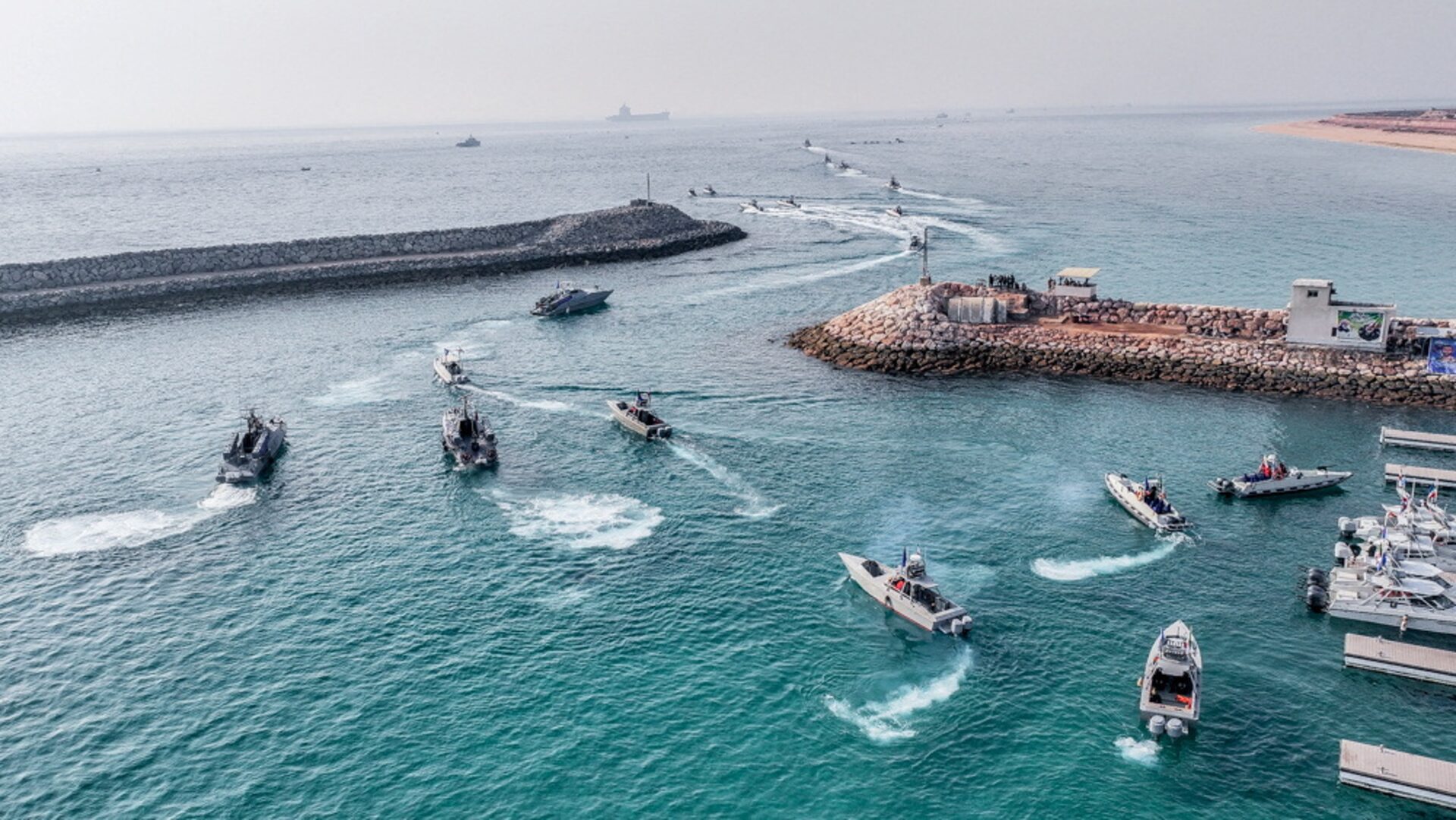
Abu Musa, Greater Tunb and Lesser Tunb are all located in the Persian Gulf, with Abu Musa, the largest of the three islands, situated roughly at the midpoint between Dubai and the Iranian coastal town of Bandar Lengeh. It has a commercial airport, which is served by flights to mainland Iran.
Greater Tunb and Lesser Tunb are located further northeast, close to the undisputed Iranian island of Qeshm. They have a combined population of around 300.
In the modern era, the dispute over the islands’ ownership is sourced from when the British ruled over the Trucial States, the predecessor to the modern UAE.
Shortly before the end of the British protectorate and the formation of the UAE in 1971, Iran, ruled at the time by Mohammad Reza Pahlavi, and the ruler of the Emirate of Sharjah – one of the UAE’s emirates – Khalid bn Mohammed Al Qasimi, signed a memorandum of understanding stipulating joint administration of the island of Abu Musa.
The memorandum, signed on November 30, 1971, provided for the establishment of a police station by Sharjah and the stationing of Iranian troops on the island.
Iran took Greater Tunb and Lesser Tunb on the day the memorandum was signed, and seized Abu Musa the following day.
Two months later, in January 1972, Al Qasimi was killed in an attempted coup, while Pahlavi was toppled in the Islamic Revolution in Iran in 1979, but the Islamic Republic formed out of the revolution retained the islands.
The UAE took its claim over the islands to the United Nations in 1980, but the claim was deferred by the security council at the time and the matter has not been revisited.
Since then, the Iranian government has since established naval bases on the islands, which it uses to patrol the Strait of Hormuz.
The dispute over the three islands is not the first time this year that the governments of Cyprus and Iran have found themselves somewhat at odds with each other, with a misunderstanding between the two governments having occurred during Iran’s conflict with the State of Israel in June.
President Nikos Christodoulides announced that Iran “has asked us to convey a message to Israel”, and that “we will do so”, amid an escalating conflict between the two countries at the time, while Iran’s foreign ministry’s spokesman Esmaeil Baghaei saying hours later that Iran “did not send any message to Israel via a third country”.
Days later, Iran’s ambassador in Nicosia Alireza Salarian denied that his country had asked Cyprus to “send a message” to Israel, saying that “no, actually, it wasn’t like this”.
“Your foreign minister [Constantinos Kombos] asked to have a telephone conversation with my minister and we arranged it. We didn’t ask to convey a message to Israel,” he said.
“If we wanted to do something, we could ask the US, because the US is the main supporter of Israel, everybody knows,” he said.
Kombos then met his Iranian counterpart Seyyed Abbas Araghchi on the sidelines of the UN general assembly in New York in September, with the foreign ministry describing the meeting as “timely” and as a “pertinent discussion”.



Click here to change your cookie preferences