
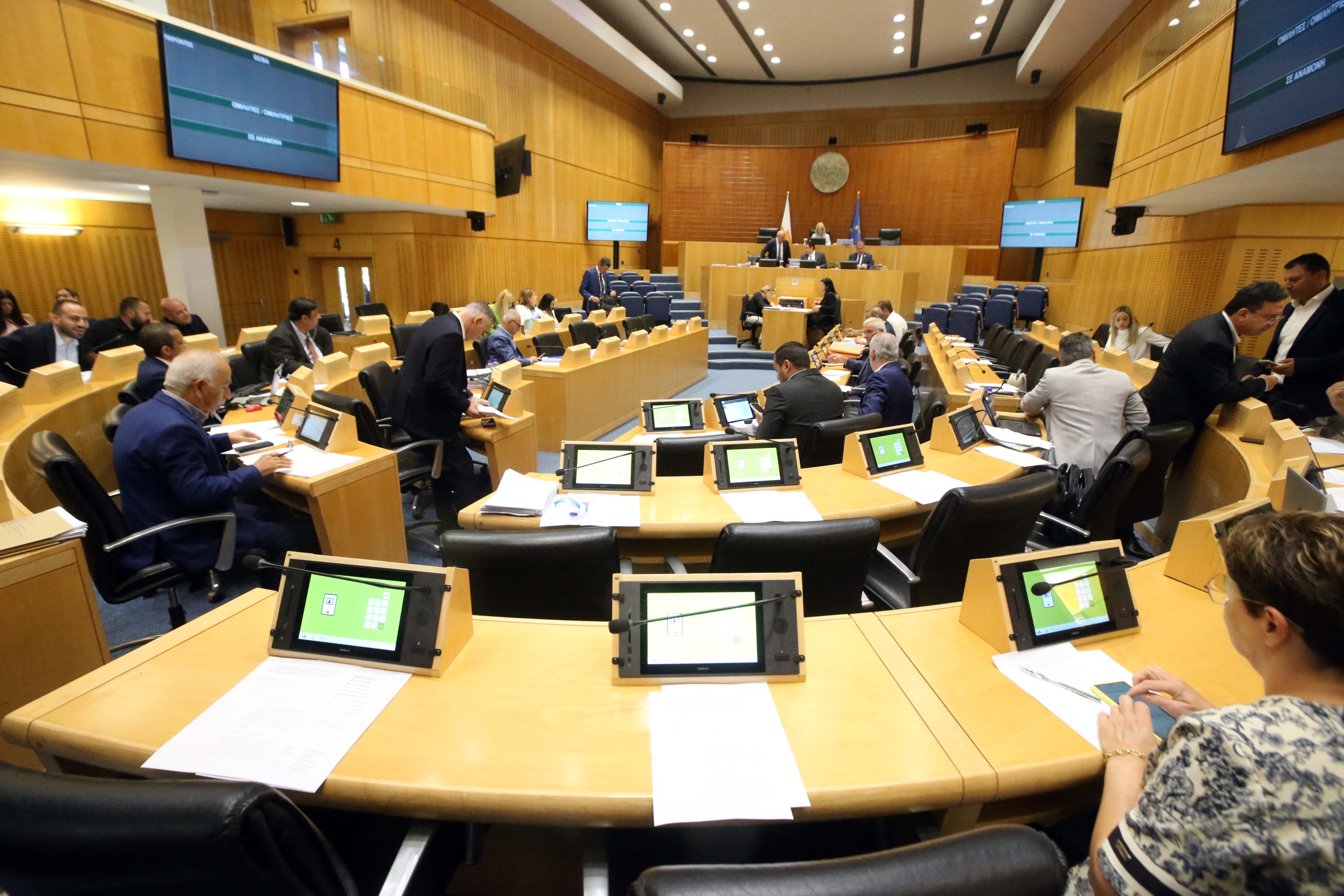
The House of Representatives on Thursday voted down a resolution calling on the government to disclose to parliament donations to the social support fund, a charity previously chaired by the first lady.
Tabled by opposition party Akel, the resolution was defeated by 19 votes against, to 15 in favour.
Under the motion, the government would have to disclose the names of the donors, as well as the amounts, to the relevant parliamentary committee for purposes of scrutiny.
Independent MP Irini Charalambidou said the resolution aimed to force the government to practise transparency, after both the attorney-general and the Personal Data Commissioner had sided with the administration in refusing to disclose the information.
The MP lamented the fact that data on corporate contributions to the charity is being concealed, when some of these companies have landed multi-million state contracts – as attested to by an Audit Office report.
In this way, said Charalambidou, parliament is being thwarted from exercising oversight on the government.
Diko deputy Chrysis Pantelides said though in principle he supports transparency in politics, parliament cannot now act in contradiction to a law which it had passed earlier.
Earlier this month, the government moved to scrap the social support fund, tabling two bills in the House. The first will abolish the charity, while the second provides for the opening of a bank account at the Central Bank, where all donations intended for students from needy families would be deposited.
It appears the Akel resolution calling for donor disclosure was one last throw of the dice before the government bills get enacted into law.
Under the government bills, for donations above €20,000, the donor would now be obliged to give written authorisation for the disclosure of his/her name as well as the amount. But for donations of less than €20,000, the contributors name would be kept secret.
Whereas the charity is a public-law body, subject to audits by the Audit Office, it was exclusively driven by private donations – it received no government funding.
There existed no cap on donations.
The law establishing the fund provides for no obligation to disclose the donors or the amounts. It is silent on the matter.
However in October 2024, President Nikos Christodoulides had vetoed a bill mandating disclosure of the fund’s donors.
Under this legislation, tabled by MPs and passed by parliament, and which never came into force, the names of donors for amounts of €5,000 and over would have been published.
The president refused to sign off on the law, and referred the matter to the Supreme Court. The court sided with the president, finding that disclosure of the donors, along with the amounts, would violate the principle of ‘proportionality’.
It’s understood that the Audit Office has full access to the charity’s donors and the amounts – but it may not disclose them to the public.



Click here to change your cookie preferences