
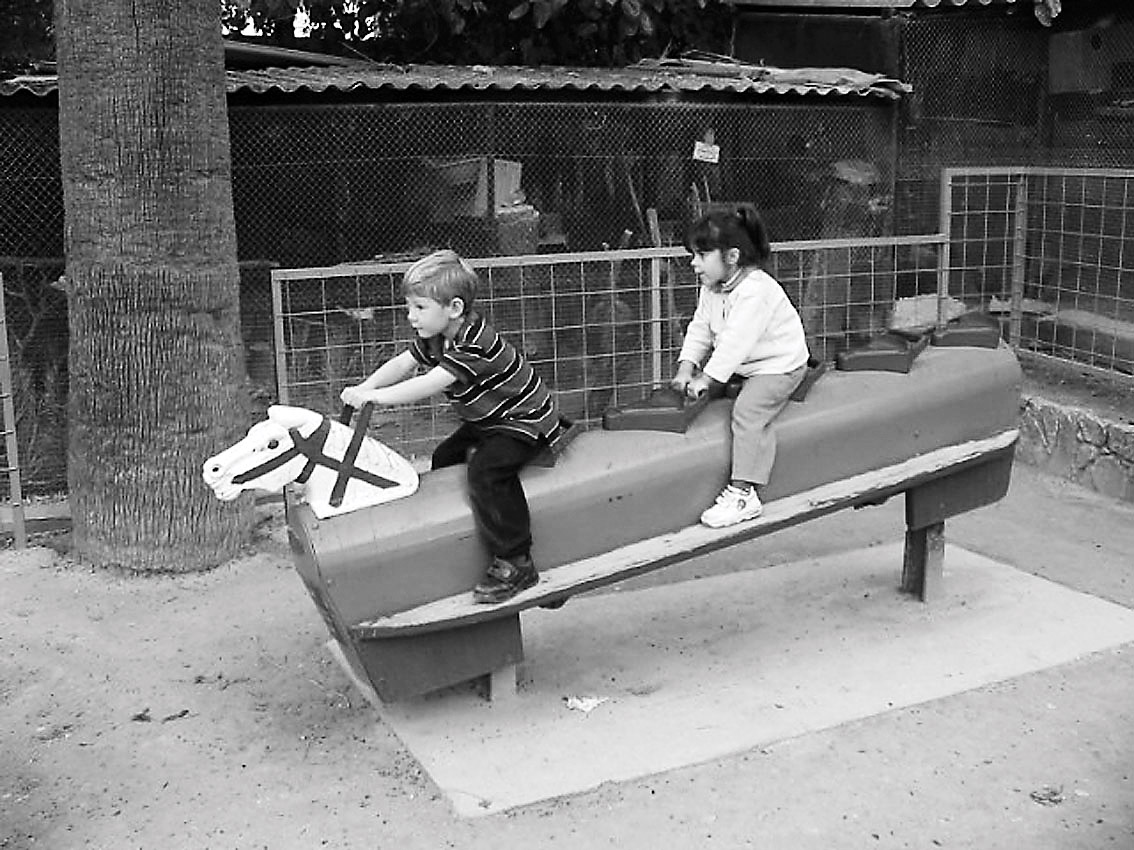
But it’s doubtful the famous playground rocking horse will ever run again
“Fifty years ago, in a park in Cyprus, a party was held in honour of a horse – the kind of playground horse you can ride on. His name was Ben Hur and he had come all the way from England,” reads the first page of a children’s book A New Coat for Ben, published in 2003.
Today, Ben Hur, the Nicosia municipal gardens’ playground horse who is now over 70, has been saved but will probably never run again.
The book tells the true story of Ben Hur, who stood weathered in the park. A boy “noticed that Ben’s paint was flaky in places, and too thick in others, and that his eyes had been painted red, which seemed all wrong to the little boy”.
“Ben grew old. His joints got stiff, his paint peeled.”
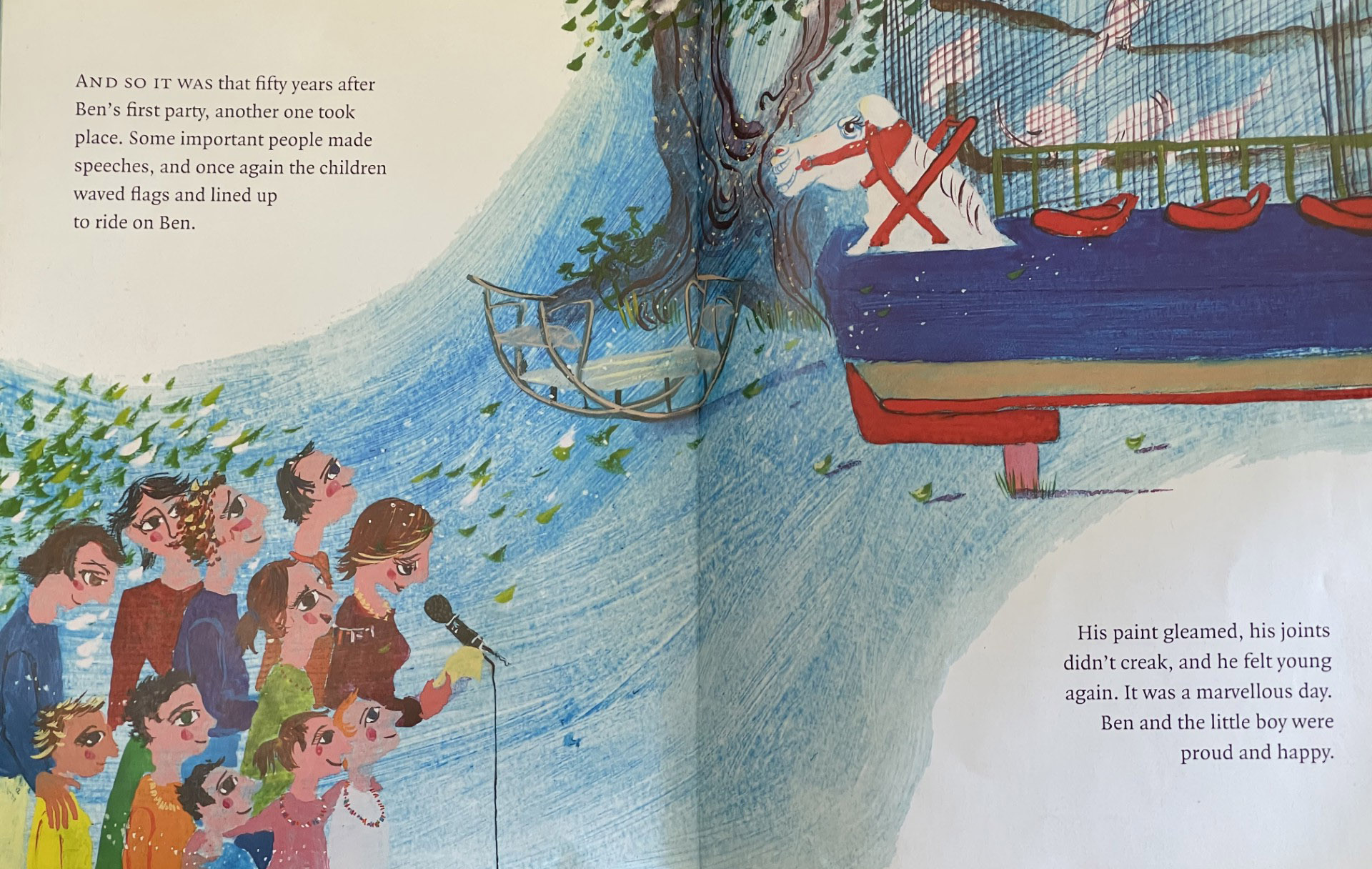
In the story, the boy befriends Ben and devises a plan to get the manufacturers to help with the horse’s refurbishing. The story ends with a party for Ben, who is unveiled as good as new.
“And so it was that fifty years after Ben’s first party, another one took place […] His paint gleamed, his joints didn’t creak, and he felt young again. It was a marvellous day. Ben and the little boy were proud and happy.”
That campaign did indeed happen in 2003. Yet less than ten years after he was given a new lease of life, Ben was dumped.
He was later retrieved and given a new home. The much-loved five-seater playground horse, who brought joy to hundreds if not thousands of children down the decades, is now safe in the courtyard of the Leventis Municipal Museum in Nicosia.
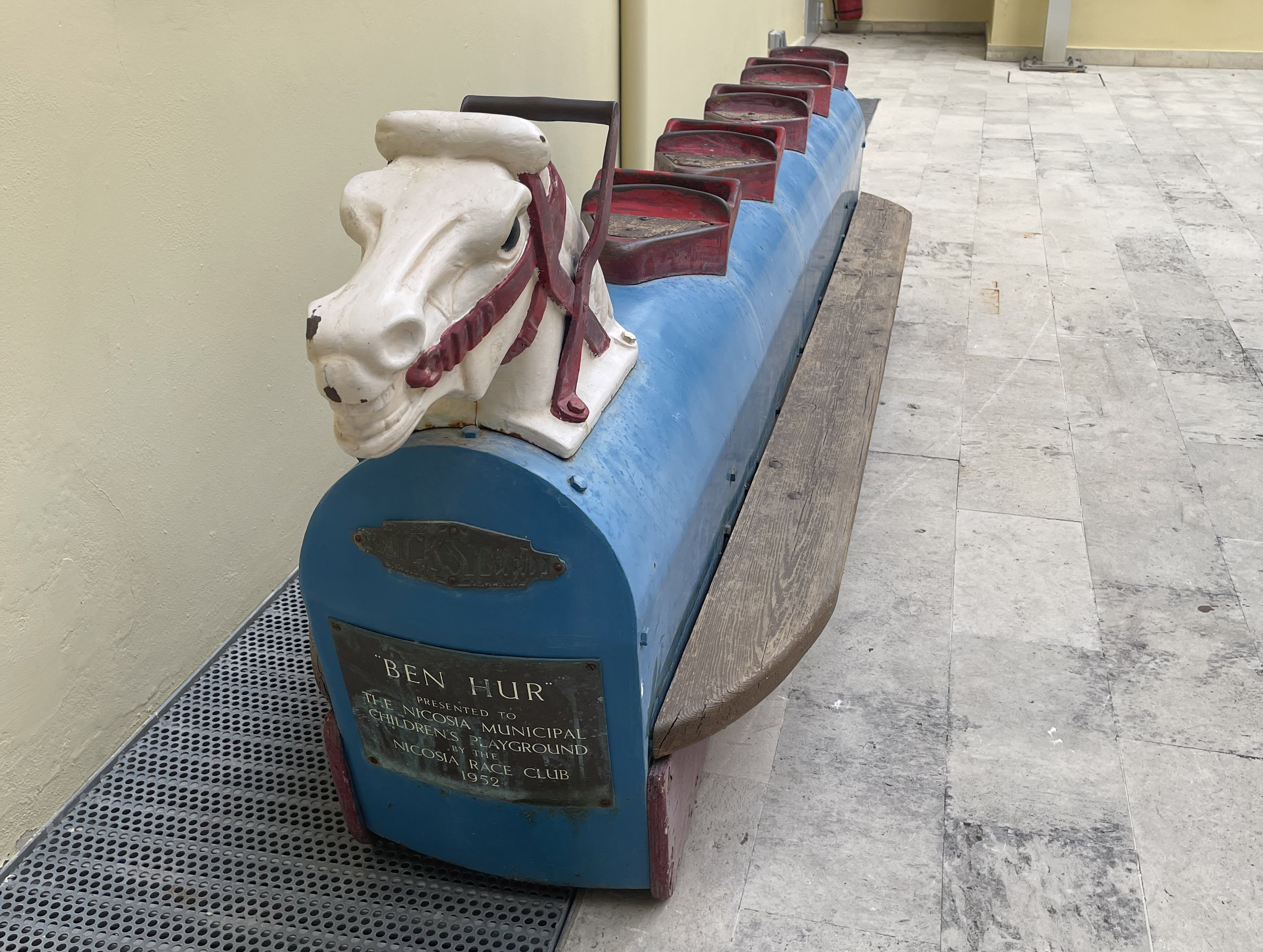
Ben Hur was built in 1952 by English company Wicksteed and was then donated to the Nicosia municipality by the Nicosia Race Club.
He was initially placed in the moat of the Venetian Walls surrounding the old town and in 1980 was transferred to the municipal gardens.
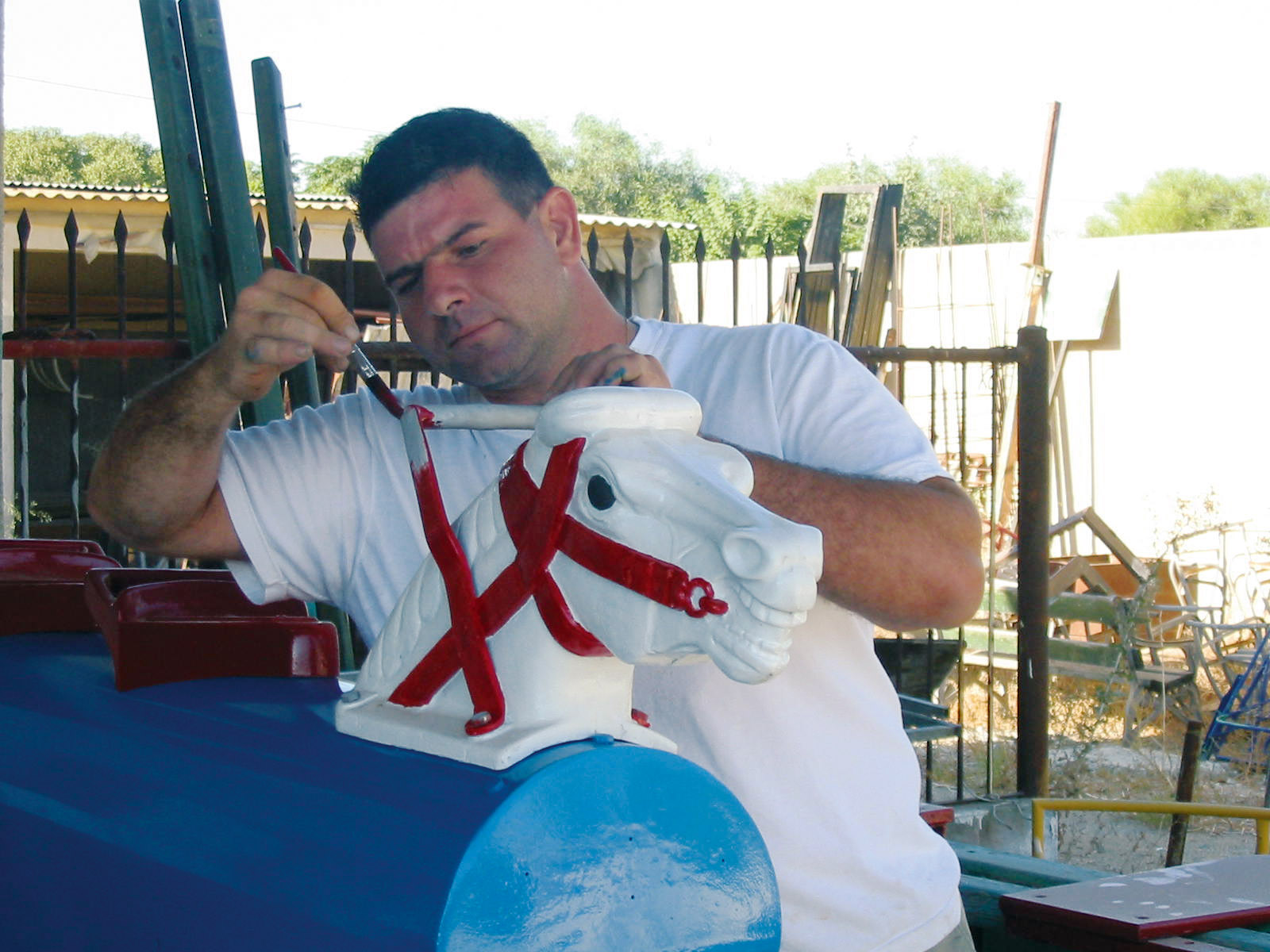
In 2003, Wicksteed Leisure Ltd, the Nicosia Race Club and the Nicosia municipality joined forces to restore Ben to his original glory, undertaking the cost of refurbishing and the printing of a book titled A New Coat for Ben by writers Rachel Davey and Toby Maklin, in English, Greek and Turkish.
The book, illustrated by Louiza Kaimaki, is out of print and hard to come by. Luckily, I have a copy of my own, in English. Some copies may be found secondhand – if you’re lucky.
The much-anticipated Ben with his new coat and greased workings was unveiled on October 8, 2003, by then Nicosia mayor Michalakis Zampelas. The book was also presented.
One day, Ben disappeared. The exact date he was removed is unknown, however what we do know is that he was found in 2012.
“After he was removed from the Nicosia municipal playground […] he was taken to Nicosia municipality warehouses. Ben Hur was found a few years later – in 2012 – by Nicosia municipality technical services employees, who, recognising his historical and emotional value, turned to the Leventis Municipal Museum and his transfer here was arranged,” museum curator Chrysostomos Sakallis told the Cyprus Mail.
Ben, having already undergone restoration, was in quite good shape when he was found.
“He was in a relatively good condition. However, he was rusty in places and worn in others, and his preventive maintenance and aesthetic restoration were decided. As a result, his paintwork was restored to a great extent and his wooden parts were saved from full degradation,” Sakalli explained.
Much of Ben’s mechanism, such as the forward and rear movement springs, is still attached. What is missing is the part of the mechanism that secured it to the ground.
“This may have been encased in cement and is unfortunately missing. It appears that it was removed along with debris during his dismantling. It is a shame because, had it been salvaged, it would allow us to have this beautiful toy in full working condition,” Sakalli said.
The transfer of Ben to the Leventis Municipal Museum was decided by then director Loukia Loizou Hadjigavriel.
“When she was informed that he had been found, she deemed it imperative to rescue and preserve him, taking of course into account the historical and emotional value this artefact held for thousands of Nicosia residents,” Sakalli explained.
In real life, Ben sported unusual colours – red, white and blue. Usually, playground horses were red with a black head. It is believed that Ben was painted the colours of the Union Jack to honour the coronation of Queen Elizabeth II in 1952.
Those who grew up in England will be familiar with playground horses, however Ben was unique in Cyprus, with unverified information about one or two at other locations, possibly Limassol and Kyrenia.
“The majority of local visitors immediately recognises the artefact and in most cases this recognition is accompanied by a wave of enthusiasm,” Sakalli said.
Those who remember him “many times want to share their stories with the staff or other visitors and, of course, there are those who see Ben Hur for the first time and are curious to hear his story.”
“Ben Hur has found a home at the Leventis Municipal Museum. Here, at the city’s historical museum, we preserve and promote thousands of objects. Ben Hur is among these. He adds his own testimony to the dozens of small or big stories, memories and experiences of people who lived, live and compose the uniqueness of our capital. The image of our city is more complete with this iconic artefact taken from our childhood.”
So, next time you visit Leventis Municipal Museum in the old town of Nicosia remember to look into the courtyard and say hello to Ben.

Click here to change your cookie preferences