
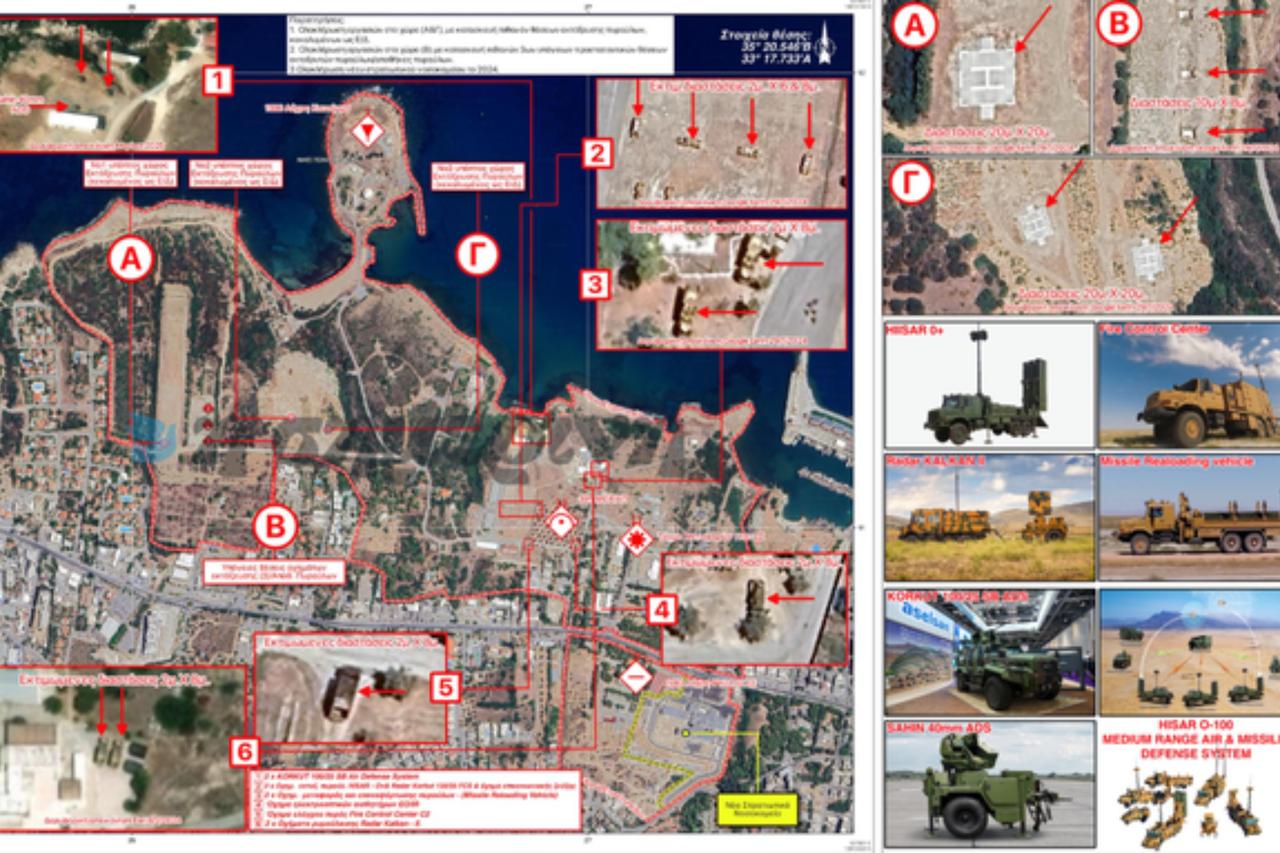
Turkey has reportedly expanded its air defence network in the north with the deployment of advanced systems described as part of a so called “Steel Dome” deterrent.
Regional media outlets, citing satellite imagery and Turkish press reports, say the deployment includes Hisar medium range anti-missile systems integrated into a wider defence architecture.
The system is believed to be operating from Kyrenia and connected to Turkey’s central command infrastructure, significantly enhancing Ankara’s surveillance and capabilities over Cyprus and the wider Levant.
Military analyst Yiannos Charalambides has warned that the deployment sharply restricts the operational effectiveness of the Republic’s recently acquired H145M helicopters.
He said the range of the Hisar missiles, which reportedly extends up to 40 kilometres, exceeds the standoff capabilities of the helicopters’ weapons, forcing them to enter into hypothetical engagement zones and thus increase their vulnerability.
According to reporting from Simerini, the air defence network combines multiple radar systems with medium range missile platforms and cyber warfare capabilities.
These are said to be coordinated through Turkey’s own domestic Hakim command system, the central hub that fuses data from radars and sensors to rapidly assign targets to appropriate weapon systems.
The architecture is designed to counter drones, helicopters, aircraft and missiles, while also bolstering resilience against electronic interference.
Military analysts argue that the overall effect is to place the Republic in a defensive posture and complicate operational planning.
The developments have heightened concern in Nicosia amid broader tensions in the eastern Mediterranean.
Analysts say the reported deployment displays Turkey’s growing presence in air defence and surveillance in the region.




Click here to change your cookie preferences