
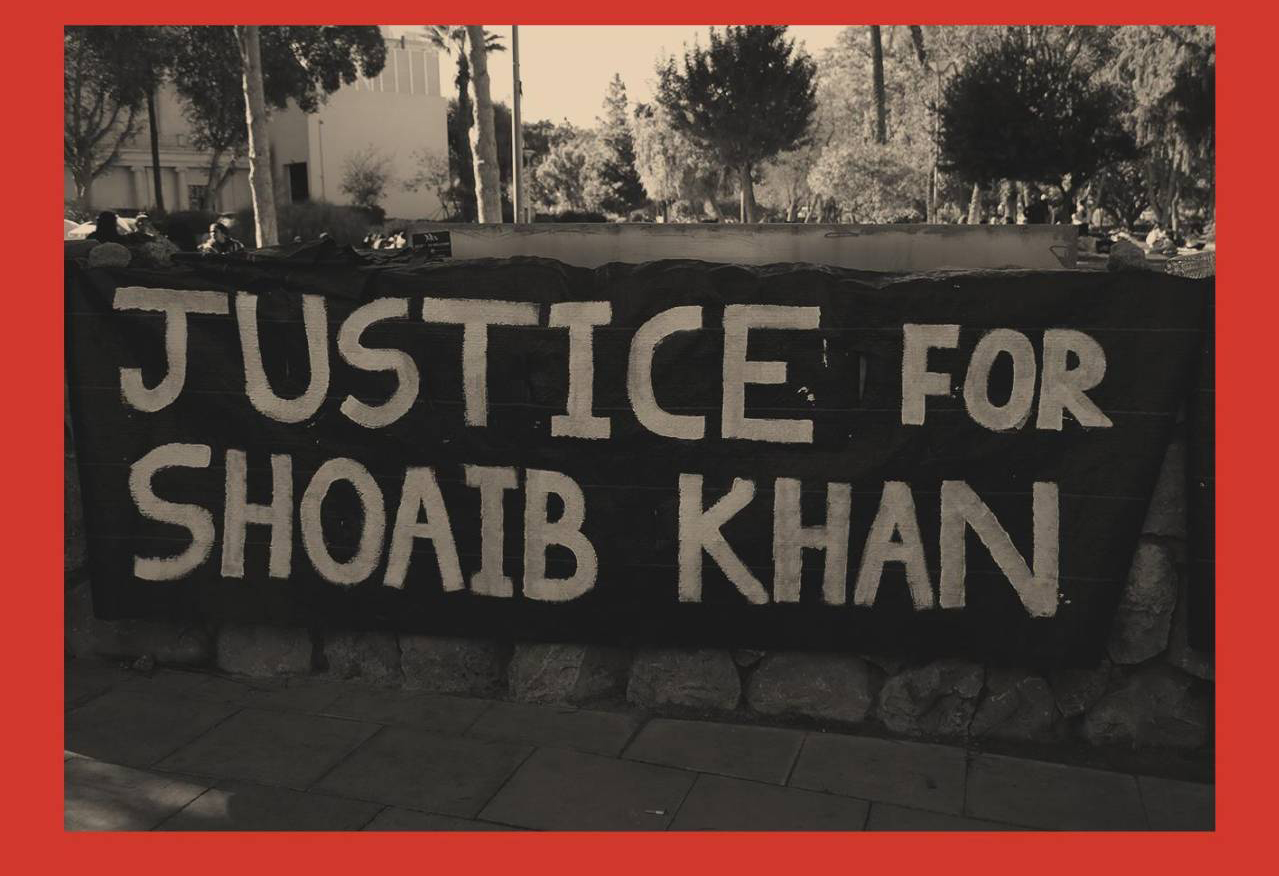
The inquest into the death of 24-year-old Shoaib Khan in the buffer zone-adjacent village of Potamia last year is set to begin at the Nicosia district court on Wednesday.
Khan was found dead in the Nicosia suburb of Strovolos on January 6 last year, but had been among a group of third-country nationals attempting to cross the buffer zone in Potamia. He had been shot in the back with a police weapon as officers attempted to immobilise a convoy crossing the buffer zone.
Following the case is a group of activists named the Justice for Shoaib Khan Initiative, which said on Tuesday that “up until now, the state and the police have treated Shoaib Khan’s murder as a natural outcome of migration policy enforcement, rather than as a killing that should have never occurred and should be investigated as such”.
The group added that “concerns about transparency and accountability have surrounded the handling of this case from the very beginning”, given that the police initially did not report that Khan had been shot.
As such, it described the forthcoming inquest as “a crucial opportunity to bring this case into the public eye, expose the systemic failures that allowed this killing to occur with impunity, and demand answers about Shoaib’s death”, before demanding a series of questions be answered regarding the sequence of events surrounding the incident.
It asked why the police’s anti-poaching unit had responded to the incident in Potamia, given that the unit typically does not deal with migration-related issues, and who in the police’s chain of command “made the operational decision to stop the vehicles”.
Additionally, it asked, “how is it possible that police officers, who have supposedly undergone training on precision shooting, repeatedly missed their stated target of shooting only in the air and the tyres of the first vehicle but instead hit two cars, fatally shooting Shoaib Khan in the back?”
It then questioned why the officers involved in the incident were not immediately suspended and investigated, and stated that Khan’s family’s lawyers have been “denied full access to statements, evidence and investigative material”.
For this reason, it asked whether further information “continues to be withheld”.
“Shoaib Khan’s killing is not an isolated incident. It is part of a wider system of border violence, where racialised migrants are subjected to extreme force and dehumanisation. We stand in solidarity with all those affected by border regimes that normalise death, violence and injustice,” the group said.
It added that it demands “a collective response and sustained action against the cruelty of border violence and the murderous logic of systemic racism”.
“Justice for Shoaib Khan means accountability, not only for those who pulled the trigger, but for the policies and institutions that made this killing possible. We will continue to fight for truth, accountability and political consequence,” it said.
Khan had lived in the north since 2021, after entering the island via the north on November 29 of that year on a 60-day tourist visa. The Turkish Cypriot authorities found after his death that he had never left through any of the north’s points of entry before attempting to cross the buffer zone in January last year.
Police on both sides of the island had made a series of arrests in the aftermath of Khan’s death, with three cars which were damaged by gunfire found – two in Nicosia and one in Kyrenia.


Click here to change your cookie preferences