

Cyprus shipping deputy minister Marina Hadjimanolis joined ministers and international officials in a high-level debate on maritime decarbonisation, where the United States set out firm objections to the Net Zero Framework (NZF) while backing the institutional role of the International Maritime Organisation (IMO).
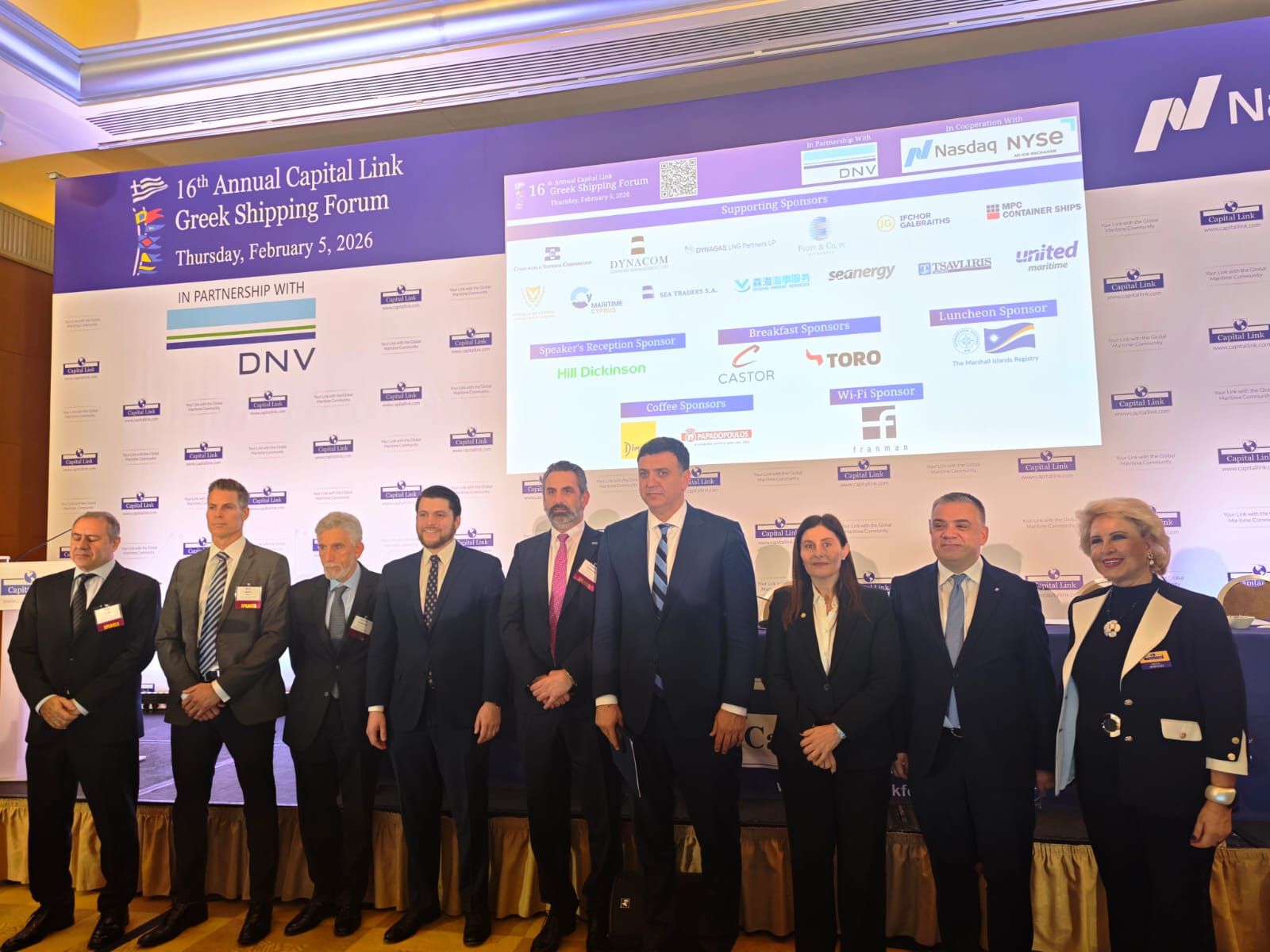
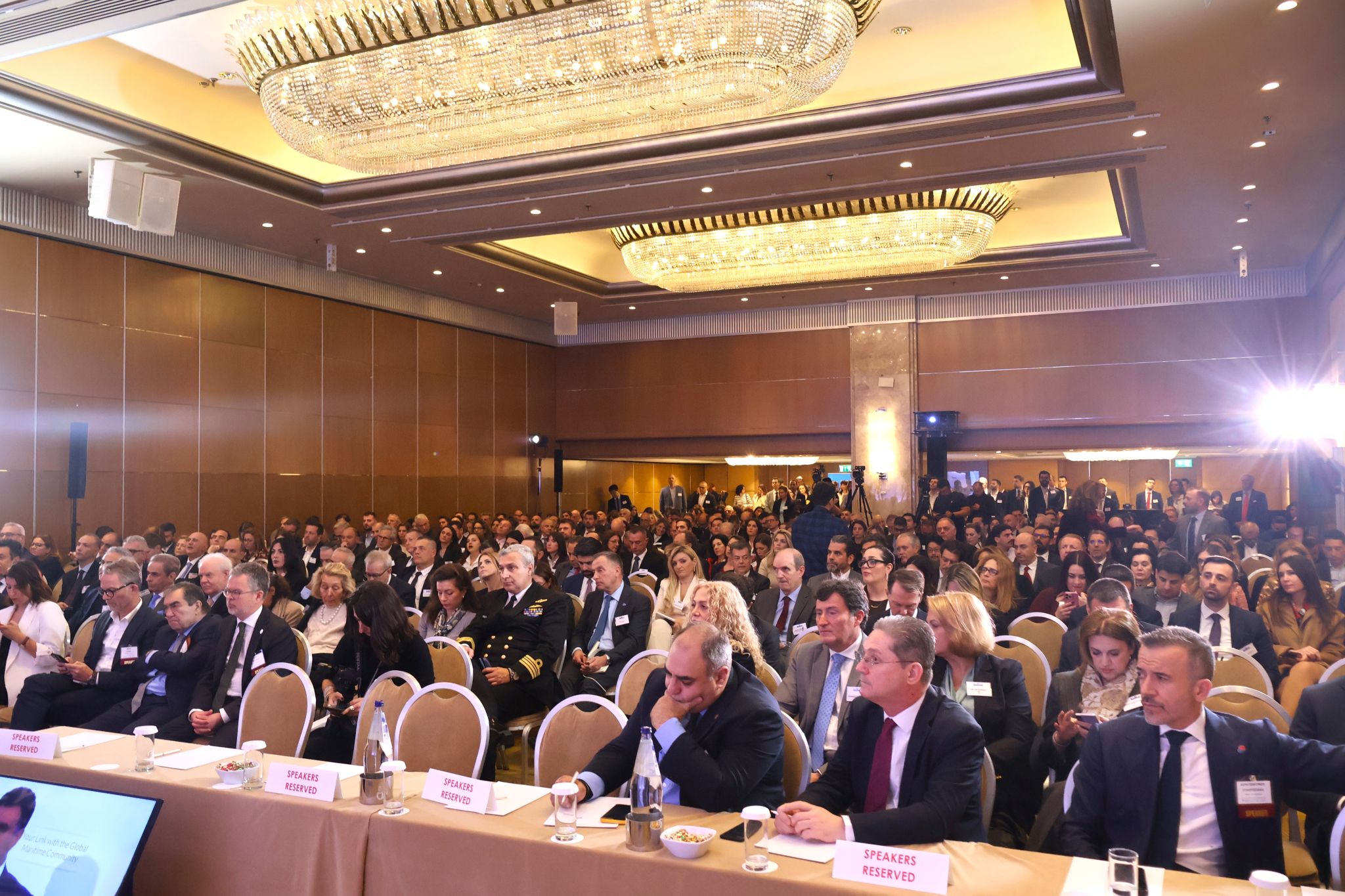
The discussion took place at the ministerial panel of the 16th Annual Capital Link Greek Shipping Forum organised by Capital Link, also attended by Greece’s maritime affairs minister Vasilis Kikilias, Malta transport minister Chris Bonett and US Deputy Assistant Secretary for Transportation Affairs Marco Sylvester.
Sylvester warned the transition risked failure without realism, technical documentation and active industry participation.
He clarified that Washington’s rejection of the NZF did not amount to withdrawal from international cooperation, but argued the framework alters the character of the IMO, transforming it from a technical organisation for safety and security of navigation into a global climate policy regulator.
According to him, such a development is not consistent with either the mission of the IMO or US interests. “Common sense is needed,” he said, calling for a review of a framework that, in Washington’s view, freezes progress more than it facilitates it.
The US sees two paths ahead, either recycling the confrontations that marked discussions last October, or moving beyond a framework preventing substantial progress.
Only through open dialogue, he added, can a workable and acceptable outcome be achieved.
In parallel, Washington proposed stronger state accountability, including explicit ratification of regulations by national governments so that decisions are not attributed exclusively to the IMO.
Particular emphasis was also placed on industry participation. Sylvester urged market players to state clearly what is technically and economically feasible, noting that zero-emission targets carry significant costs which first burden shipping and are ultimately passed on to consumers. In that context, excluding shipping from decision-making was described as unrealistic.
Hadjimanolis, for her part, called for realism and meaningful listening to the shipping industry, pointing out that legislation often precedes understanding of how the sector actually operates.
From the Greek side, Kikilias said any new burden on shipping inevitably moves from the ship to the charterer and eventually to the consumer.
He noted the transition is being requested towards fuels that currently cover only a minimal share of global availability while the required infrastructure remains absent.
Given that up to 90 per cent of global trade is transported by sea, he warned the decisions taken will have direct and profound effects on the cost of living and social cohesion.
Bonett meanwhile raised the issue of European unity, saying the EU must act as a single entity on such critical matters.






Click here to change your cookie preferences