
From gasfields to RES and desalination
Just over a month into 2026, unfolding developments are already shedding light into the priorities that will shape Cyprus energy this year. These include EEZ and gasfield developments, electricity and renewables, fuels and desalination.
EEZ and gasfield developments
At a meeting with President Nikos Christodoulides at the end of January, ExxonMobil vice-president, John Ardill, said “if all goes well” commercialisation of the block 10 gasfields Glaucus and Pegasus is expected between 2030-2035. Total gas is estimated at between 6-9 trillion cubic feet (tcf). Ardill also said that ExxonMobil is targeting ‘Declaration of Commerciality’ in April.
In order to estimate gas quantities more accurately, the company plans appraisal drilling of Pegasus in 2027. It is only after that the company will be able to examine development options and the way forward.
ExxonMobil is also considering further exploration in block 5, based on further analysis of data obtained from Electra. Even though drilling in January 2025 was unsuccessful, the well confirmed the presence of a hydrocarbon system.
In the meanwhile, ExxonMobil plans to drill two exploratory wells in Egypt’s Masry and Cairo blocks, that are adjacent to Cyprus’ blocks 5 and 10 and have high prospectivity, with operations expected to begin later this year. Completion of this exploratory drilling coincides with completion of appraisal drilling of Pegasus.
Additional gas discoveries will allow the company to assess the feasibility of a much more ambitious project: the establishment of a long-term upstream business exporting LNG.
ExxonMobil’s upstream strategy focuses on high return, low-cost-of-supply, projects that require finding large quantities of oil or gas that can be brought to market through established infrastructure or, where appropriate, new regional export infrastructure.
This is different to Eni’s strategy which is focused on: “rapid monetisation and a pragmatic, technology-driven, approach by combining low-cost reserves, fast-track development, and cross-border collaboration.” A prime example of this is the 3.5tcf Cronos gasfield in block 6, the development of which leverages existing infrastructure at Zohr in Egypt to maximise returns. The company expects to take a final investment decision (FID) this year, with the aim of bringing first gas to market likely by early 2028.
Following Egypt’s decision not to take its share of gas for use domestically, all Cronos gas, about 5bcm/yr, will be liquefied at Damietta and exported to Europe as LNG. However, given the low LNG price expected in Europe after 2028, between $6-8/mmBTU, and a tolling/tariff fee for use of Egyptian facilities expected to be up to $1.5/mmBTU, Cyprus profit share is likely to be low.
Eni may follow Cronos with development and monetisation of the other two gasfields in block 6, Zeus and Calypso.
Chevron and its partners have decided to move forward with front-end-engineering-design (FEED) of the 3.5tcf Aphrodite gasfield. Should FID be taken, gas exports to Egypt are not likely to start before 2031.
The good news is that the unitisation dispute with Ishai is on the way to be settled before the end of March.
However, with project capital costs estimated at $4billion, there are uncertainties regarding FID. Chevron’s strategy is heavily anchored in “disciplined cost-containment, operational efficiency, and capital allocation designed to drive high-profitability and shareholder returns, focusing on high-margin assets.”
The current development concept for Aphrodite, based on the use of an FPU, and the low gas prices Egypt pays for gas, may prove problematic. If all gas from Aphrodite is redirected to Egypt’s domestic market, the project’s strategic alignment with “high profitability” would be significantly challenged. Low LNG prices would pose similar problems. Either the development concept will have to change to eliminate costly infrastructure or Egypt will have to raise the price it pays for the gas, or Cyprus may be asked to grant additional incentives. These are the issues that make FID uncertain.
Electricity and renewables
And talking about gas, the disastrous project to import LNG at Vasilikos is still at a complete standstill without any indications on the way forward or timetable for completion, or when switch of power generation to gas can be achieved. Etyfa is still waiting for completion of yet more studies by its project manager, Technip, before it decides on the next step.
In the meanwhile, electricity prices remain very high to the extent that one in six Cypriots cannot afford to pay for heating this winter.
In addition to these, EU carbon allowances are expected to increase from an average of €75/tonne in 2025 to about €95/tonne. The total cost Cyprus incurred to comply with the EU ETS in 2025 is estimated at approximately €390million. This is likely to rise to €490million in 2026, all passed to electricity consumers through ‘green-taxes’ or fuel adjustment clauses on utility bills.
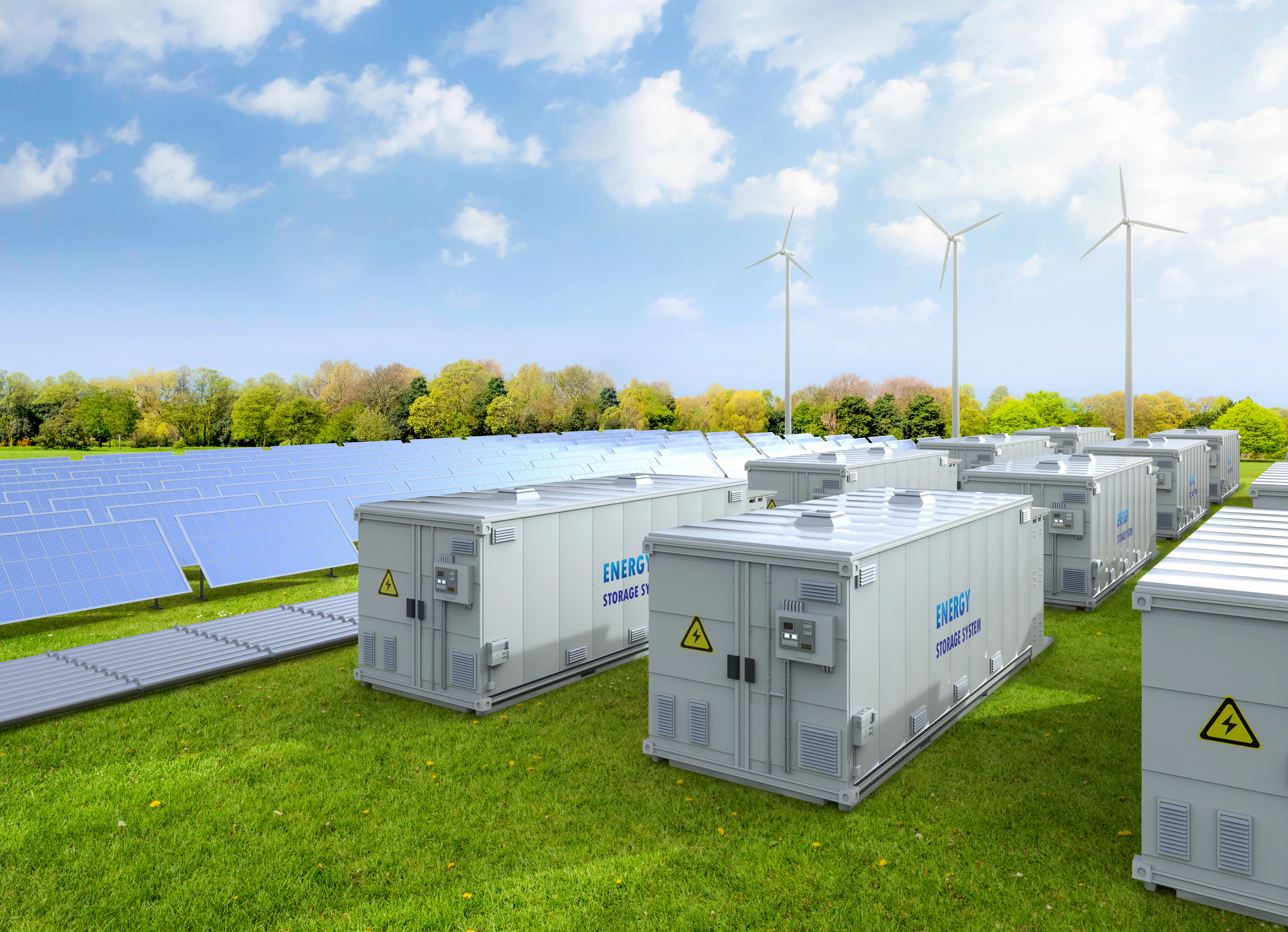
An increase in the uptake of renewables should in theory reduce this. In this context, the call for removal of restrictions to allow EAC and Cyta to invest in renewable generation and cooperate to offer combined electricity/telecoms packages at competitive prices must be supported.
But the current market model bases the electricity price on the most expensive fuel, ie diesel/HFO. As a result, renewables are priced at just below the EAC conventional price, continuing to amass super profits for RES producers.
Without grid upgrading and batteries, increasing renewable power generation is constrained due to high levels of curtailment. Cyprus continues to linger in 23rd place in Europe in terms of electricity share from renewables. This is less than half the European average. It also has the highest emissions per capita in Europe. On top, the tax component of the household electricity price is about 35 per cent – the fourth highest in the EU where the average is 27.6 per cent.
And then there is the Great Sea Interconnector still experiencing indecision and delays.
Fuels
Earlier this week ExxonMobil Cyprus fuels business was bought by Petrolina. The company has been providing fuels and lubricants through a network of 66 petrol stations.
Through this, Petrolina becomes the dominant fuel distributor in Cyprus, raising competition concerns. The Competition Protection Commission has imposed restrictions to safeguard this, such as limiting Petrolina’s ownership of petrol stations to less than 50 per cent, but it remains to be seen how this works out.
Desalination
We have a “once-in-a-generation” opportunity to fix the water sector, but sadly we are not grabbing it. As I keep saying “Cyprus must get out of the vicious cycle of having to react in the face of emergencies rather than be prepared through long-term planning for what we know is coming.”
Desalination has become essential in providing a stable, climate-independent source of water for domestic use, freeing dam water for use in agriculture.
Cyprus urgently needs to put in place long-term strategic energy and water plans developed on the basis of climate change and global warming, and must expedite the switch from use of conventional electricity for desalination to renewables.
In short, 2026 promises to another busy and controversial year in terms of energy.




Click here to change your cookie preferences