
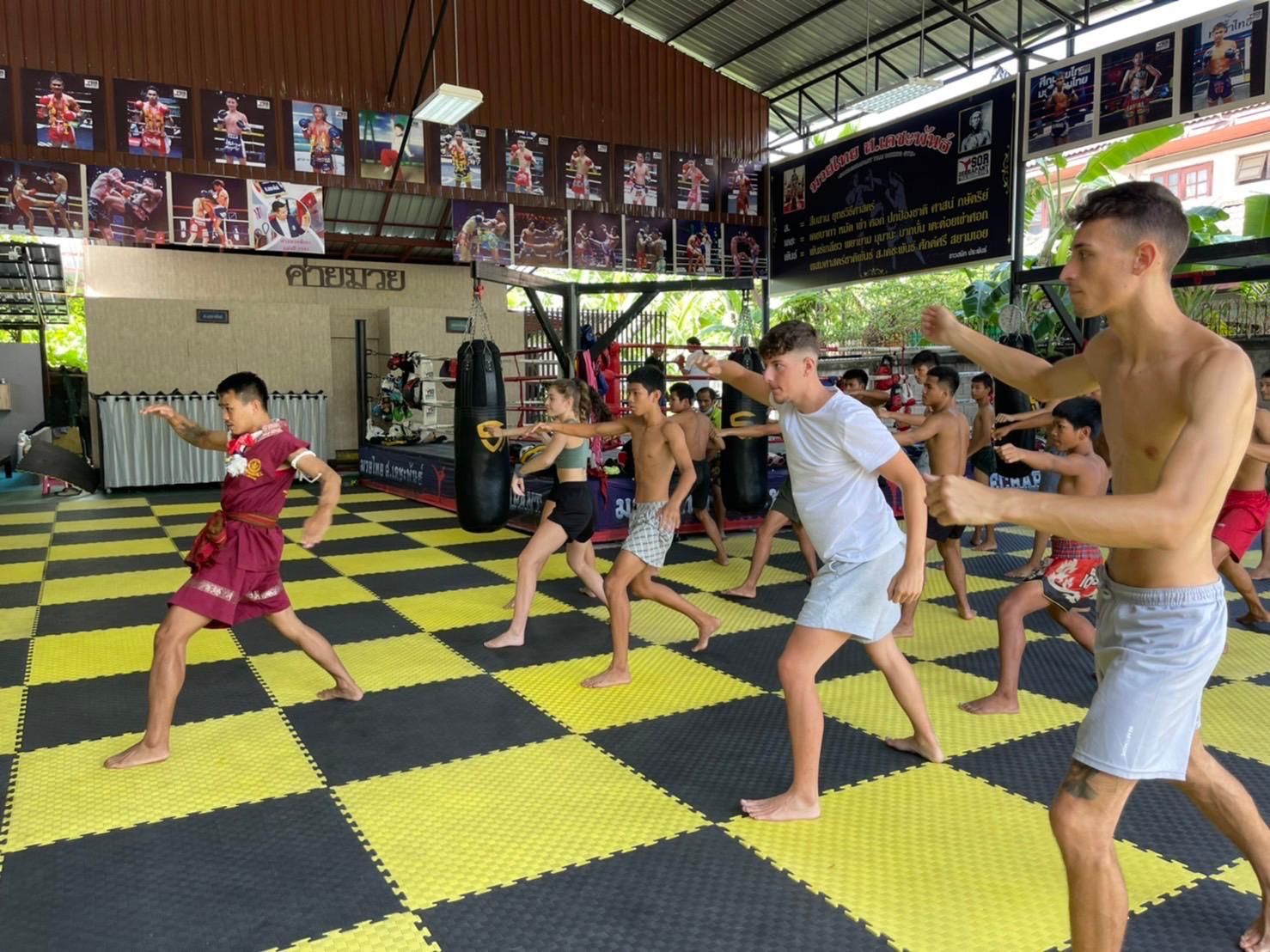
I coach in Bangkok, and the visa question comes up so often that it’s basically part of the warmup now. Somebody finishes their first week, starts feeling good, then hits me with the same line: “Kru, how do I stay longer to train?” That’s exactly why Muay Thai Visa Thailand (MTVT) exists—because training is the easy part; staying legal and organized is where people get stuck.
People call it a “Muay Thai visa” like it’s one button you press, and life becomes a training montage. Thailand doesn’t really work like that. In 2026, the long-stay options that actually make sense for Muay Thai training usually fall into two real lanes: the education lane and the newer DTV lane. Everything else is either short-term travel stuff or it turns into a messy game of extensions and stress.
Quick reality check: nobody at an embassy cares if you can kick hard. They care if your documents look like they belong together.
Why 2026 feels different
Two things changed the vibe.
First, the Destination Thailand Visa (DTV) is now part of the conversation for normal people, not just “I heard this exists on a forum” people. The basic structure is simple: it’s a multiple-entry visa with long stays per entry, and an extension option inside Thailand. That’s why trainees like it. It matches how people actually want to live and train for months, not weeks.
Second, the paperwork process is more digital and more picky. A lot of applicants are going through online systems now, uploading documents, getting a request for revisions, uploading again, then waiting again. It’s not hard, but it punishes sloppy files. If your documents look like a screenshot-of-a-screenshot situation, you’re gonna have a bad time.
And there’s also one extra travel admin thing that catches people off guard at the airport. Thailand now uses a digital arrival card system that you submit shortly before you arrive. It’s separate from your visa. It doesn’t replace your visa. But if you forget it, you’ve just created a totally avoidable problem on travel day.
The two long-stay routes that actually fit Muay Thai training
1) Education visa (Non-Immigrant ED) for Muay Thai
This route makes sense when your training is structured like an actual program with a real school behind it, not just “walk in and pay cash.”
The reason ED works is that it has a clean story. You’re here to study. You have enrollment documents. You have an institution backing you. That story is what the visa is built for.
The part people mess up is that they think a gym letter is enough. A casual “we confirm this person will train here” letter is nice, but it’s not always what the checklist is asking for. Many ED routes expect proper enrollment proof and supporting documents that look official and verifiable—not just a friendly invitation. That’s the difference between “looks legit” and “looks like a loophole.”
When ED applications get delayed, it’s usually not because the person is unqualified. It’s because the file doesn’t look official enough, or it doesn’t match the exact wording the officer expects.
If you’re planning a structured year-round training, the most direct fit is a Muay Thai ED Visa (Education) service from a Bangkok MOE-licensed school.
2) Destination Thailand Visa (DTV) with Muay Thai as the activity
DTV is popular for one reason: it fits how people actually live when they come to train seriously. You can stay in longer blocks per entry, and you can extend that stay once inside Thailand, then you leave and re-enter to start another long block.
That’s the simple version. The annoying version is the document version.
DTV is still a paperwork game. You’re proving three boring things. First, you meet the financial requirement with clean bank evidence. Second, you’re applying from the correct place and through the proper channel. Third, your purpose in Thailand is supported by documents that look real and verifiable, not like something typed in five minutes.
Most trainees who struggle with DTV aren’t struggling because DTV is “hard.” They struggle because they treat it like a travel hack instead of an application. It’s an application.
If your plan is to base yourself in Thailand long-term and train with flexibility, the right match is a 5-year Muay Thai DTV Visa (Destination Thailand Visa) program through a Bangkok championship school.
A separate DTV lane that people keep mixing up (don’t)
This is where I see confusion blow up plans.
Some people want “DTV,” but they’re not coming primarily as Muay Thai trainees. They’re remote workers. Founders. People whose days are split between laptop hours and training sessions before work or after calls. That’s a different profile, and it should be treated as its own service and its own paperwork story—not mixed into the Muay Thai DTV route and not mixed into ED.
If your main identity is “I work remotely, and I want Thailand as a base,” the better fit is a 5-year Thailand Digital Nomad Visa (DTV) service.

The documents that usually make or break approvals
I’m not an embassy officer, so I’m not going to do the fake internet thing where I promise approvals. What I can say is what I see students get asked for when their files come back with “please provide additional documents.”
For ED, the two big anchors are the enrollment confirmation and the authority-style supporting documents that match what officers expect to see for an education-based stay. When those are clean, the rest of the file tends to feel normal: passport bio page, photo, proof of where you currently live, and financial evidence showing you can cover yourself.
For DTV, the anchor is usually financial evidence plus the supporting documents that explain why you’re coming and what you’re doing. The bank evidence needs to be clear, recent, and in your name, and the purpose documents should look like something a real organization issues, with proper names and signatures where required.
And honestly, the “proof of current location” item trips up more people than it should. People upload something random because they’re rushing, and then they get bounced. If the checklist asks for it, treat it like a serious requirement, not a box to tick with whatever screenshot is in your camera roll.
What I tell trainees before they choose a path
If you’re coming for two or three weeks, don’t overcomplicate your life. Train, enjoy Thailand, and go home safe.
If you’re coming because you want months of consistency—two sessions a day, routine, and progress that actually sticks—then your visa plan should match that reality.
If your training setup is tied to a properly licensed school program and the education documents are strong, ED can be a clean path because it’s designed for study-style stays.
If you want flexibility and longer blocks that match a destination-style life, DTV can make sense if you can meet the financial requirement and you can present your purpose documents in a clean, official-looking way.
Either way, the same rule applies: you don’t win visas by arguing. You win by submitting a file that makes sense.
The destination-site version of the truth
People reading destination content don’t want a speech. They want to know what happens in real life.
Real life is this: your training can be serious, your intentions can be good, and you can still get delayed because one document is missing a signature or your proof of location is unclear. I’ve watched it happen. The students who have the smoothest experience are the ones who treat the admin like part of the training camp, not like an afterthought.
Get the paperwork clean, show up prepared, and then you can focus on the only thing you came here for.
Training. Eating. Sleeping. Doing it again tomorrow.
DISCLAIMER – “Views Expressed Disclaimer – The information provided in this content is intended for general informational purposes only and should not be considered financial, investment, legal, tax, or health advice, nor relied upon as a substitute for professional guidance tailored to your personal circumstances. The opinions expressed are solely those of the author and do not necessarily represent the views of any other individual, organization, agency, employer, or company, including NEO CYMED PUBLISHING LIMITED (operating under the name Cyprus-Mail).



Click here to change your cookie preferences