
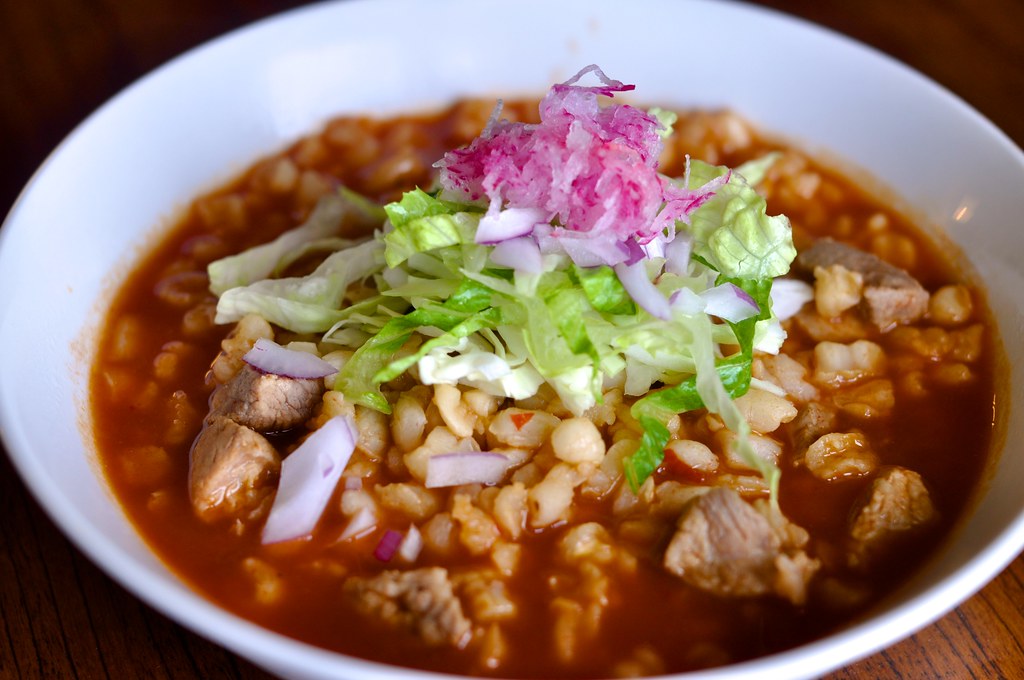
Pozole feels generous from the very first spoonful. Served in wide bowls and topped at the table with handfuls of fresh garnishes, it is less a quiet supper and more an invitation to gather.
At its heart lies hominy, dried maize treated with lime so that each kernel swells and blossoms as it cooks. The name comes from the Nahuatl word pozolli, meaning foam, a small poetic nod to the way the grains open in the pot.
Its roots stretch back to pre-Hispanic Mexico, where maize was not merely food but the foundation of life itself. Early versions of pozole were prepared for ceremonial occasions, linking the dish to ritual and community.
Over centuries, the stew evolved into the form recognised today. Pork became the most common addition, though chicken is widely used, and dried chillies were blended into the broth to give it depth and colour.
Across Mexico, three principal variations developed. Pozole rojo, tinted deep red with guajillo or ancho chillies, carries a gentle warmth. Pozole verde, bright with herbs and tomatillos, feels fresher and sharper.
Pozole blanco, the simplest, allows the flavour of the maize and meat to speak clearly. Each region guards its preferences, and each household tends to have its own version.
What makes pozole particularly distinctive is the ritual of serving. The stew arrives as a base, but the final flourish belongs to the diner. Bowls of shredded cabbage or lettuce, sliced radishes, chopped onion, dried oregano and wedges of lime are placed on the table.
A squeeze of citrus sharpens the broth; a scattering of radish adds crunch. The act of finishing the bowl becomes part of the pleasure. It is food that encourages conversation, each person adjusting their serving while the pot remains within reach.
Pozole is closely tied to celebration. It appears on Mexican Independence Day, at birthdays and family gatherings, prepared in generous quantities that seem designed for long afternoons. Its warmth makes it especially welcome in cooler months, when the slow-cooked broth feels restorative and sustaining.
In Cyprus, pozole is still relatively uncommon, appearing mainly in specialist restaurants or international food events. Yet its ingredients are not entirely foreign to Mediterranean tastes. Maize, pork, fresh herbs and citrus all find echoes here, and the idea of a communal pot placed at the centre of the table feels instinctively familiar.





Click here to change your cookie preferences