
Cyprus is one of the noisiest places in Europe.
And it’s not just the nightly barking dogs and the ever-present honking!
Studies have shown that nearly half of the island’s urban population is exposed to noise levels (traffic, nightlife, construction) well in excess what health experts consider safe. The constant background sounds that keeps the body alert, whether you consciously know it or not.
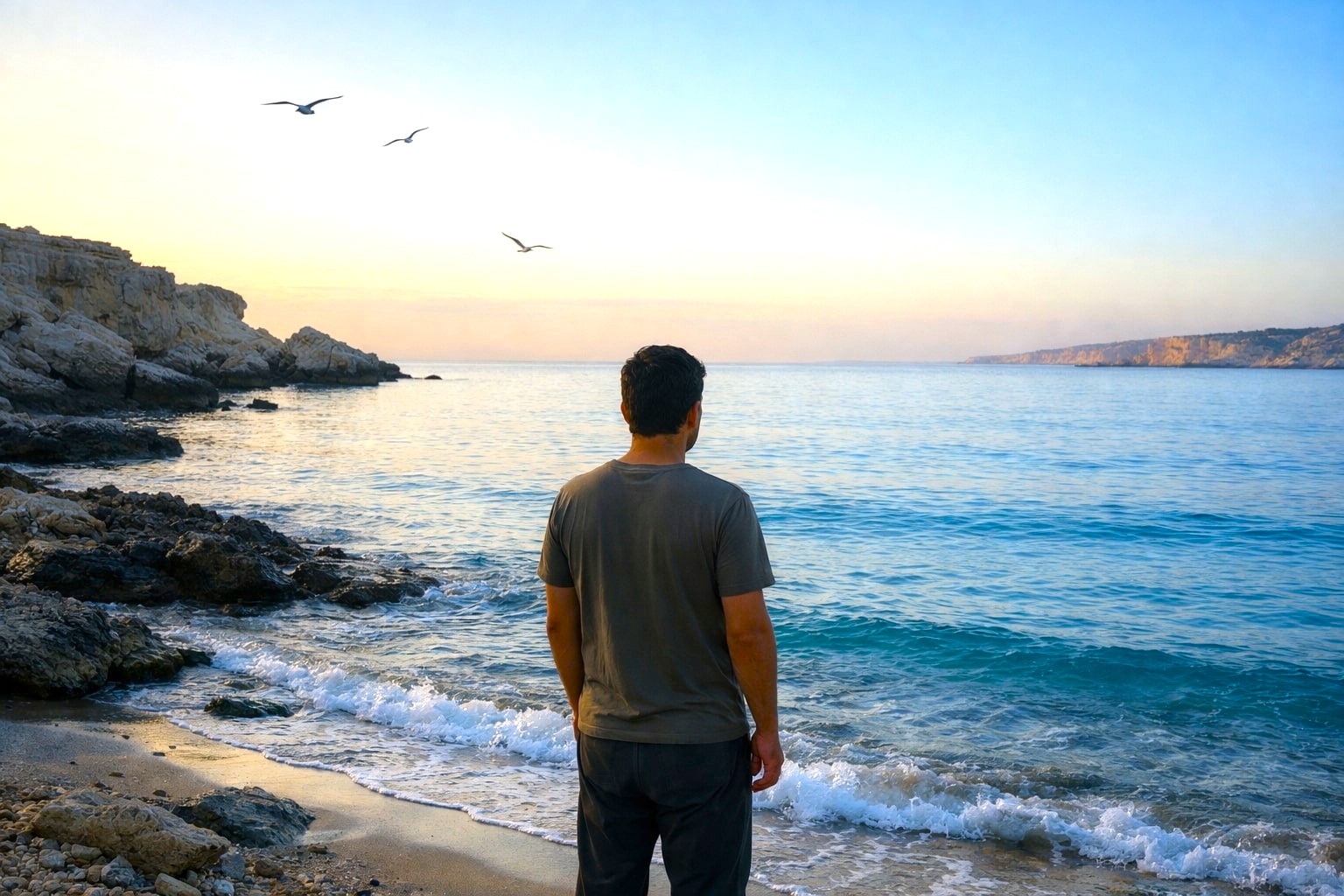
And yet, paradoxically, Cyprus also boasts many of the loveliest sounds in existence. Waves folding onto the shore. Early-morning birdsong. Wind moving through olive trees.
Even in the cities, there are pockets of auditory beauty: the clink of coffee cups in a quiet café, church bells carried on warm air, the low murmur of conversation in a square at dusk. Sounds that don’t demand attention, but actually lower stress, slow breathing and help the brain shift out of vigilance and into rest.
The same island that keeps so many of us on edge also holds, quite literally, the sounds that help the body soften again.
What matters, it turns out, isn’t volume alone. Research shows that the nervous system responds very differently to different kinds of sound.
Irregular, unpredictable noise – traffic, shouting, engines revving – keeps the brain’s threat system switched on. By contrast, natural soundscapes such as birdsong and waves signal safety: they’re patterned, rhythmic, and familiar, slowing our heart rate and breathing; shifting the nervous system out of vigilance and into recovery.
A large review on the subject found that natural sounds are consistently linked with reduced stress and annoyance, and improved mood and cognitive performance. And, as anyone living in Limassol, Larnaca, Paphos and the Famagusta region will have noticed, water sounds are especially associated with positive emotional effects.
In the mountains and the on the plains, it’s birdsong that brings the most benefits. From Nicosia to Troodos, the avian chorus – sparrows, swallows, even the soft coo of pigeons – signals continuity and safety, helping the body settle into the day rather than brace itself against it.
And if you’re stuck in a wholly urban environment, there’s no need to panic: even listening to recordings of nature sounds can lower physiological markers of stress!
Sound, wherever we are on the island, is always present. Even in the silent mountain valleys, there’s the whistle of wind through the pines; the buzz of bees in the thyme. (Well, when it’s not hunting season, at least!)
What really matters is which sounds the body reads as safe. And here in Cyprus, we have an abundance of calming sounds; if not outside your window, then in memory, or through a speaker, or in the brief pause when the city exhales.
A gull overhead. Water against stone. The cicadas in the summer evenings.
In a place as loud as Cyprus, those moments matter. Not as luxury, but as biology. Small reminders, carried on sound, that the body can stand down. That not every noise is a warning. That some sounds, at least, are there to hold you.



Click here to change your cookie preferences