
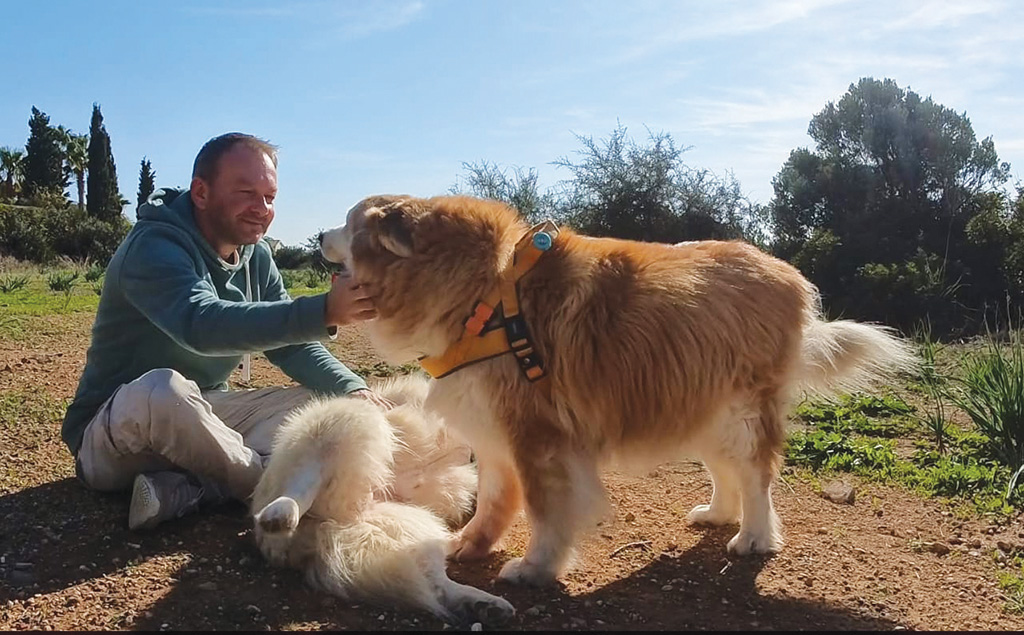
Bark with Nick the canine behavioural consultant
After our recent piece ‘Why Cyprus needs its cats and dogs’ on the island’s relationship with our felines and canines (Cyprus Mail, February 9), canine behaviour consultant Nick Ravignat got in touch.
Based in Limassol and Paphos and working closely with dog owners across Cyprus, he felt the article touched on something important but also opened the door to a deeper conversation.
For Nick, the issue is not only about strays, shelters or rescues. It is about how much, or how little, we truly understand animal behaviour.
“It is about awareness, responsibility and the way human actions shape the wellbeing of the animals living alongside us,” he says.
“Cyprus often feels divided when it comes to animal welfare,” he explains.
On one side are dedicated animal lovers and highly skilled professionals: veterinarians, groomers, trainers, behaviourists, physiotherapists, pet sitters, shelter workers and volunteers doing extraordinary work.
On the other, serious welfare concerns persist. Backyard breeders operate with little understanding of basic care.
Reports of poisoned cats and dogs continue. Some animals are still kept chained or confined in cages around the clock. Seasonal abandonment of hunting dogs remains an uncomfortable reality.
“In 2026, that is very difficult to justify,” he says, noting that animals are still often treated more like property than sentient beings.
He points to measures introduced by the European Parliament in 2025, including mandatory microchipping and registration, bans on abandonment and harmful breeding practices, and training requirements for breeders and animal keepers.
As part of the EU, he would like to see these standards fully implemented and enforced in Cyprus.
Misunderstanding dog behaviour, he adds, is not unique to Cyprus.
The general assumption is: “I’ve had dogs all my life, I know how it works.”
Experience is valuable, but it is quite different from expertise.
Animal guardianship, he argues, should be treated with the same seriousness as driving a car. It requires knowledge, responsibility and accountability.
Much of the misunderstanding comes from anthropomorphism, interpreting canine behaviour through a human lens.
Dogs do not look “guilty” when told off; they are attempting to defuse tension, he says. A yawning dog is not necessarily tired but may be signalling discomfort or trying to self-regulate.
“With so many dogs living alongside us, understanding their communication is essential for welfare and public safety,” he says.
Nick also runs desensitisation programmes for people with a fear of dogs, noting that around six per cent of the global population experiences cynophobia.
“One of the most common mistakes people make with their dogs is saying ‘no’ without ever showing the dog what to do instead,” he says.
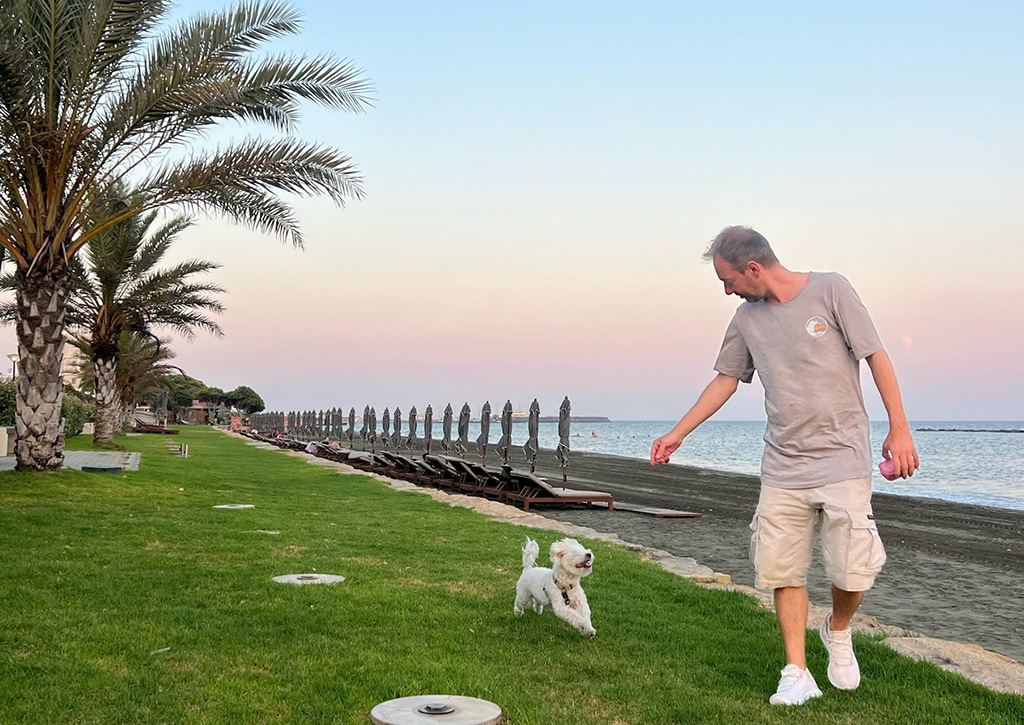
Dogs are opportunistic and tend to repeat behaviours that gain attention, even negative attention. Shouting at a dog for chewing the sofa may unintentionally reinforce the behaviour.
Nick uses a simple analogy: imagine being slapped every time you sit on the wrong chair. That would not automatically teach you to choose the right one. Positive reinforcement would make the lesson clearer.
“That is what happens when we clearly show dogs what we want and reinforce it,” he says. “More ‘yes’, less ‘no’.”
Dogs, he explains, have one primary goal: to feel safe. Many find the human world overwhelming. They communicate discomfort daily through subtle calming signals, body language designed to reduce tension.
Tail wagging does not always mean happiness. Growling is not aggression but communication, a warning that the dog is uncomfortable.
“Punishing a growl can remove the warning system entirely. If dogs are punished for growling, they may stop warning and move straight to biting if they feel they have no other option,” Nick explains.
Most aggression, he adds, is a last-resort strategy after numerous ignored signals.
Human behaviour has a profound effect on dogs. Their sense of smell can be up to 100,000 times more sensitive than ours, allowing them to detect chemical changes linked to stress or fear.
They often reflect our emotional state as part of social bonding. When humans regulate their own emotions, dogs are more likely to feel secure. It is a process of co-regulation across species.
For Nick, there is no such thing as “bad behaviour”. Behaviour is the expression of an emotion. Excessive barking, jumping up, reactivity or resource guarding are symptoms.
Addressing only the visible behaviour without understanding its cause is, in his words, “putting a band-aid on a bullet wound”.
Instead, he urges owners to reinforce calm behaviour and meet basic canine needs: physical exercise, mental enrichment, appropriate food and water, social interaction and affection.
He is particularly critical of outdated dominance theories, ideas around “alpha” status and pack leadership that were challenged decades ago.
Dominance refers to priority access to a resource between animals of the same species, not between humans and dogs.
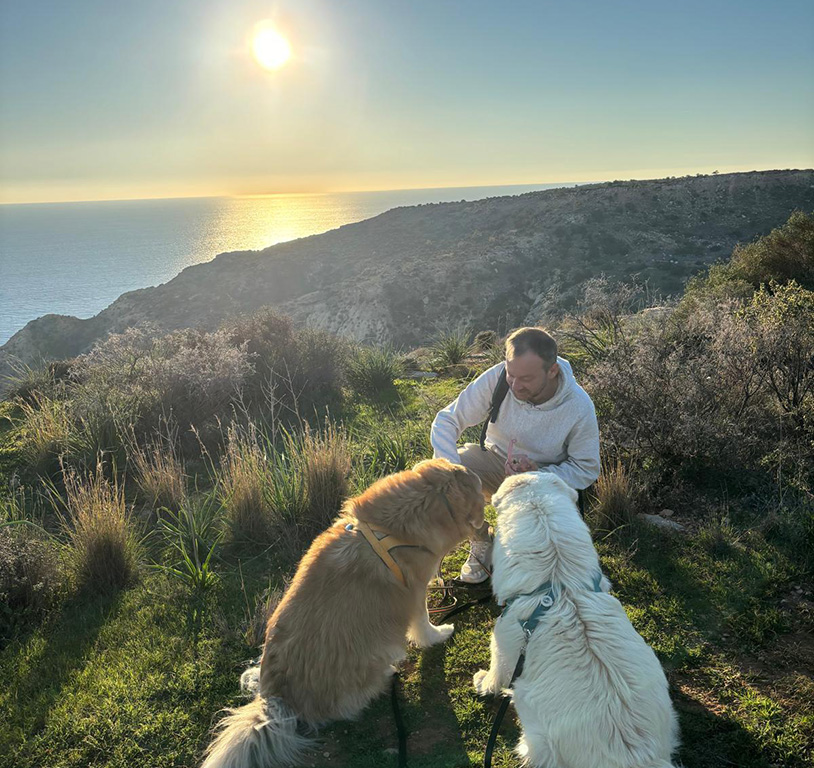
If prong collars or “pack leader” theories are still in use, he believes it is time to move forward.
Nick believes there is a lack of education about animal behaviour in Cyprus, though solutions exist.
Greater education would mean safer interactions, fewer accidents, improved welfare, better detection of pain and stress, and fewer failed adoptions.
Countries such as Germany and Switzerland require first-time dog owners to demonstrate responsible ownership through written and practical exams.
Similar measures, he believes, could significantly reduce frustration and post-adoption surrenders in Cyprus.
He runs post-adoption workshops to help families understand their dog’s needs based on breed, age and history, and to explain how dogs learn.
These should be the basics known by every dog guardian. Strong enforcement of animal welfare laws is equally important.
Nick prefers to see the glass as half full. Cultural change takes time, but he chooses to believe things are improving.
Animal welfare may not always feel like a priority in uncertain times, yet reconnecting with animals and nature would ultimately improve human wellbeing too. It is all linked.
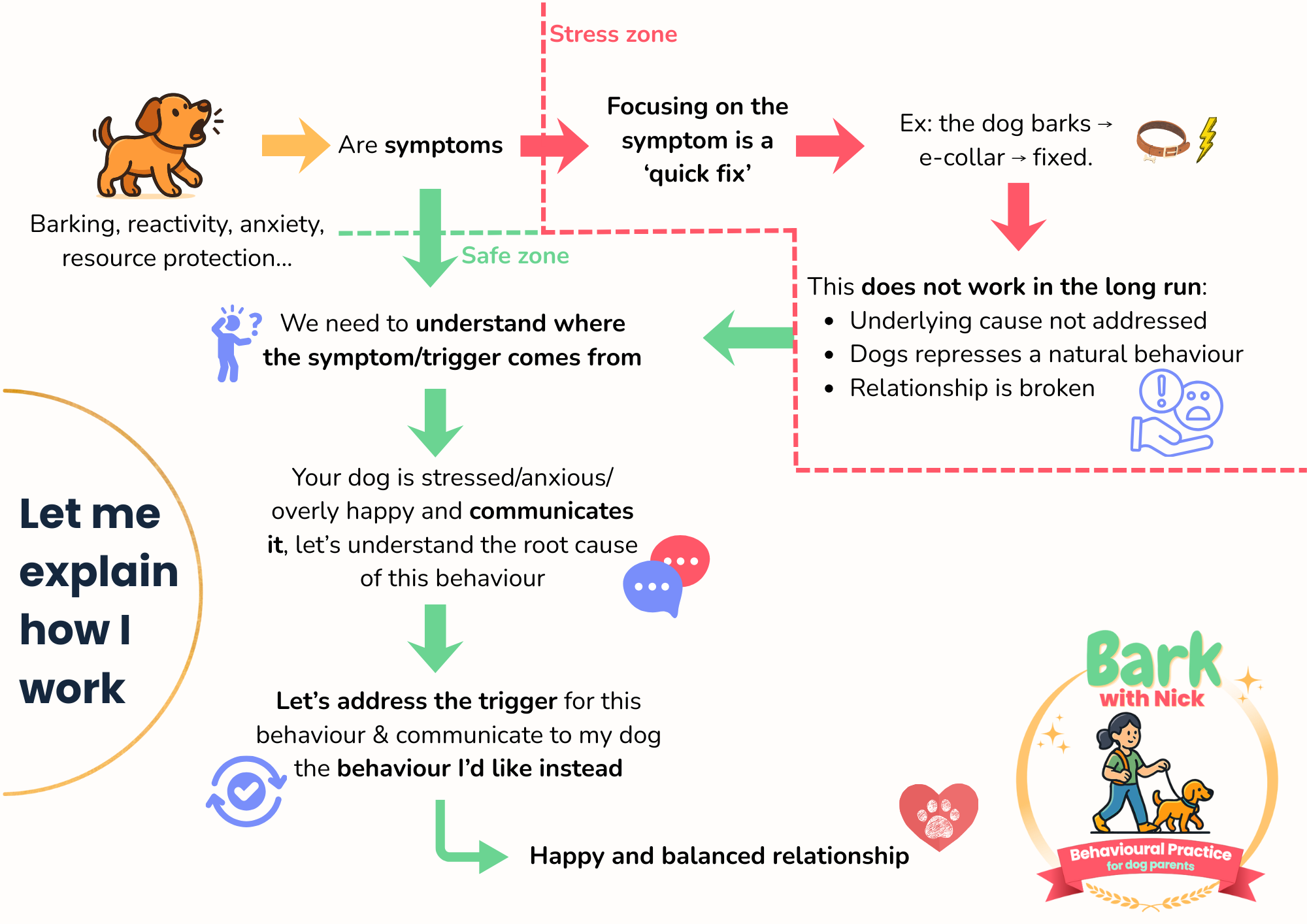
He is planning a series of webinars under the banner Bark with Nick, covering topics such as canine communication, pulling on the lead and separation anxiety, alongside in-person workshops for deeper discussion.
For now, his work remains focused on prevention, helping families adjust routines after adoption and understand the origins of behavioural issues before they escalate.
“What I do is train people to be independent with their dogs,” he says, “so they have the keys to live a happy and balanced life with a calm and confident dog.”
As the debate around animal welfare in Cyprus continues, the conversation may need to go beyond just feeding and rescuing. It may be about learning.


Click here to change your cookie preferences