
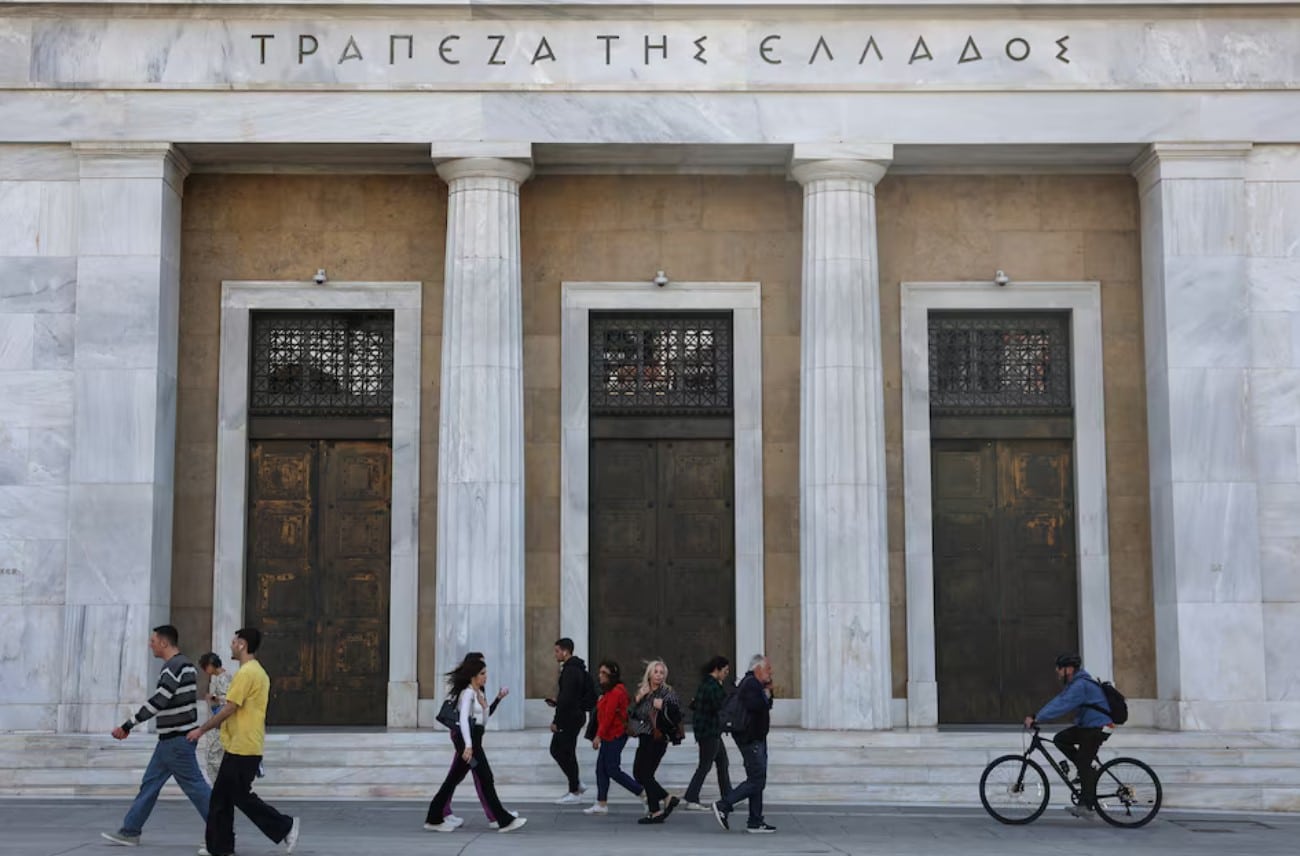
International banks signalled strong confidence in the Greek banking sector’s outlook for 2026, highlighting resilient credit expansion, solid asset quality and growing investor demand.
This follows meetings with major lenders including Eurobank, Alpha Bank, National Bank of Greece, Piraeus Bank and the Bank of Cyprus.
According to Greek business outlet Newmoney, the above assessment was outlined by investment bank Goldman Sachs after its teams met the banks’ management and investor relations departments in Athens on March 9 and March 10, 2026.
The meetings suggested that Greek banks entered 2026 with strong momentum, supported by sustained lending growth, healthy balance sheets and increasing flexibility in the use of excess capital.
Goldman Sachs indicated that the macroeconomic environment in Greece remains supportive for the banking sector, with economic activity continuing to drive loan demand, particularly from corporate borrowers.
The investment bank also reported that asset quality across the sector remains stable, with no material signs of deterioration at present.
At the same time, it recognised that recent developments in the Middle East represent a potential risk, mainly through their impact on energy prices and inflation.
However, the bank stressed that the Greek economy appears less exposed to a potential energy shock than many other eurozone economies.
The report also pointed to Greece’s prudent fiscal stance, declining unemployment and the continued support of the EU Recovery and Resilience Facility, even though the window for new projects under the programme is expected to close during 2026.
Discussions with bank executives placed strong emphasis on capital allocation strategies and shareholder distributions.
Goldman Sachs said lenders are increasingly focusing on strengthening payouts to shareholders through regular distributions and, where possible, extraordinary capital returns.
The bank cited the example of the additional €300 million distribution announced by National Bank of Greece alongside its fourth-quarter results.
At the same time, the sector appears to be shifting towards targeted acquisitions in areas such as bancassurance and asset management, reflecting a transition from balance sheet repair to capital optimisation.
Executives also indicated that credit expansion remains robust in 2026, supported by strong pipelines of new lending and continued preference for corporate loans.
Goldman Sachs added that visibility for credit growth beyond 2027 remains positive, although a prolonged energy shock could eventually weigh on economic activity through inflation and cost pressures.
Competition in the sector is expected to continue putting pressure on lending margins, although at a slower pace, while international syndicated loan markets are emerging as an additional growth channel.
Funding conditions through deposits also remain supportive.
Goldman Sachs explained that many Greek bank accounts still have a highly transactional character, with relatively small and fragmented balances and no significant upward pressure on deposit costs.
Banks are also trying to shift part of their client base from time deposits towards investment products under management, reflecting the historically low penetration of such products in Greece, where savings traditionally flowed mainly into deposits and real estate.
The report also highlighted Cyprus as an attractive banking market, citing low deposit costs and a favourable macroeconomic backdrop.
According to the investment bank, low unemployment, strong real GDP growth and the continued relocation of companies to Cyprus, supported by the tax framework and state incentives, are sustaining a positive outlook.
It also pointed out that Eurobank and the Bank of Cyprus hold the largest market share in Cyprus, while Alpha Bank has recently strengthened its presence in the market.
At the individual bank level, Alpha Bank highlighted the benefits of its cooperation with UniCredit in wholesale banking and geographic reach, while also stressing the still limited penetration of the asset management market in Greece.
National Bank of Greece emphasised the strength of its deposit base, particularly in retail banking, alongside a disciplined capital strategy aimed at bringing its CET1 ratio below 16 per cent by 2028 through higher distributions and credit expansion without limiting the possibility of future deals.
Eurobank focused on continuous improvements in cost efficiency while maintaining investment in technology.
Piraeus Bank highlighted its excess capital position at the end of its current strategic plan, which could support stronger lending growth, potential acquisitions or higher shareholder distributions.
In terms of valuations, Goldman Sachs maintains a buy recommendation for Eurobank, Piraeus Bank and Alpha Bank, with target prices of €5.00, €10.50 and €5.10 respectively.
The investment bank assigns a neutral rating to National Bank of Greece, with a target price of €17.50.
The valuations are based on 2027 price-to-earnings multiples of 10.5 times for Eurobank, 10.25 times for Piraeus Bank, 10 times for Alpha Bank and 11.25 times for National Bank of Greece.
Meanwhile, a separate report by Bank of America suggested that Greek equities remain firmly on the radar of international investors, with banks leading the way.
Despite the market volatility triggered by renewed tensions in the Middle East, the bank said international investors have largely maintained their positions in EMEA markets.
Within this context, Greece continues to maintain a visible presence in the portfolios of Global Emerging Markets funds.
According to Bank of America, Greek bank shares represent the clearest and most comprehensive way for foreign investors to gain exposure to Greece.
The National Bank of Greece stands out as one of the most overweight positions among GEM funds across the EMEA region.
The bank recorded an overweight position of 179.3 basis points and appears in 41.1 per cent of the portfolios monitored by Bank of America.
Eurobank also shows strong positioning with an overweight of 93 basis points and a presence in 30.9 per cent of funds.
Piraeus Bank follows with an overweight of 64.5 basis points and representation in 35.7 per cent of portfolios.
Alpha Bank remains in positive territory with an overweight of 15 basis points and participation in 28.2 per cent of GEM funds.
The strong simultaneous presence of all four major Greek banks underscores the concentration of international investor interest in the sector.
Beyond banking, the report also highlighted selected non-financial Greek stocks held by international funds.
OPAP (now known as Allwyn) stands out as a consistent choice, with an overweight position of 11.2 basis points and participation in 22.9 per cent of GEM funds.
What is more, Metlen Energy & Metals was identified as a potential “fear of missing out” opportunity.
The company currently has zero representation in the GEM funds sampled by Bank of America, trades at 8.2 times earnings and at a discount of 1.1 times compared with its average valuation over the past twelve months.
According to the bank, this suggests there may be room for new inflows into the stock if its investment narrative strengthens further.





Click here to change your cookie preferences