
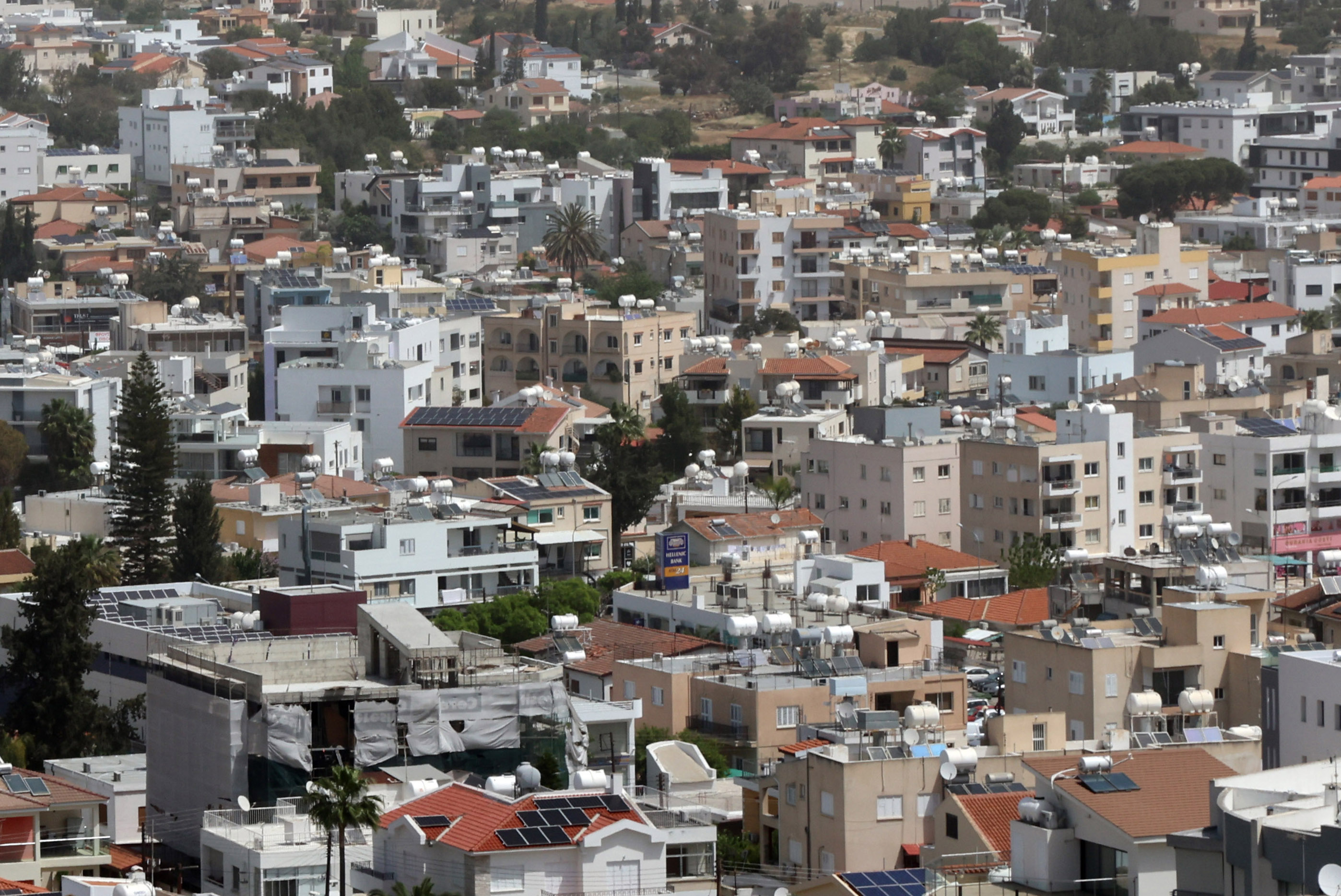
Cyprus’ property market is holding firm despite escalating tensions in the Middle East, bolstered by its long-standing reputation as a stable “safe haven” for overseas investors and families seeking a European base.
While regional conflict often rattles global markets, the island’s real estate sector is currently benefiting from a “Plan B” effect, as buyers from nearby countries look to diversify their assets and secure residency in a nearby EU jurisdiction.
Leading industry figures from Landbank Group, Ask Wire, and Danos Group set out these views to Philenews, noting that the market has repeatedly shown resilience during previous periods of volatility in Lebanon, Israel, and Ukraine.
Andreas Christoforides, chief executive of Landbank Group, said the market is watching recent developments calmly, with nothing at this stage to justify concern or panic.
He said “the real estate market is calmly following what has been happening in recent days and we do not see it being affected to an extent that would inspire concern or panic”, adding that many in Cyprus had been left surprised by reports circulating abroad about the country, which, in most cases, bore little resemblance to reality.
He went on to say that property sales were continuing as normal despite the tense geopolitical climate created by the war in Iran.
In his words, “it is a fact that a slight downturn has been observed in the markets in recent days, which is completely normal, but we expect that everything will soon return to normal”, while noting that Cyprus had experienced a similar pattern in 2022 following Russia’s invasion of Ukraine, as well as during earlier tensions in Lebanon.
Looking back at previous crises, Christoforides said Cyprus, and its property sector in particular, had shown notable resilience.
As he put it, “for example, last year we noticed that despite what was happening, interest in purchasing real estate had increased as several investors from Lebanon and Israel saw Cyprus as a safe alternative”.
He added that the end of the war, which “we all hope to see as soon as possible”, would help sustain the upward course of the real estate market, along with other important sectors of the Cypriot economy.
For the time being, he said, demand remains centred largely on residential property, notably apartments and houses, both for owner-occupation and for investment aimed at rental income.
In his words, “the increased demand from abroad, combined with the limited inventory, tends to maintain prices at their current levels”, while “I would not say that prices are being compressed, but rather strengthened, as Cyprus matures as a quality investment destination”.
Loizou said the Cypriot property market now has a clear memory of how it responds to geopolitical upheaval in the region.
He said “this is not the first time we have seen such developments affecting demand from abroad”.
After the Beirut port explosion in 2020, he noted, interest from Lebanese buyers rose, particularly for homes in Larnaca and Limassol. Then, in 2022, the war in Ukraine triggered a notable movement of companies and people to Cyprus, especially to Limassol, affecting both the sales market and rents.
“A similar mobility was recorded after the attacks on Israel in 2023,” he added.
According to Loizou, market data already show that foreign demand is one of the sector’s main pillars. In recent years, around 4 in 10 property purchases in Cyprus were made by foreign buyers, while in districts such as Paphos and Larnaca the share often rose above 50 per cent.
He added that current interest is coming mainly from Israeli buyers and, to a lesser extent, from Lebanese nationals.
In practice, he said, this demand is not necessarily focused on luxury property.
Instead, “they are mainly ready-made two or three-bedroom apartments and family homes in areas with private/international schools, infrastructure and good air connections”.
For many of these buyers, Loizou said, Cyprus serves as a second base, a “plan B residence” close to their homeland, but within the European Union.
That, he said, helps explain why the strongest movement is being recorded in Larnaca, Limassol and selected projects in Paphos.
In the short term, he said, geopolitical uncertainty usually causes the market to pause, as buyers and investors adopt a wait-and-see approach until the picture becomes clearer.
If tensions in the region persist, however, the medium-term pattern has historically been different.
As he put it, “we observe increased demand for property purchases from individuals and families seeking stability, but also possible relocations of companies or business activities to safer European jurisdictions”.
In such cases, he said, Cyprus often emerges as a natural choice because of its proximity, tax framework and quality of life.
Loizou also said a second issue should be taken into account, the close relationship between the Cypriot investment property market and tourism.
He noted that around 16,000 short-term rental properties are currently operating in Cyprus, hosting a significant share of the country’s visitors.
Should geopolitical tensions drag on and affect tourist flows or occupancy, he said, that could weigh on returns from those properties and, by extension, on demand from investors buying homes for tourism use.
Hadjinicolaou, meanwhile, said developments in the Middle East appeared to be adding to interest in the Cypriot property market.
“In times of uncertainty, many investors and families are looking for safe and stable destinations within the European Union to diversify their investments and protect their assets,” he said.
“For them, Cyprus is Plan B, remaining close to their place of origin”, he added.
He said the war in Iran, along with wider geopolitical tensions, had already affected the Cypriot real estate market to some extent, as heightened uncertainty and security concerns pushed investors and families from the region to seek stable destinations either for investment or temporary residence.
According to Hadjinicolaou, Danos estimates pointed to a marked increase in interest from Israeli, Lebanese and Iranian buyers after the outbreak of the conflicts in the Middle East, with some property platforms even reporting demand up by as much as 300 per cent compared with earlier periods.
He added that there had also been interest from people previously invested or settled in Dubai, although “unfortunately, some of those interested ultimately end up in the occupied territories”.
Hadjinicolaou further noted that thousands of property titles between 2015 and 2025 were granted to Iranian, Turkish and Russian buyers, who invested in Famagusta and Trikomo.
Over the same period, he added, Ukrainian and Kazakh citizens also bought property in the occupied territories, particularly in Morphou and Kyrenia.
More broadly, he said, geopolitical developments in the region would continue to affect the Cypriot real estate market to some extent, given that the sector acts as one of the clearest indicators of international investor confidence in the country.
“The duration of the war will ultimately determine the consequences on the real estate market in Cyprus,” he said.
For now, Hadjinicolaou said, the trend points to stronger foreign interest from the affected countries, alongside cancellations and postponements in tourist arrivals and higher building material costs, which would in turn raise construction prices.
More broadly, he added, “the prevailing uncertainty should concern the government and professionals in the sector and appropriate representations should be made abroad for valid and timely information.”



Click here to change your cookie preferences