
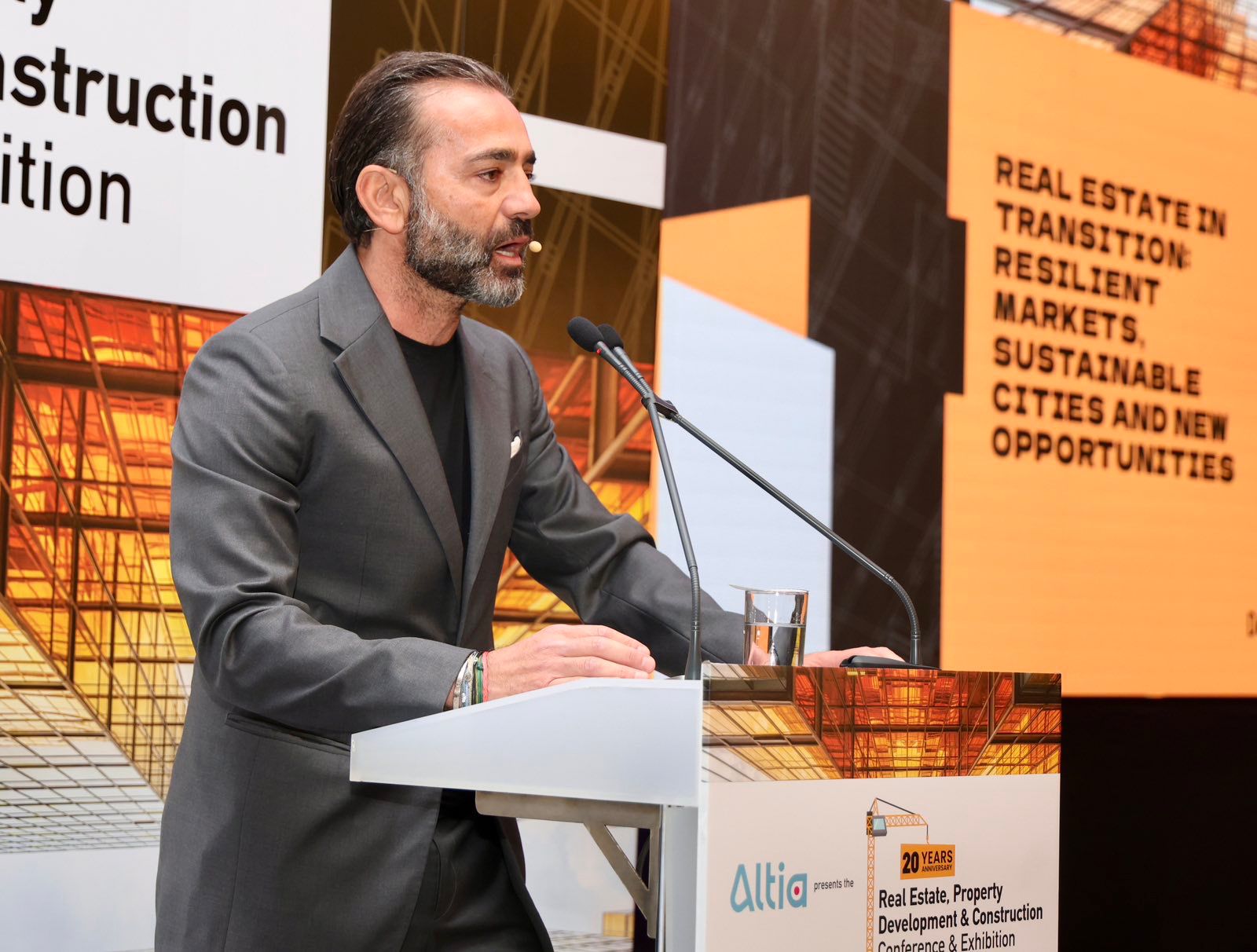
Cyprus’ real estate sector is entering a period of transformation, according to Yiannis Misirlis, chairman of the Cyprus Property Developers Association and CEO of Imperio Group.
Misirlis explained that “property development is no longer simply about constructing buildings or tracking investment flows, but increasingly about shaping the country’s economic, social and urban future”.
That shift was evident in his address at the 20th annual Real Estate, Property Development & Construction Summit, where Misirlis noted that, for decades, the real estate sector had been one of the defining engines of the Cypriot economy, although its role is now evolving.
Property development, he said, is no longer simply about constructing buildings or tracking investment flows. Instead, it is increasingly about shaping “the economic, social and urban future of the country”.
Historically, Misirlis explained, real estate in Cyprus functioned primarily as a growth driver, attracting foreign investment, generating employment and stimulating economic activity.
That role remains critical, he added, but the expectations placed on the sector today are far broader.
Property developers, in his view, are now expected to do more than build projects. They are also expected to help shape the cities in which people live, work and raise their families.
“The real estate sector is no longer simply measuring economic growth, it is increasingly shaping it,” Misirlis said.
At the same time, he pointed out that Cyprus itself is changing rapidly. Cities such as Limassol and Nicosia, he noted, are undergoing “a structural transformation” driven by international investment, the relocation of global companies and a growing population of professionals choosing Cyprus as a base.
This evolution, Misirlis continued, demands “a different approach to property development”.
The industry, he added, must move beyond individual buildings and focus on creating integrated urban environments, places that combine architectural quality, sustainability, functionality and social balance.
“In the past we designed buildings. Today we must design living environments,” Misirlis said.
He added that developments must respond to the needs of young families seeking affordable homes, international professionals relocating to the island, and the generations who will inhabit Cyprus’ cities in the decades ahead.
At the same time, Misirlis stressed that the sector must operate in “an increasingly uncertain geopolitical landscape”.
Recent tensions in the Middle East, he observed, have once again reminded markets how quickly instability can affect economic sentiment across the region. In such moments, he added, caution often spreads through investment markets.
However, Cyprus has repeatedly demonstrated “a capacity for resilience”, according to Misirlis.
“Over the past decades, the island has navigated financial crises, regional tensions and structural reforms while preserving its position as a stable European destination for business and investment,” he said.
“Cyprus remains a safe European jurisdiction with strong institutions and a credible business environment,” Misirlis added, describing that stability as one of the country’s greatest economic assets.
For the property sector, he said, maintaining this stability requires “constant attention to the foundations of the market”.
A clear regulatory framework, transparency and professional standards are essential, Misirlis argued, to ensuring that Cyprus continues to attract responsible investment.
In that respect, discussions currently underway around the formal recognition of the property developer entrepreneur as a professional framework are, in his words, particularly important.
He added that strengthening professional standards across the development industry would help reinforce confidence in the sector and ensure that projects are delivered with accountability and transparency.
At the same time, Misirlis argued that the most urgent challenge facing property markets across Europe, including Cyprus, is housing affordability.
Housing, he said, has moved from being a purely economic issue to becoming a major social policy challenge, while access to housing influences social mobility, quality of life and the ability of younger generations to plan their future.
“The housing question is not simply about prices. It is about opportunity, social cohesion and the long-term sustainability of our cities,” Misirlis said.
The affordability challenge, he added, is not unique to Cyprus. Cities across Europe, from Lisbon to Amsterdam, are grappling with similar pressures driven by urbanisation, demographic shifts, rising construction costs and planning constraints.
Still, Misirlis made clear that the solution cannot come from any single actor.
Governments, he said, can create policy frameworks and incentives, but housing supply ultimately depends on “a functioning development sector capable of delivering new homes at scale”.
“Solving the housing challenge requires partnership, between the state, the private sector and European institutions,” Misirlis said.
Alongside these structural challenges, he added, the sector is also experiencing “a profound technological transformation”.
Digitalisation, advanced data analytics, smart-building technologies and artificial intelligence are already reshaping the way developments are planned, constructed and managed, he said.
Misirlis further noted that technology allows property developers to build more efficiently, reduce costs and improve transparency throughout the development process.
“Technology does not replace the human element of development,” Misirlis said, adding that it enhances the ability “to design better cities.”
Sustainability, he went on to say, is another defining factor shaping the future of the industry.
Energy efficiency, environmental responsibility and the quality of the urban environment are no longer optional features that add prestige to a project, Misirlis said, but fundamental determinants of value.
Modern developments, he added, must be resilient, environmentally responsible and designed for long-term urban sustainability.
These shifts, according to Misirlis, are redefining the role of real estate within the broader economic trajectory of Cyprus.
As the country continues to attract investment and expand into new sectors, from technology to professional services, he said the property sector will play a central role in supporting that growth.
Modern infrastructure, sustainable urban environments and accessible housing are not simply real estate objectives, Misirlis noted. They are also national economic priorities.
“The cities we build today will shape the Cyprus we live in tomorrow,” Misirlis said.
The opportunity ahead, he added, is significant.
But progress, Misirlis concluded, will require collaboration between government, industry and institutions, as well as a shared vision for the development of Cyprus’ cities.
Real estate, he said, can remain one of the country’s most powerful economic pillars. But in the years ahead, it must also become “a strategic platform for building resilient, sustainable and inclusive cities.”





Click here to change your cookie preferences