
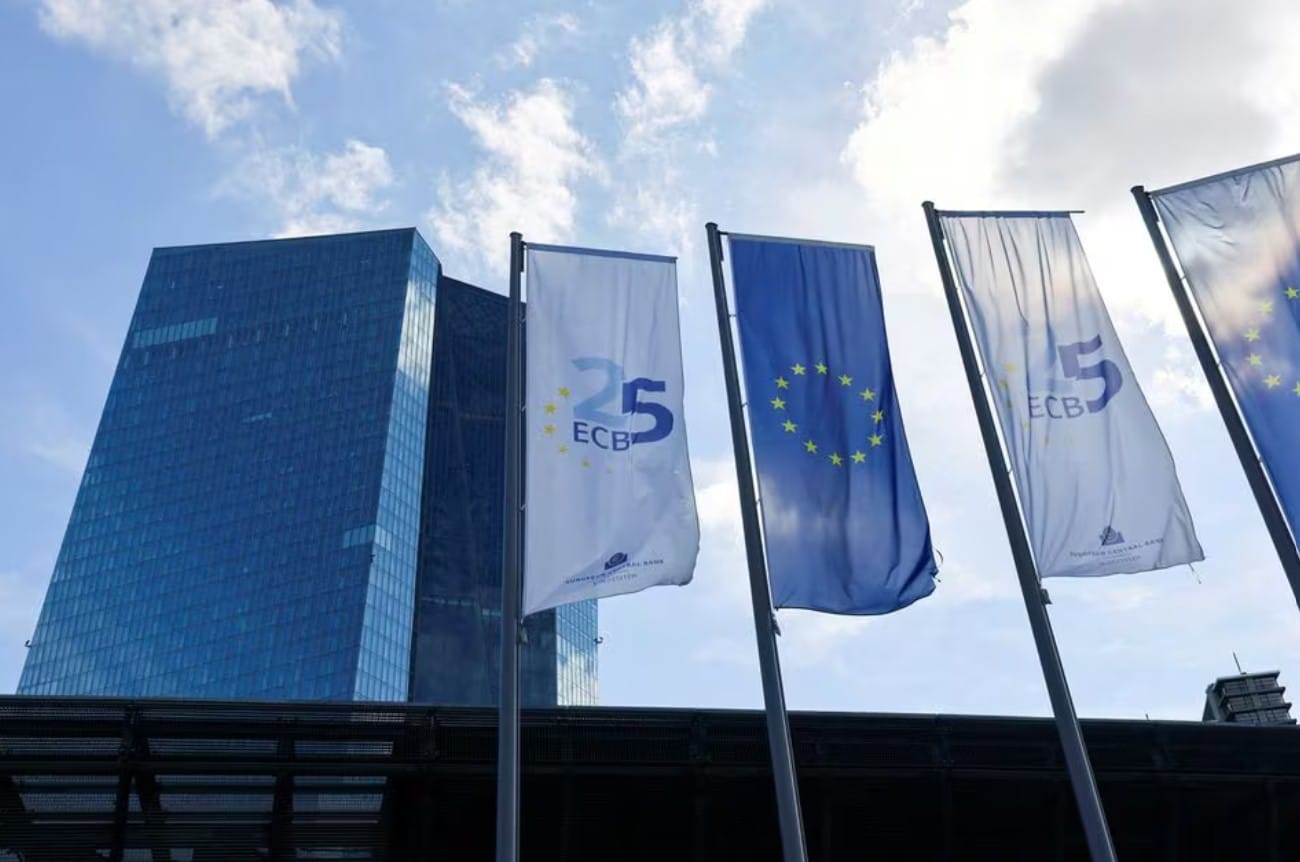
The European Central Bank (ECB) Governing Council decided on Thursday to maintain its three key interest rates, citing rising uncertainty stemming from the conflict in the Middle East.
The council remains determined to ensure that inflation stabilises at its 2 per cent target in the medium term, despite mounting geopolitical risks.
The ongoing war has significantly clouded the economic outlook, creating upside risks for inflation and downside pressures on growth.
While higher energy prices are expected to impact near-term prices, the medium-term effects will depend on the duration of the conflict and how costs permeate the wider economy.
The Governing Council noted it is well-positioned to manage current volatility, given that inflation remains close to target and expectations are well-anchored.
Policymakers will closely monitor incoming data to assess how the conflict influences inflationary pressures and associated risks.
The ECB confirmed its approach will remain data-dependent, allowing for adjustments to monetary policy based on evolving conditions.
Updated staff projections, incorporating data up to March 11, 2026, forecast headline inflation at 2.6 per cent in 2026, before easing to 2.0 per cent in 2027 and 2.1 per cent in 2028.
Projections have undergone upward revisions compared with December estimates, primarily due to higher energy costs linked to the war.
Core inflation is projected at 2.3 per cent in 2026, followed by 2.2 per cent in 2027 and 2.1 per cent in 2028, also reflecting upward adjustments.
Annual economic growth is expected to average 0.9 per cent in 2026, rising to 1.3 per cent in 2027 and 1.4 per cent in 2028.
Growth forecasts have been revised downwards to reflect the impact of the conflict on commodity markets, real incomes, and consumer confidence.
The ECB suggested that low unemployment and public spending on infrastructure should continue to support the economy, partially offsetting these negative pressures.
Scenario analysis indicates that prolonged disruptions in oil and gas supply would likely push inflation above current expectations.
The Governing Council reiterated its meeting-by-meeting approach to monetary policy decisions, based on the latest financial data.
Officials emphasised that they are not pre-committing to a specific rate path, maintaining flexibility in their response.
The ECB confirmed that key interest rates remain at 2.00 per cent for the deposit facility, 2.15 per cent for main refinancing, and 2.40 per cent for the marginal lending facility.
Portfolios for the asset purchase and pandemic emergency programmes continue to decline as reinvestments of maturing securities have ceased.
The council stands ready to adjust all available instruments to safeguard the transition of its policy across the euro area.
Finally, the Transmission Protection Instrument remains available to counter market dynamics that could threaten the bloc’s financial stability.





Click here to change your cookie preferences