

The UN agency for international cooperation in culture, education and science on Friday launched a campaign at Larnaca airport to combat the illegal trafficking of cultural goods.
“The fight against illicit trafficking is among Unesco’s priorities and ours as well. Cyprus raised the issue of illicit trafficking of cultural goods as a priority for the informal Council to be held in June,” Deputy Culture Minister Vasiliki Kassianidou said.
She referred to the successful cooperation of a national committee comprising the antiquities department, customs authorities, the law office of the Republic, the Church and the police, stressing its crucial role in the repatriation of cultural objects.
“Our aim is to inform people who travel that we do not take antiquities, and the posters at the airport depict a Cypriot cross-shaped bench and a Cypriot vase,” she said.
Kassianidou said the visibility of the posters at Larnaca airport was particularly important, adding that they were created through a collaboration between Unesco and the European Commission.
“It is very important for us that Unesco chose Cyprus to start this campaign. The campaign will also be in other European countries, but it starts from Cyprus,” she added.
Hermes Airports CEO Eleni Kalogirou said the campaign would run for around two months and aims to raise awareness among travellers of Cyprus’ “very rich heritage” that must be preserved.
“We understand the very important role we have to play as the gateway to and from the Republic of Cyprus, and we want to support the effort being made at the initiative of Unesco, in collaboration with the deputy ministry of culture, to protect our cultural heritage,” she said.
She added that the campaign would help travellers understand the importance of protecting objects that could otherwise be exploited or mishandled.
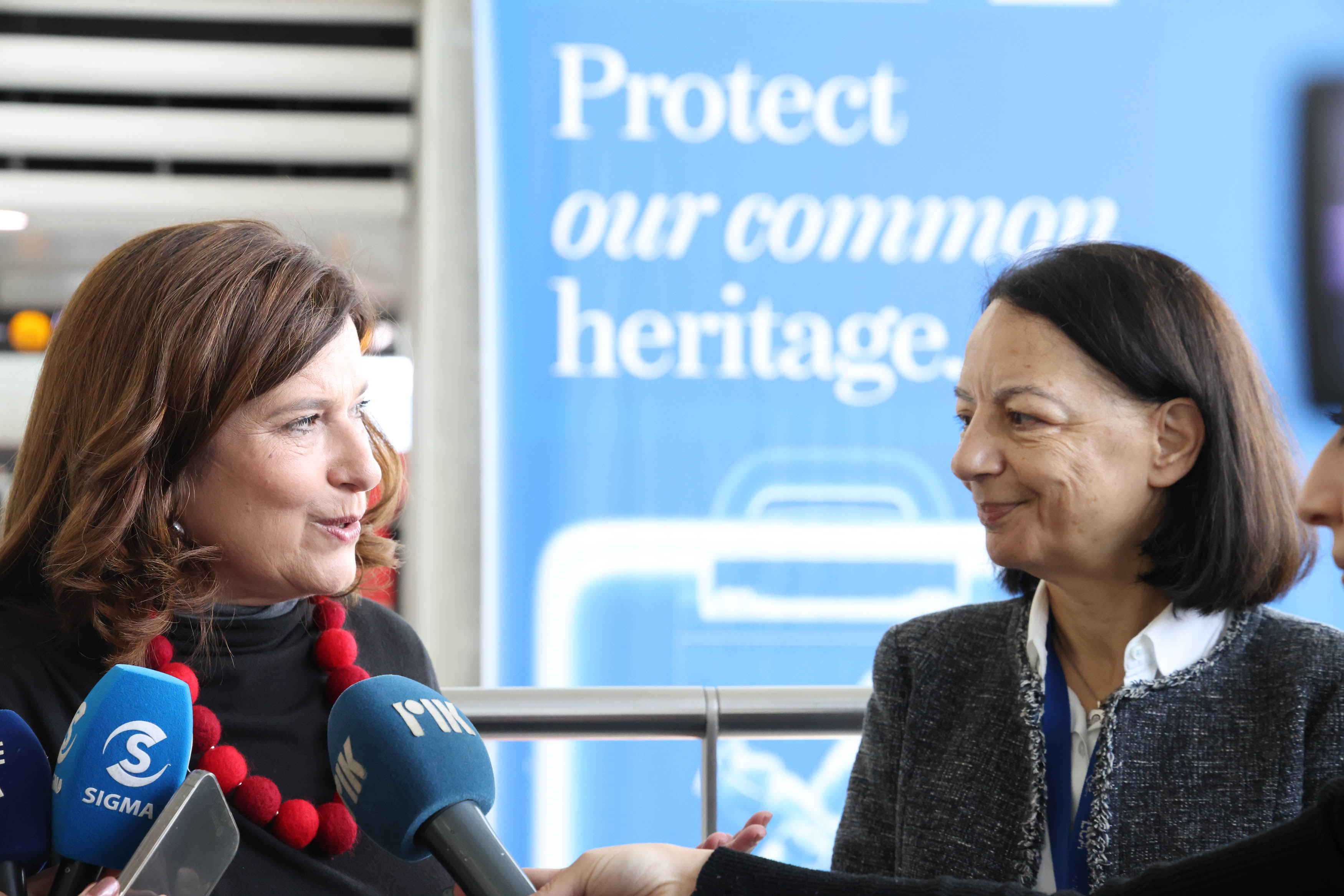
President of the Cyprus national Unesco committee Marina Solomonidou-Ieronymidou emphasised the link between illegal trade in cultural goods and organised crime.
“It is very serious and is one of the most significant threats to the protection of cultural heritage, because it essentially deprives people of fundamental elements of their historical memory and identity,” she said.
Solomonidou-Ieronymidou praised Unesco’s role in combatting the phenomenon, as well as its efforts to coordinate international policies and initiatives to address it. She underlined that the Cyprus national Unesco commission actively participates in and implements such actions to bring relevant bodies together.
Solomonidou-Ieronymidou praised Unesco’s role in combatting this phenomenon, as well as its efforts to coordinate international policies and initiatives to address it, underlining that the local Cyprus national Unesco commission actively participates in and implements these actions to bring the relevant bodies together.
“The campaign is precisely this synergy – cooperation between all involved parties, public and private bodies and international organisations – aimed at raising awareness and preventing this enormous problem,” she said.
The campaign was launched at the initiative of Unesco director-general Khaled El-Enany and is aimed at informing travellers about the illegal trafficking of cultural goods and the need to combat it.


Click here to change your cookie preferences