
Despite its flaws, we rip it up at our peril
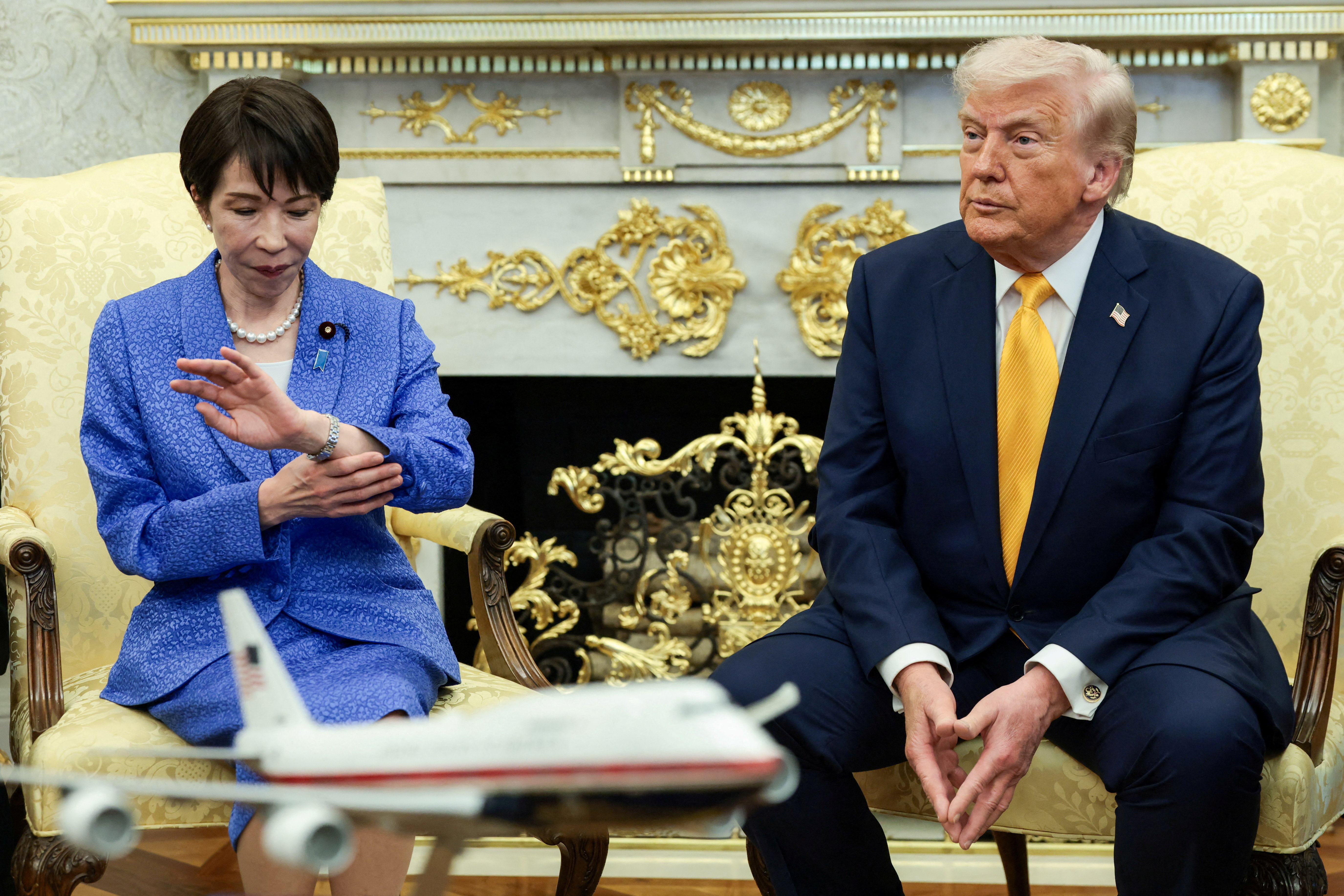
History repeated itself as farce at the White House last Thursday during the visit of Japanese Prime Minister Sanae Takaichi for talks with President Trump at the Oval Office.
As usual Trump took questions from journalists before talks in private, when one Japanese reporter asked why Trump had not informed allies like Japan that he was going to attack Iran.
His riposte was vintage Trump: “we didn’t tell anybody because we wanted surprise … who knows better about surprise than Japan? Why didn’t you tell me about Pearl harbour? You believe in surprise much more so than us.”
It was a classic “don’t mention the war” moment from the 1970s sitcom Fawlty Towers in the episode entitled ‘The Germans’ in which hotelier, Basil Fawlty, tells his staff to be polite to their German guests and not mention the war but couldn’t himself stop making references to World War II while serving them.
But there is a serious side to Trump’s gaffe because Japan’s attack on Pearl Harbour on December 7, 1941 that President Franklin Roosevelt characterised as the day “which will live in infamy” had another similarity with the attack on Iran on February 28, apart from surprise. The US, like Japan in 1941, was engaged in negotiations with Iran in bad faith ostensibly to resolve their differences diplomatically but in fact to achieve surprise for the attack on Tehran that killed its Supreme Leader Ayatollah Ali Khamenei, his top advisers and members of his family on February 28.
To many Iranians that day will also live in infamy as the attack on Pearl harbour on December 7, 1941 does in America. As Roosevelt said of the attack on Pearl harbour it was “unprovoked and dastardly” and so was the US-Israel attack on Iran in 2026.
The attack on Pearl harbour and many others like it perpetrated by Japan, Germany and Italy was why the use of force was prohibited by the UN Charter in 1945 unless authorised by the UN Security Council (UNSC).
It was also the kind of armed attack for which the UN Charter preserved the use of force in self-defence, which is what this column was intended to be exclusively about this week before the Trump gaffe.
Self-defence is not an excuse for an otherwise unlawful act but a justification for a lawful act, which is why it is called a natural right that states have in common with individuals. Indeed, state self-defence was imported into customary international law from the criminal law of personal self-defence.
It was inserted at the end of the powers of the UNSC to authorise the use of force, so as to make it clear that while member states gave up the use force in favour of the collective security of the UNSC, they did not give up their natural right to defend themselves under customary international law in the event of an armed attack.
The problem with the UNSC collective security system since 1945 has been that all five permanent members of the UNSC – the United Kingdom, the United States, Russia, France and China – rarely agree on collective action to keep the peace.
The result of the UNSC’s inability to act has been that states resort to the use of force and claim self-defence as justification. As it is the only lawful way to use force it has been abused by states as cover for illegal attacks on other states – for example the attack on Iraq in 2003 that allegedly had weapons of mass destruction (WMD) when it did not.
But indirectly self-defence has been conducive to maintaining relative peace and security. This was because the UN Charter did not just preserve the right to individual self-defence but of collective self-defence — the underlying principle of most defence alliances.
In 1986 in the case of Nicaragua v United States the International Court of Justice (ICJ) identified the preconditions of collective self-defence to ensure that assisting states used force genuinely in defence of another and not as a cover to engage in unlawful military aggression.
The ICJ held that the victim state must not only have suffered an armed attack, but declared that it has been attacked and requested military assistance assistance and that the use of force is necessary and proportionate – the UK has just invoked collective self-defence to help defend the straits of Hormuz.
Collective self-defence has been the lynchpin of defence alliances. The first treaty that contained a collective assistance clause after World War II was the Brussels Treaty of 1948 between UK, France and the Benelux. It was a European military defence alliance that was modified in 1954 by the Paris Agreements that enabled Germany and Italy to join when it became the Western European Union (WEU).
The WEU was the precursor to Nato signed in Washington on April 4, 1949 that made the US dominant in the alliance and expanded membership to most of Western Europe so as to contain communism that worried America enormously at the time.
What is interesting about the WEU is that it was also the precursor to the incipient defence alliance emerging under an updated Treaty of the EU (TEU).
The WEU was phased out in 2011 when its functions were transferred to the EU by article 42 of the TEU that amongst other things obliges EU member states to help a fellow member state who is a victim of armed aggression on its territory. For the moment the obligations to Nato of EU member states that are also members of Nato take precedence over EU obligations inconsistent with those to Nato.
But if President Trump manages to break up Nato there is no reason why the Europeans, particularly the Germans, whose Wehrmacht back in the day was a formidable force, could not defend themselves without the US.




Click here to change your cookie preferences