
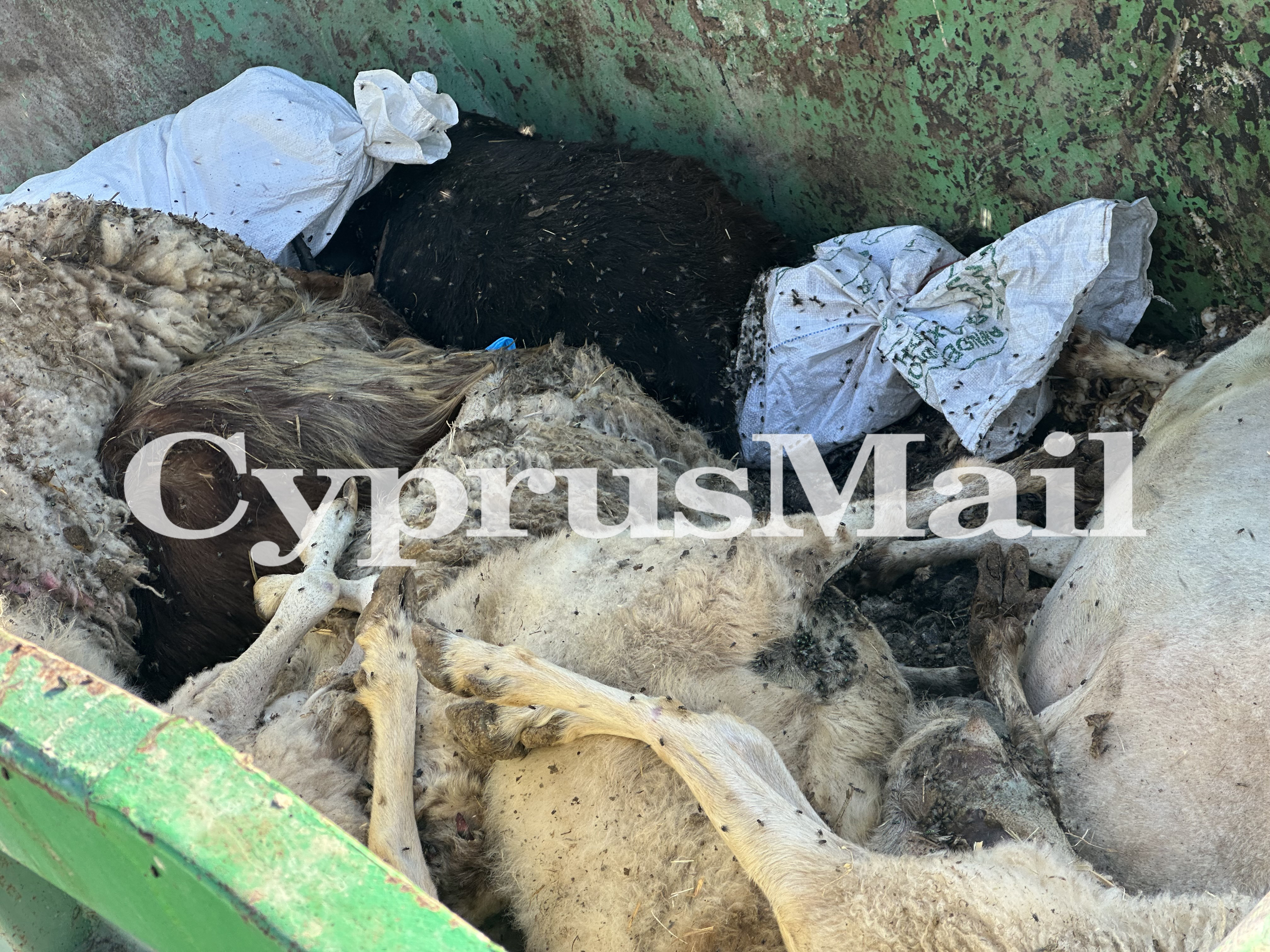
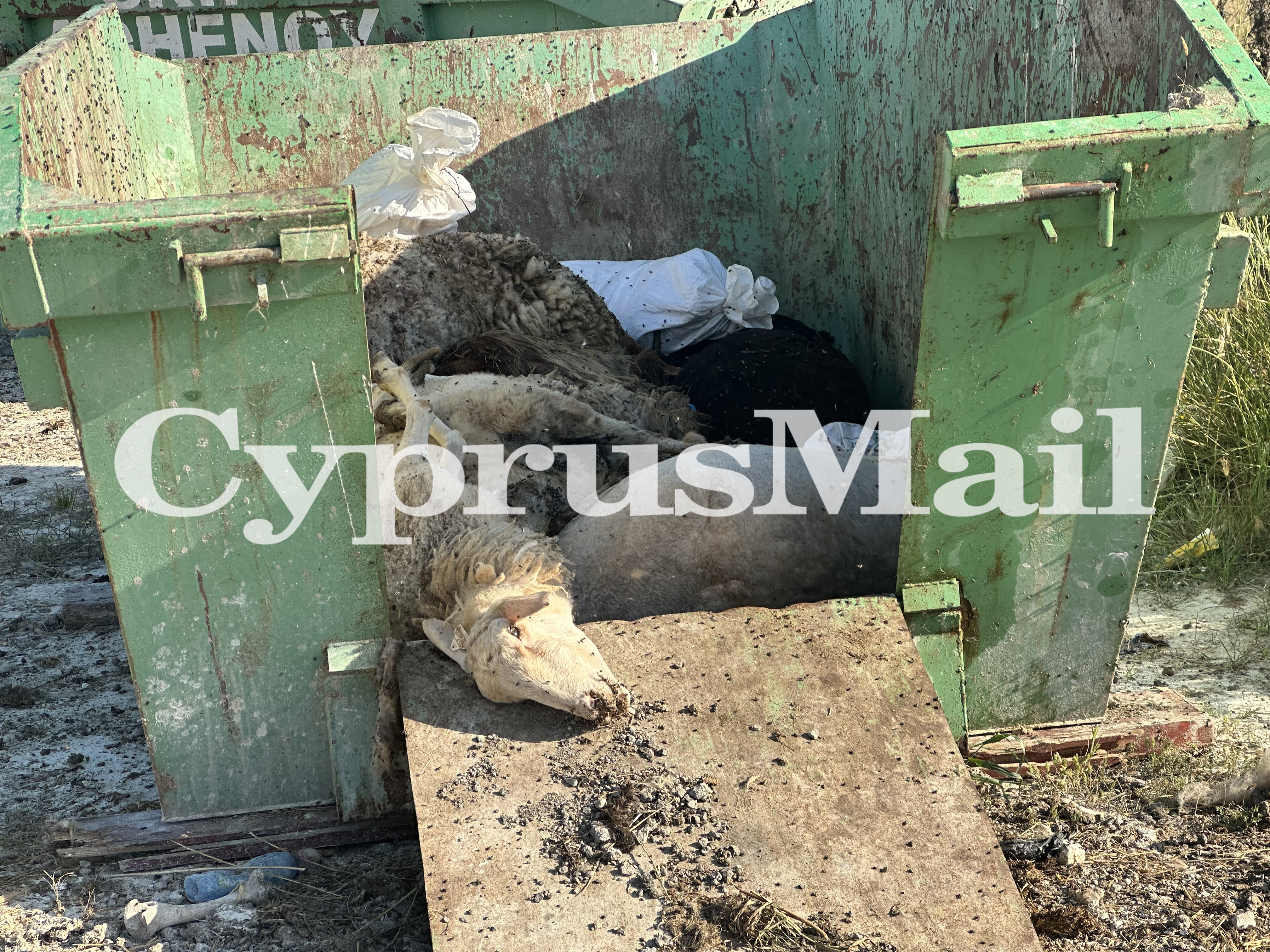
Multiple dead sheep were seen discarded in an open skip, reportedly following recent culling measures linked to foot-and-mouth disease (FMD) in the industrial zone of Athienou raising concerns.
The carcasses were left exposed in a waste container for an extended period, raising fears about public health, environmental contamination, and proper compliance with animal disposal regulations as there are no clear biosecurity measures in place.
The head of the cattle farmers’ association in Athienou, Giorgos Parpas told the Cyprus Mail that culled animals are currently collected from designated spraying points placed into skips, which are covered and left at specific collection sites to be picked up by an incinerator.
However, concerns have been raised over delays in the system. It is understood that in some cases carcasses remain at these points for days, while there have also been reports of animals found outside the skips.
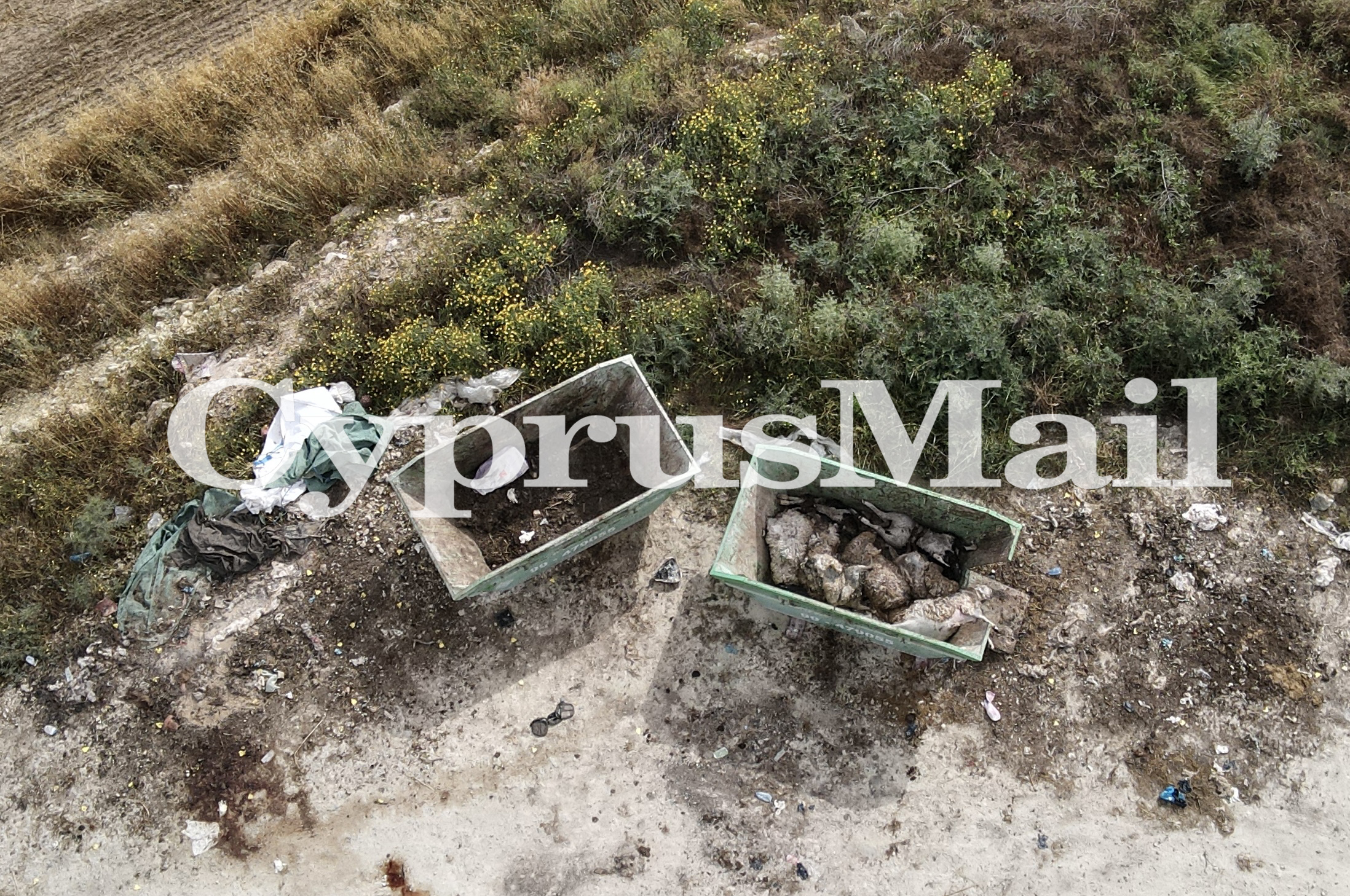
Parpas, acknowledged the issue, describing it as an existing problem and said that “under normal procedures, animals should remain in the skip for no more than one to two hours, between 7 and 9 in the morning, before being collected for incineration”. However, he also expressed concern that in some instances carcasses may be left from the previous day.
Meanwhile, the head of sheep farmers, Sotiris Kadis, said the situation has improved compared to earlier stages of the outbreak, when carcasses were left outside farms. He noted that a designated space for collection was found “without any external assistance from the authorities” but stressed that further improvements are still needed.
6-7 units have been infected in Athienou, totalling 5-6 thousand culled livestock.
The ministry has stated they are looking into the matter.
The question is whether proper protocols were followed, as EU and national guidelines typically require that culled animals be disposed of through controlled rendering or burial under strict sanitary conditions to prevent disease spread.
The veterinary services spokesperson Sotiria Georgiadou clarified processes surrounding the handling of animal carcasses following recent culling measures, outlining what is a tightly regulated process designed to protect public health and the environment. Speaking to the Cyprus Mail in March, Georgiadou explained that the selection of burial sites follows a multi-agency assessment involving the land registry, agricultural authorities, the department of water development, the environment department, veterinary services and the agriculture department.
It is worth noting that according to scientific sources free-living birds, especially starlings, sea gulls and house-sparrows can be contaminated with FMD viruses and the virus can then be spread over long distances during migration periods in spring and autumn. Thus migrating birds may assume an active role in long distance dissemination of FMD viruses.
Cyprus is currently dealing with a significant outbreak of foot-and-mouth disease, first detected in February 2026 in the Larnaca district. The outbreak has since spread across parts of Larnaca and Nicosia, with clusters of cases reported in and around Athienou.
The number of infected livestock units has risen to around 110, the vast majority involving sheep and goats, while thousands of animals have been culled as part of containment efforts. More than 30,000 animals have already been culled, with veterinary association chairman Demetris Epaminondas having said previously that there is “no less painful alternative” to culling when attempting to stem the spread of the disease.
Authorities stress that FMD does not pose a risk to human health, though its economic and agricultural consequences are severe with Employers and Industrialists Federation (OEV) President Giorgos Pantelides warning that food security and livestock resilience must now become national priorities.
Compensation schemes are underway, but delays and uncertainty including the need for EU approval are adding to farmers’ concerns.
At the same time, protests and growing frustration among producers highlight the strain on rural communities.




Click here to change your cookie preferences