
The slow evolution of Ayia Napa’s underwater sculpture museum
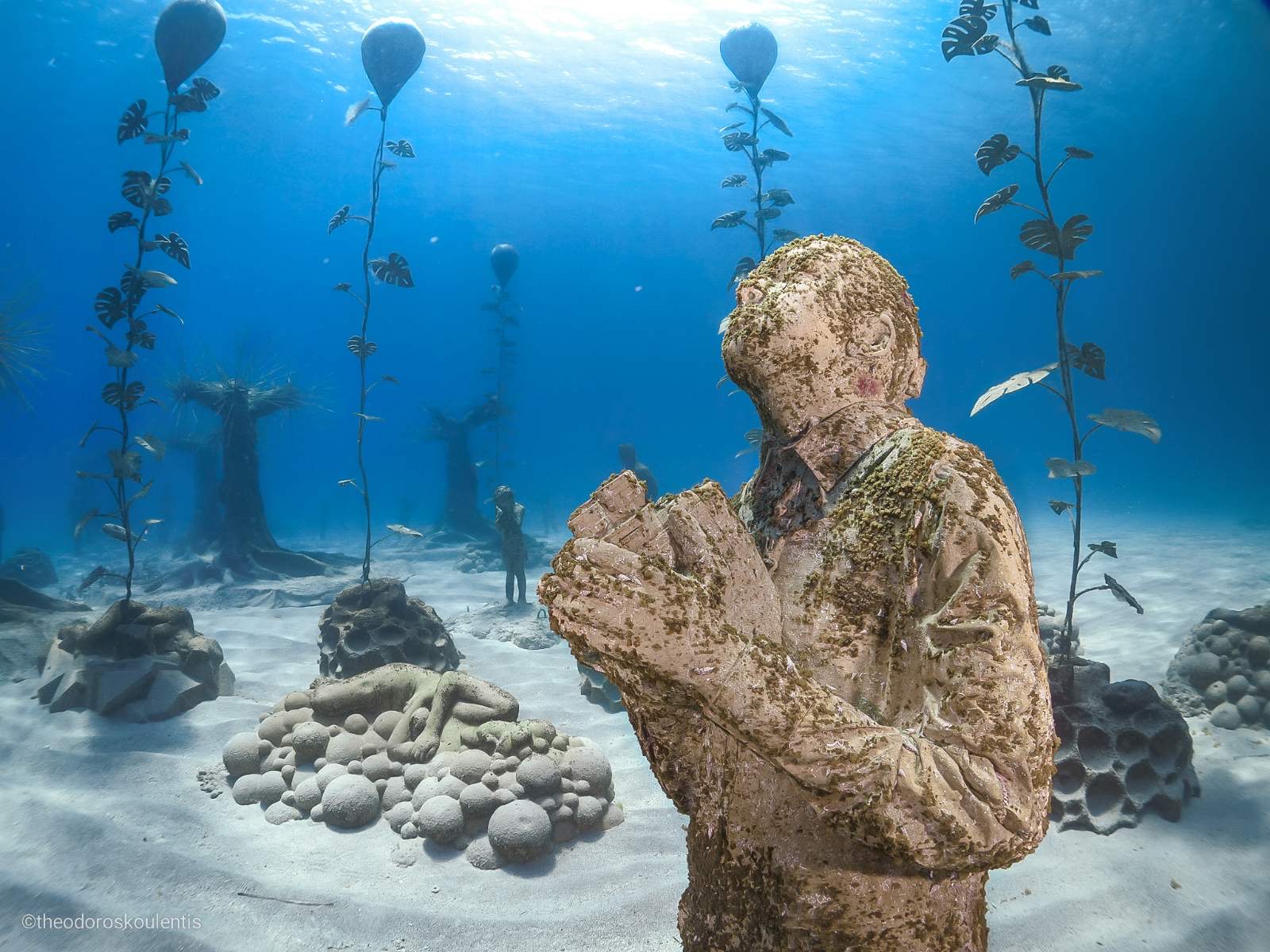
A few years have passed since the sculptures at the MUSAN Underwater Museum were lowered onto the seabed near Ayia Napa, and now the first subtle signs of transformation are visible.
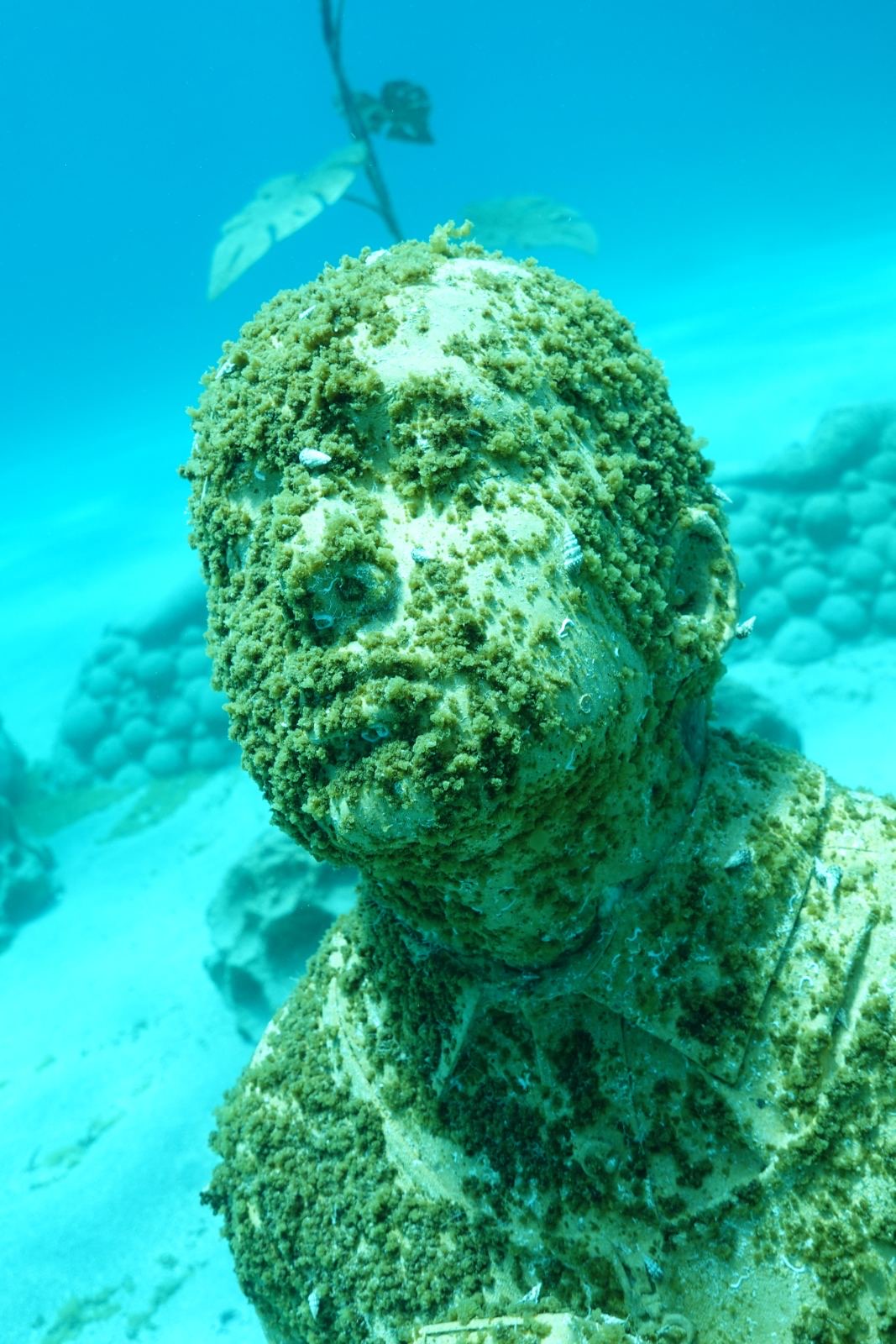
Recent photos reveal patches of marine life starting to blanket the statutes, algae and other organisms have begun to settle on parts of the figures, a gradual transformation that was always anticipated when the installation was initially submerged.
British sculptor Jason deCaires Taylor created the underwater museum, which opened in 2021. He designed it to be both an installation and a structure that would interact with local marine environment as time passed.
For Taylor this transformation journey is fundamental to the work itself. “Watching the work transform is central to its meaning,” he said. “Evolution is what animates these forms, shifting them from static grey monuments into living and breathing structures.”
As time passes, structures placed underwater start to attract marine organisms that settle across their surfaces. Taylor says that the first signs of this process is usually a slight change in color as algae and calcareous organisms start to settle in.
“Crustaceans move in, occupying crevices and sheltered edges,” he explains. “Juvenile fish are typically the first permanent residents, drawn to the structures as refuge from predation.”
At MUSAN there are signs that marine life has started to develop around the underwater sculptures. According to the Department of Fisheries and Marine Research, various types of marine algae are now growing on parts of the installation. Oysters have also settled in large numbers, especially on the tops of some sculptures which suggest marine life is beginning to establish itself around the sculptures.
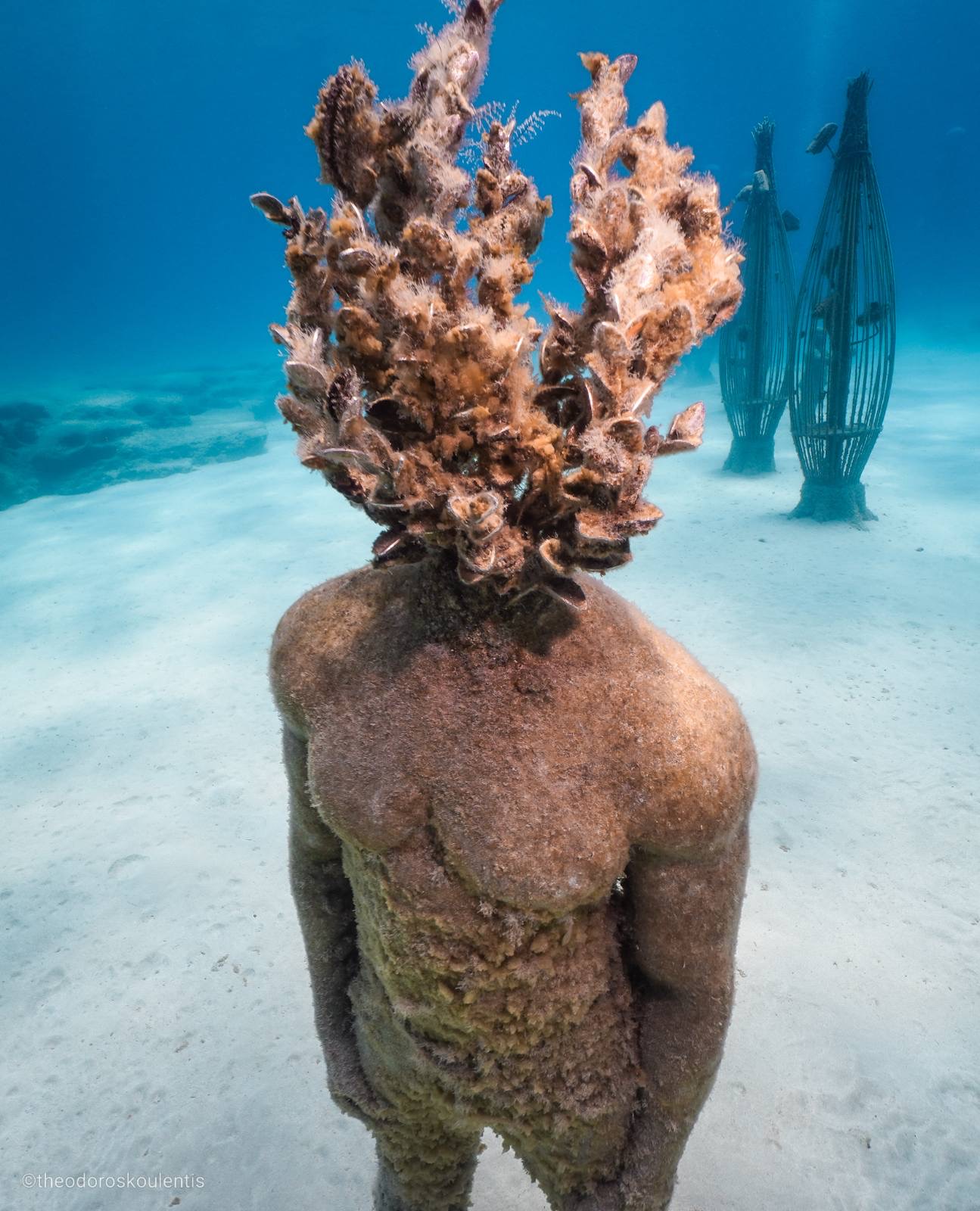
Fish species such as saddled seabream, parrotfish, squid and white seabream have also been observed around the site. However, Taylor said that the changes as MUSAN seem to be developing at a slower pace than some of his other underwater installations. “Yet in comparison with other marine sites I have worked in, the changes at MUSAN have been notably subtle and slow,” he said. “The relative absence of species, particularly fish, is striking. It serves as a reflection of the Mediterranean’s heavily pressured waters, where decades of overfishing have taken place.”
Environmental conditions can affect how the sculptures change over time. Taylor pointed out that the waters near Ayia Napa are much clearer than many other places where he has installed underwater works. “Of all the sites I have worked at, including those in the Caribbean, the visibility at the MUSAN is among the clearest I have ever witnessed,” he said.
The water clarity enables divers and snorkelers to observe the entire installation from a distance with the sculptures remaining distinctly visible against the sandy seabed. Nonetheless, Taylor said that when the water is more turbid, it can alter the ecological and visual experience.
“A slight haze or opacity in the seawater can introduce intrigue and mystery,” he explained. “Forms reveal themselves gradually, and the experience becomes more atmospheric.”
Because they offer cover in otherwise open areas, introduced structures often quickly draw marine life to many sandy environments. Shipwrecks and artificial reefs often serve as gathering places for fish and other organisms looking for safety. However, according to Taylor, this pattern has not emerged at MUSAN as strongly as he has seen elsewhere. “That pattern, however, has not unfolded here with the same intensity,” he said.
The underwater installation was always intended to change slowly over time. A lot of the sculptures at MUSAN look like trees coming out of the ocean floor. This was deliberate so that marine life would be attracted to them at different levels of the water column.
Tylor said the purpose of these structures was to provide shelter in an otherwise open sandy environment. “I had certainly expected a greater abundance of marine life, especially on the tree forms,” he said. “Submerged trees offer an intricate lattice of shelter, a vertical refuge in an otherwise open seascape”.
So far, the amount of marine life Taylor has seen at some of his other underwater installations has not shown up at MUSAN yet. “In the Atlantic, at a similar latitude, I installed a comparable tree structure,” he said. “Within two years it was inundated with thousands of fish, the branches almost appearing to move with marine life… that scale of colonisation has not occurred at MUSAN… the contrast is difficult to ignore and points, once again, to the wider ecological pressures facing the Mediterranean.”
Despite this, marine life has slowly started to appear around the sculptures. Michalis Konias, manager of the MUSAN Visitor Information Centre, observes that organisms have steadily begun to settle on the sculptures since the museum opened. “Since the sculptures are made from pH-neutral, environmentally friendly materials, we have seen significant growth of marine organisms on their surfaces,” he said. “These changes are now very prominent.”
Konias added that fish activity has also increased around the site over the past few years.
The area around the museum is now a marine protected zone, where fishing is prohibited. Some of the species that have been spotted near the museum are green sea turtles, loggerhead sea turtles, Mediterranean monk seals, diplodus sargus, sparisoma cretense, loligo vulgaris, octopus vulgaris, and pterois miles.
For Taylor, this gradual and fluid transformation is part of the artwork. “Whenever I submerge a sculpture, it feels like an act of letting go,” he said. “Up until that moment, the work is shaped by my hands, my decisions, my control. Once it disappears beneath the surface, its future is no longer mine to direct. It’s the moment when the sculpture ceases to be an object and begins its life as a living process.”


Click here to change your cookie preferences