
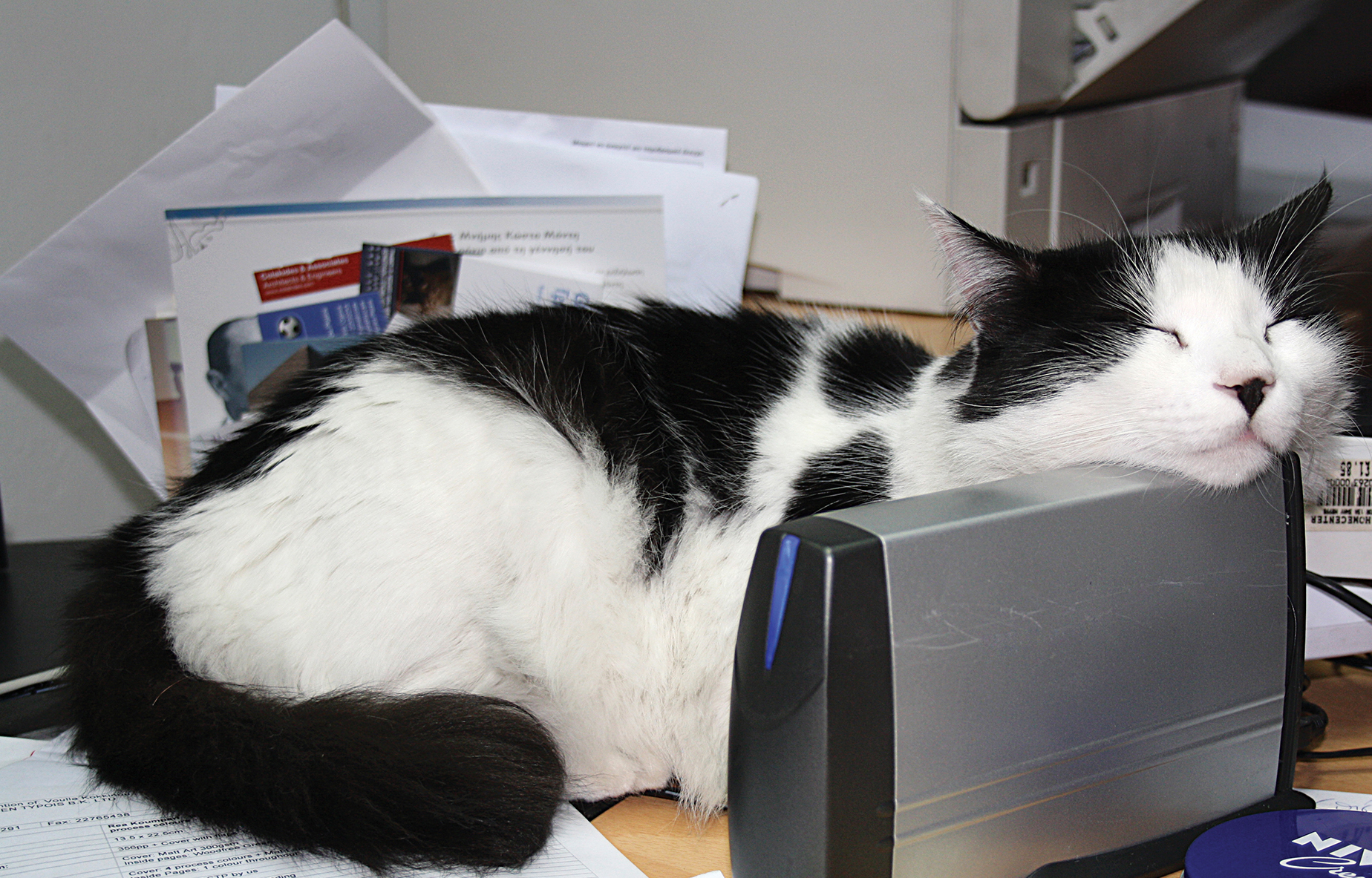
A new book on cats seeks to preserve some beautiful moments
“I was touched by her need for love, companionship and connection,” writes Voula Kokinou in her book dedicated to the island’s favourite mascots: the cats of Cyprus.
Antonio, a female kitten, settled into the pot of a large gardenia back in 2010. But she did not only claim the pot just outside Voula’s flat as her first home; she also claimed a place in Voula’s heart.
With Antonio (named after the author’s friend, Antonis, who loves cats) and her kitten, Theo (named after Voula’s father, Theofilos), in mind, the book Cats in Cyprus: Encounters took form and was published just this month.
“I wanted to preserve the beautiful moments they gave me forever through this book. I lost two members of my family,” Voula, a seasoned Cypriot book publisher and the founder of En Tipois Publications, told the Cyprus Mail.
The book had been under preparation for 14 years, while Voula collected the material. Centred on the cats of Cyprus – from strays and semi-feral neighbourhood cohabitants to fully domesticated cats watching the world go by from the safety of their favourite windowsill – she gathered 152 pages’ worth of material.
Cats are extremely intelligent, Voula believes. They feel deep emotions, appreciate what they are offered, and reciprocate their love many times over. On the island of cats, one finds so many different sizes, coat lengths and colour variants, differing not only in appearance but in their psychology as well. “This is what makes them special,” Voula said.
In 1997, excavations revealed that Cypriots had domesticated cats even before the ancient Egyptians. At the site of Shillourokambos in the community of Parekklisia in the Limassol district, a cat’s bones were found buried next to its owner, dating back 9,500 years, Voula recalls. For comparison, the second-oldest evidence of cat domestication today comes from ancient Egypt and is just 4,000 to 5,000 years old. This puts into perspective the bond that Cypriots have with their feline cohabitants, a connection consistently proven to be far more intricate through our shared history.
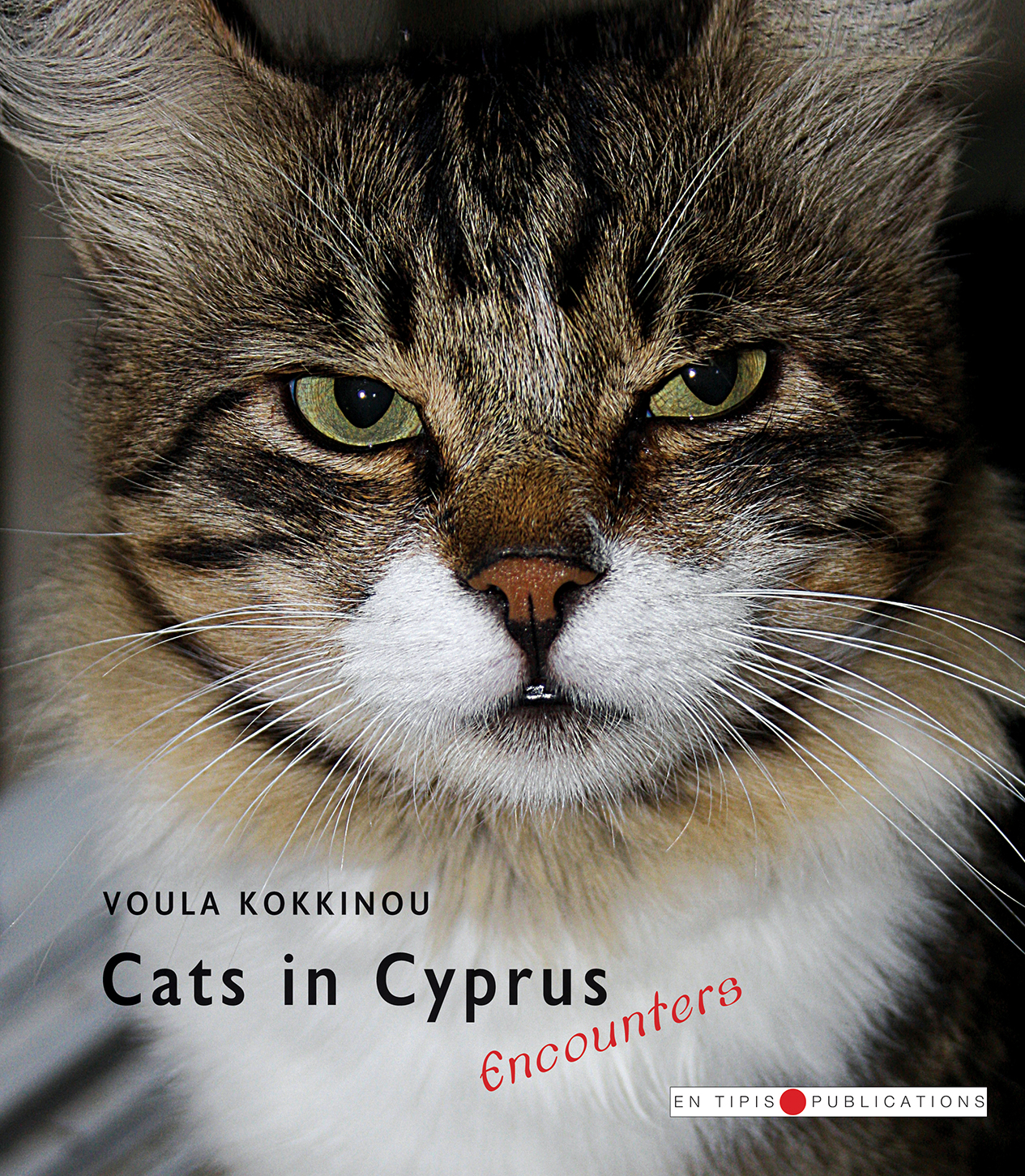
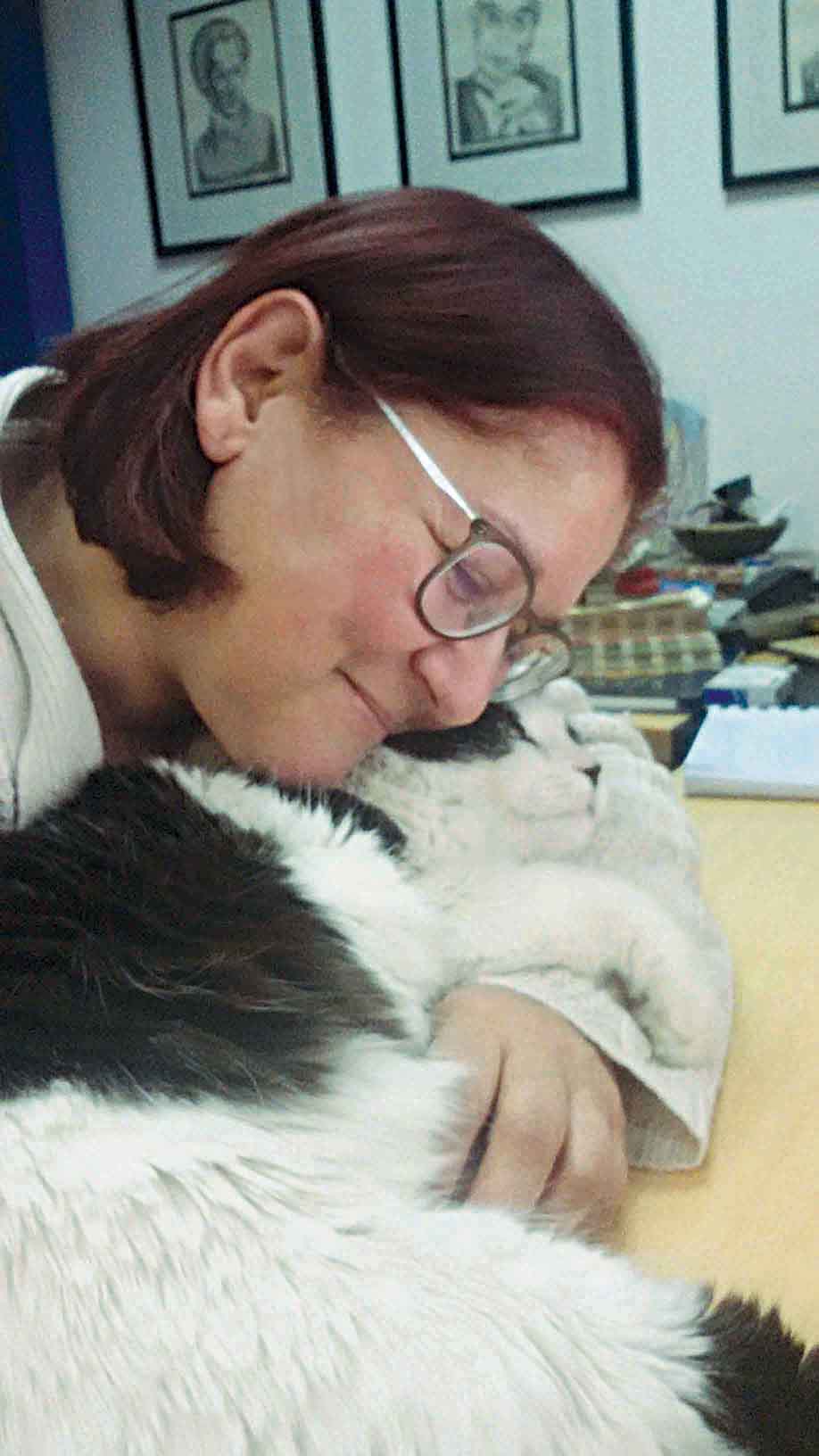
“Cats in Cyprus: Encounters” opens with Voula’s favourite story. Her beloved Antonio, the cat which in more ways than one inspired the project, has the opening chapter dedicated to her. The silent but impactful understanding between them was something Voula could not ignore when the two met before the gardenia pot. “The way she claimed me as a three-month-old kitten and the love she showed me was moving, despite her being an extremely independent and proud cat,” Voula remembers. And then later, Antonio’s son, Theo, never left Voula’s side either. Flipping through the pages, we see the black-and-white cat getting in the way of his owner’s work, other times taking up most of the space on a sofa, and certainly never allowing Voula a moment’s peace. “He always kept me company,” she said.
Even though the book hit bookshops not long ago, it has already been extremely well received for the way it highlights the sensitivity of the author and the way it battles the often negative perception of Cyprus’ cats.
“I would like to believe that through this book, I contribute a great deal to people seeing these wonderful, stubborn little creatures more positively,” she said. She happily admitted there has been great progress in Cypriots becoming more accepting toward them in recent years, but complete change may only come with the state’s full coordination, as “there is much more to be done.”
Having grown up in a little village always surrounded by animals was a strong indication that the author would always be an animal lover. The day she and Antonio met, she was accompanied by her beloved Loulou the dog, who was initially sceptical of Antonio’s intentions but quickly became inseparable from her. “Understanding life itself further fuelled my love and appreciation toward animals,” she said. Voula truly believes that some of these cats have more emotional intelligence than some humans. “They carry indescribable intelligence and assertiveness, have developed curiosity, and offer abundant wisdom.”
Cypriots are so used to seeing cats co-existing with them that at times they go completely unnoticed, perfectly blending in with the buildings and the tavernas where they patiently await diners’ leftovers. They are an integral part of Cypriot identity, and through this project, each cat’s story shines in a way that is real. Although some could certainly use more humanity and love.
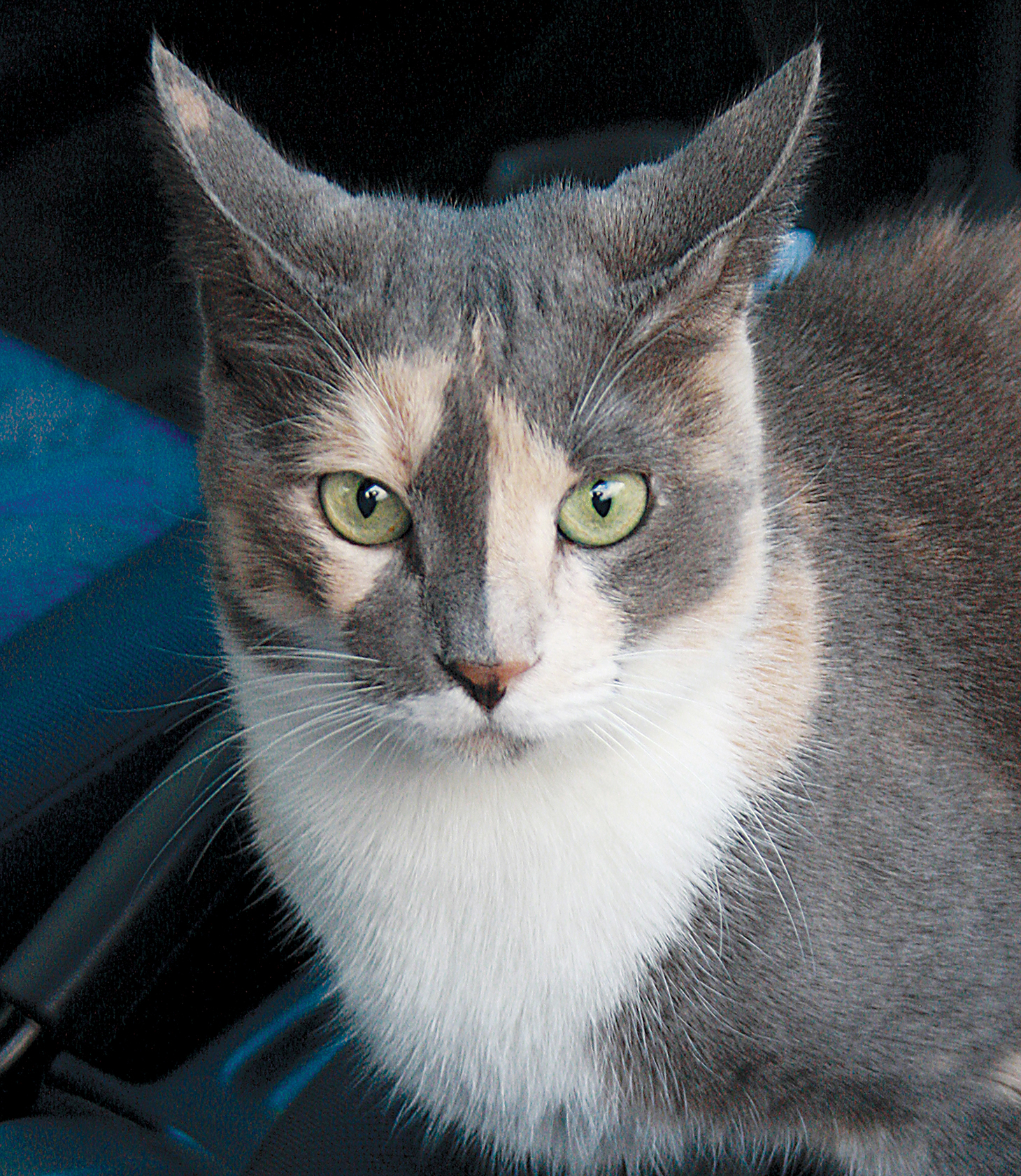
“I feel great joy and satisfaction that this publishing effort of mine was completed,” Voula said. For now, she remains at home, caring for her two later cats, Zafiria and Gregoria. “They love me and show their gratitude in every way.”
Find the book in-shop at En Tipois bookshops in Nicosia. In Limassol at K.P Kyriakou bookshop, in Larnaca at Academic Bookshop and in Fullpage Bookshop in Paphos


Click here to change your cookie preferences