
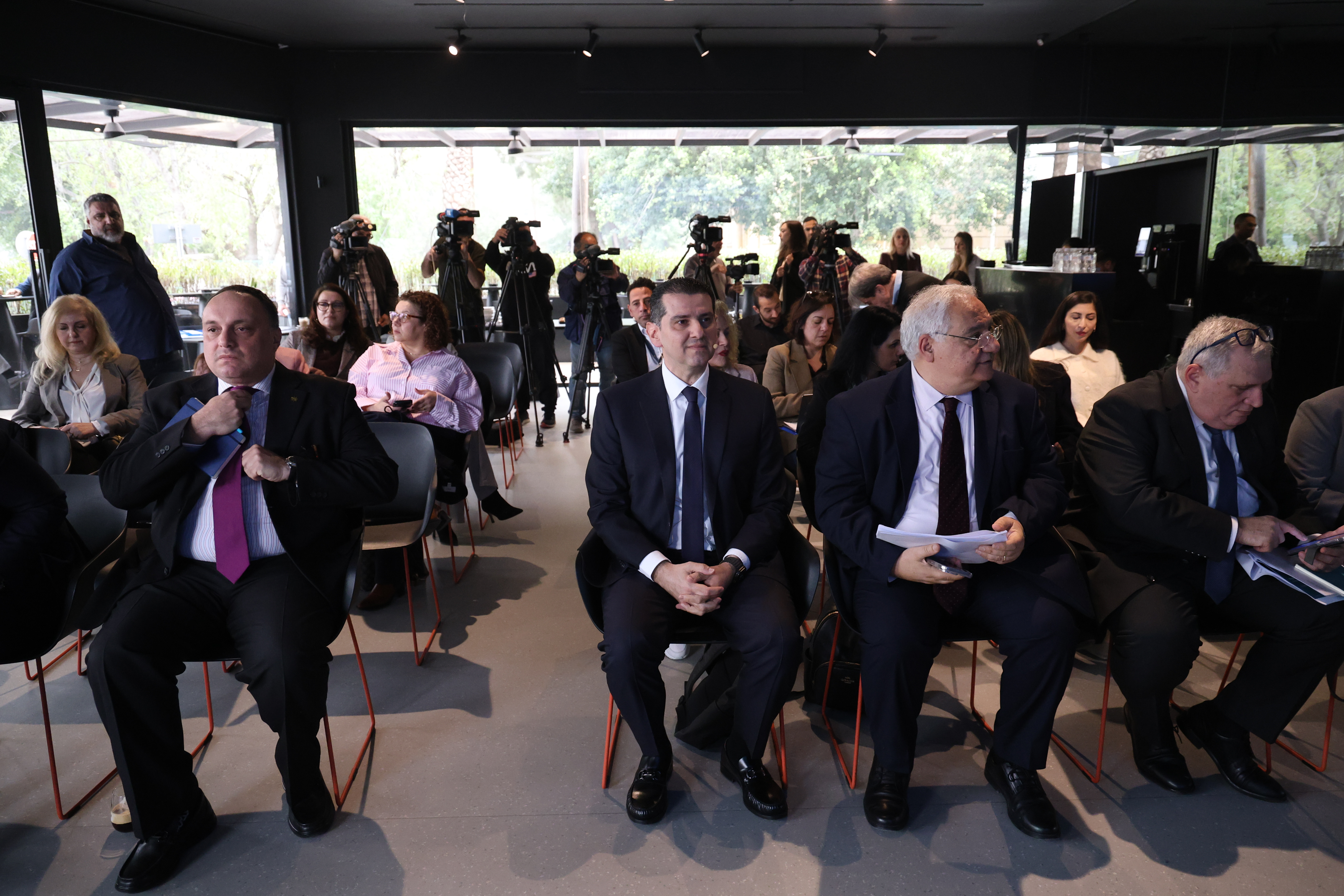
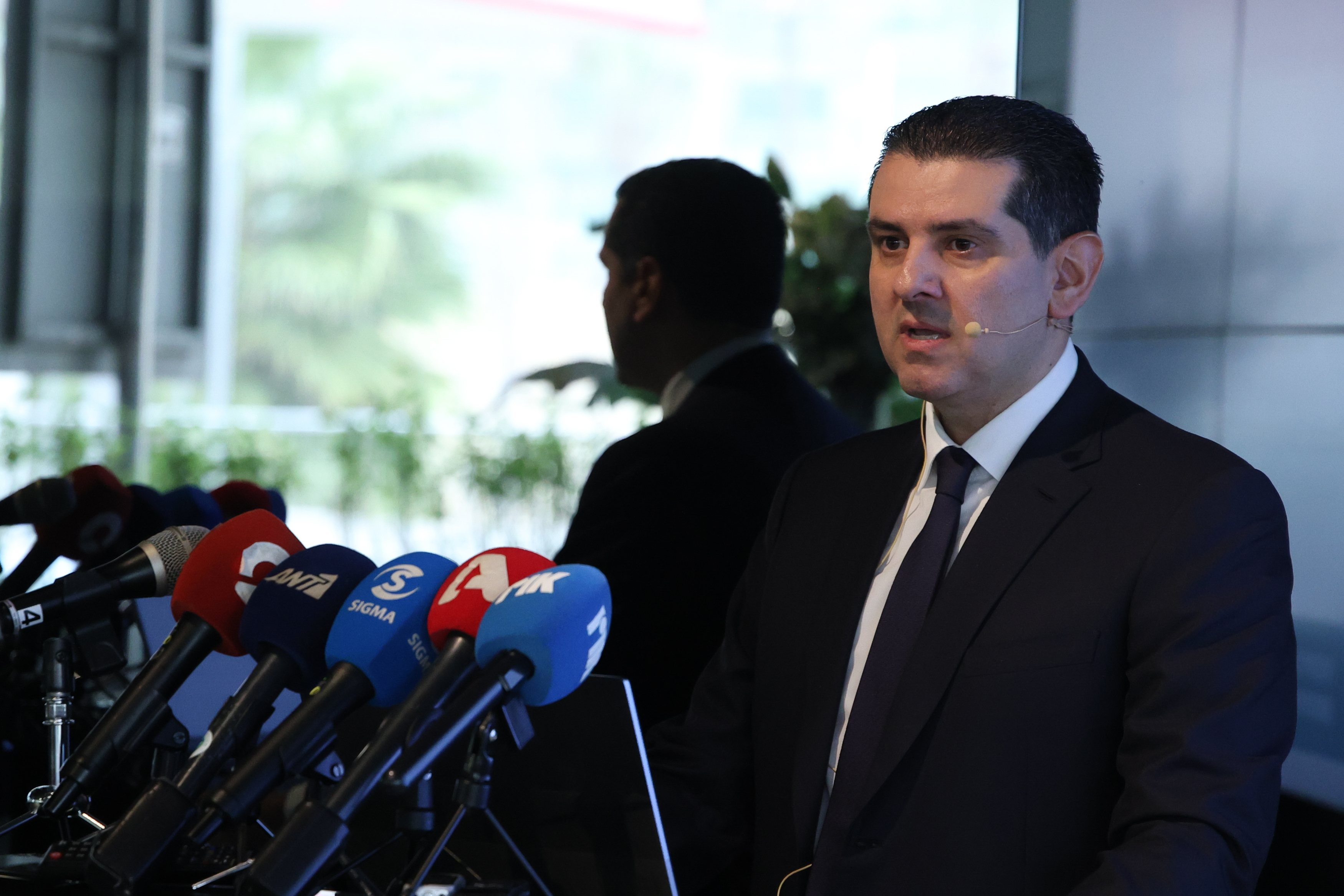
Energy Minister Michalis Damianos outlined his ministry’s 2025 achievements and priorities for 2026, while acknowledging ongoing uncertainty surrounding the delayed Vasiliko natural gas project.
Speaking at a press conference on Friday, Damianos said 2026 would focus on accelerating reforms, with particular emphasis on bringing natural gas to Cyprus to reduce electricity costs.
“The main way to bring down electricity prices is the arrival of natural gas,” he said, stressing that completing the Vasiliko project remains a key priority.
Addressing questions by the Cyprus Mail over delays and accountability, Damianos said an investigation by the European Public Prosecutor’s Office is ongoing.
“Responsibility will be assigned if and when this investigation progresses,” he said, adding that contractual arrangements had been in place and later terminated, while disputes had already gone to arbitration in London since 2023.
He described the situation as complex, involving both technical and legal challenges, as well as the need for clarity before new contractors can take over and complete the project. The floating storage and regasification unit (FSRU) vessel remains in Malaysia, he said, as authorities work through next steps.
Damianos did not provide a clear completion timeline but emphasised urgency, warning that continued delays would push back any reduction in electricity prices.
“The longer the delay, the later electricity prices will fall,” he said.
On whether consumers would ultimately bear the cost, he did not give a direct answer, but reiterated that the government’s priority is to complete the project as soon as possible to deliver cheaper energy.
During the press conference Damianos commented that in 2025, €59 million was disbursed through renewable energy and energy-saving schemes, up 111 per cent from the previous year adding that “a major milestone was the launch of the competitive electricity market in October”. The government also approved a national hydrogen strategy and advanced energy infrastructure projects, including the Great Sea Interconnector.
For 2026, the minister highlighted priorities include “strengthening energy security, expanding renewables and rolling out 400,000 smart meters by mid-year”. New schemes targeting vulnerable households and energy-poor consumers are also planned, along with the creation of a national observatory for energy poverty.
The ministry paid out €40 million in 2025 to support businesses, particularly SMEs, focusing on digitalisation and energy efficiency. New grant schemes are planned for 2026, alongside a broader strategy to boost competitiveness and exports.
Consumer protection measures in 2025 included the launch of the “e-kalathi” platform, price controls in low-competition areas and investigations into banking practices. Further digital tools are expected this year, including systems to monitor fuel prices and flag non-compliant products.
Damianos also highlighted progress in business facilitation, including the launch of the Business Service Centre, and reforms to company regulation and intellectual property frameworks. On insolvency, protections for vulnerable borrowers will be strengthened in 2026, alongside the launch of a new asset management service.
He also pointed to Cyprus’ role in advancing key European Union initiatives, as part of its presidency of the Council of the EU. Damianos said Cyprus is contributing to shaping major EU policies aimed at strengthening competitiveness, resilience and consumer protection across the bloc. Among the priorities, he highlighted ongoing negotiations on free trade agreements with India, Mercosur and Australia, which are expected to open new markets for European businesses and boost the EU’s global outreach.
At the same time, the EU is advancing legislative initiatives such as the Industrial Accelerator Act, aimed at decarbonising industry, and a new consumer agenda designed to enhance protections, particularly for vulnerable groups including children.
In the fields of energy, business and investment, Damianos said progress is also being made on key frameworks including the Critical Raw Materials Act, the Energy Grids Package, a proposed 28th company regime, and revisions to the EU’s foreign investment screening mechanism. “These initiatives strengthen the resilience and competitiveness of the European Union,” he said.
Closing his remarks, Damianos said the government’s focus remains on delivering tangible results. “Our priority is clear, to complete key projects and move forward faster,” he said.





Click here to change your cookie preferences