
What exactly the European Union does in the event that a member state activates the mutual defence clause of the EU Treaty will be discussed by European leaders during an Informal European Council in Nicosia on April 23-24, President Nikos Christodoulides ssaid on Sunday.
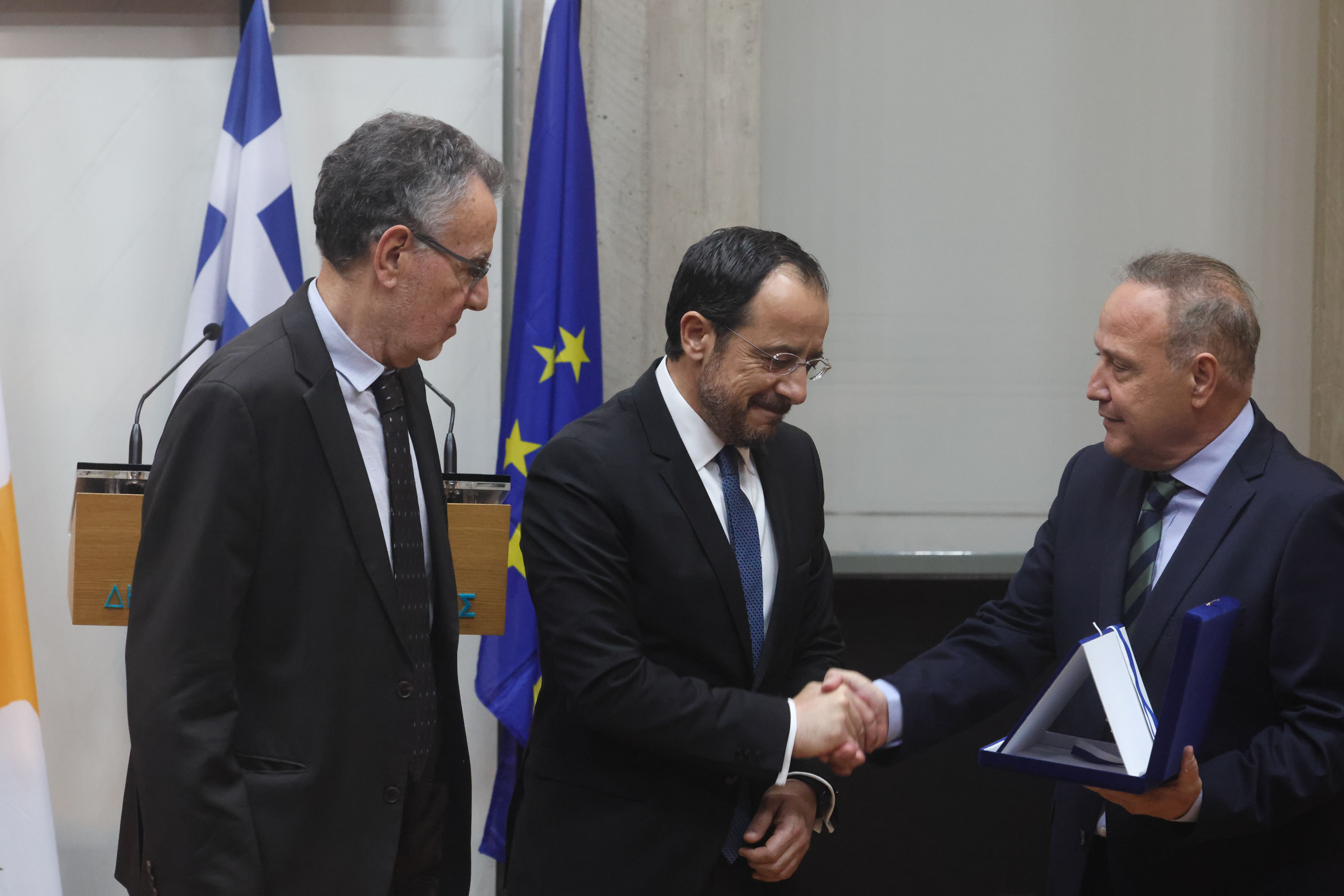
Speaking to Municipal Television of Thessaloniki after he was made an Honorary Citizen of the municipality, Christodoulides said “I have agreed with the President of the Council and the President of the Commission that we will discuss Article 42.7 of the EU Treaty and what exactly the EU does in case of its activation by a member state” during the Informal Council in Nicosia.
Article 42.7 is a mutual defence clause introduced in 2009 requiring EU members to assist another member state facing armed aggression on its territory. It has only been triggered once, by France in 2015 after terrorist attacks. It requires aid but allows for neutrality among certain members.
Possible use of the clause has been raised since Iranian drones targeted the British base of Akrotiri in Cyprus, prompting questions over how countries can actually use the instrument.
When France triggered it in 2015, EU countries largely offered logistical support, with Belgium and Germany sharing intelligence, police support and counter‑terrorism experts.
In Thessaloniki, Christodoulides was asked if Cyprus today feels safe.
“Cyprus is a safe destination. Everyday life continues normally. Cyprus is part of the geography of the region. It is in no way part of the crisis of the region,” he answered.
He said any involvement of the island is focused on cooperating with EU states within the framework of the Cyprus presidency of the EU Council and third countries “to achieve the main objective. The main issue at the moment is the de-escalation of the crisis. There are some international initiatives underway. So far they have not brought results, but we are working towards having a positive result, which can be none other than the de-escalation of the crisis”.
He was also asked about Cyprus joining Nato and said the island is ready to do so. “I have conveyed this desire to the Secretary General of Nato himself, as soon as the political conditions are there, for Cyprus to become a member state.”
“Political conditions” mean lifting of the right of veto on the part of Turkey.
Beyond that, he said, the Iran crisis also highlighted the role of the EU. “It was not only the strong first reaction on the part of Greece, we also saw France, Italy, Spain, the Netherlands. In essence, without having activated Article 42.7 of the EU Treaty, we saw it activated,” he said.
Commenting on his becoming an honourary citizen of Thessaloniki, he said it was a “historic day that comes to further strengthen the ties of Cyprus with Thessaloniki and Macedonia in general”.
“I accept this honour on behalf of my many compatriots who live and work in the city of Thessaloniki,” he added.


Click here to change your cookie preferences