
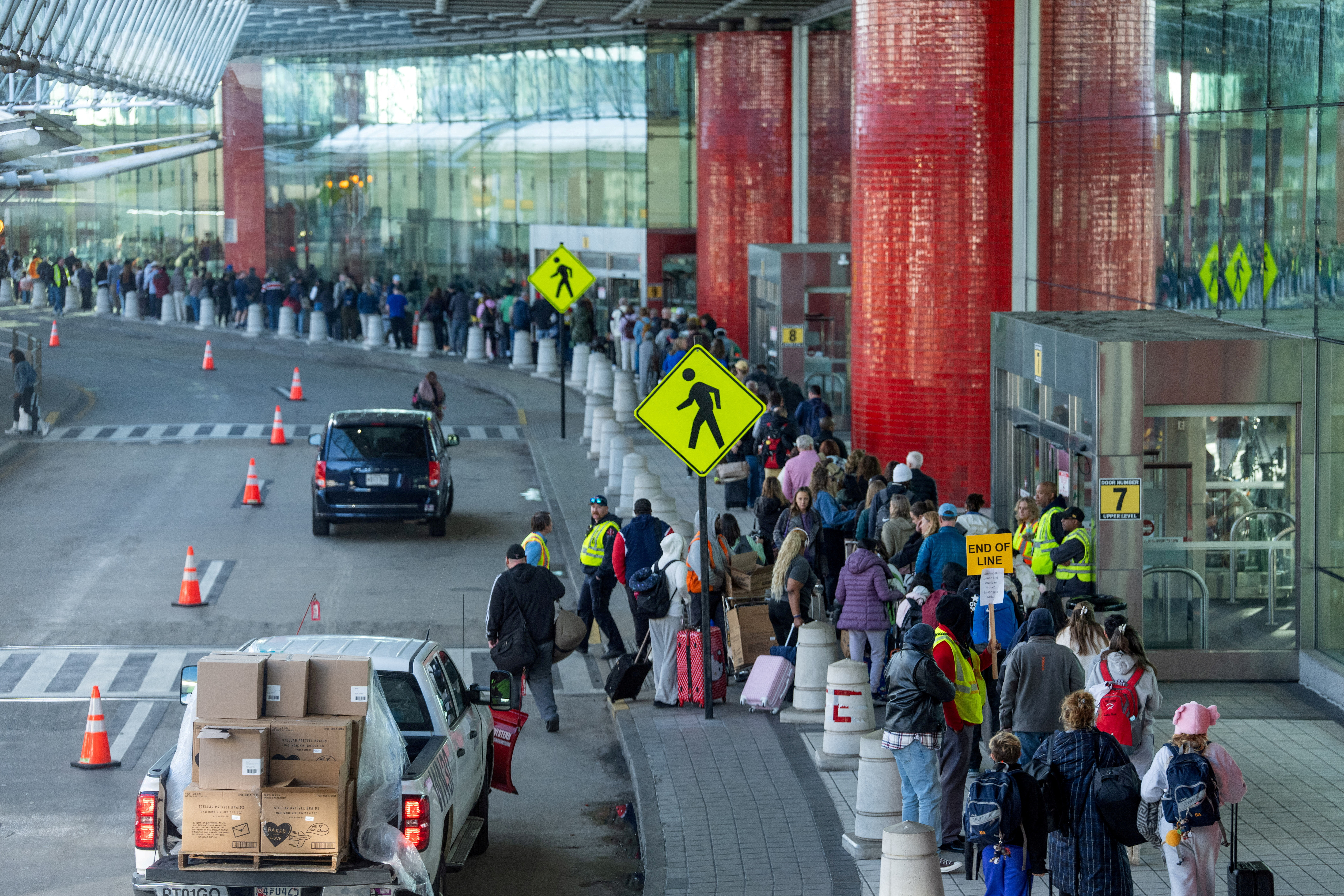
US airports could face a new wave of long security lines as early as May after the nation’s homeland security chief said on Tuesday that he will run out of money to pay for 50,000 workers due to a partial government shutdown.
President Donald Trump in late March directed DHS to use emergency funds to pay Transportation Security Administration workers who had gone without paycheques for about six weeks, causing disruptions at US airports. Homeland Security Secretary Markwayne Mullin told “Fox and Friends” on Tuesday that the money would run out by early May.
“That money is dried up if I continue down this path the first week of May, because my payroll at DHS is just over $1.6 billion every two weeks,” Mullin said. He said after the next paycheque, “There is no more emergency fund, so the president can’t do another executive order for us to use money, because there’s no more money there.”
TSA workers also went unpaid for six weeks last autumn during an earlier partial government shutdown.
Airlines for America CEO Chris Sununu told Reuters on Tuesday Congress has to move fast to get DHS funded. “You cannot ask these (TSA officers) to go through this a third time,” said Sununu, who heads the group representing American Airlines, Delta Air Lines, United Airlines and others.
In March, the weeks-long standoff in Congress caused security lines at some airports to exceed four hours, the longest in the TSA’s nearly 25-year history. More than 500 TSA officers have quit since mid-February.
Senate Republicans will move forward this week on a budget blueprint that would boost funding for DHS agencies for the next three years, Senate Majority Leader John Thune said as Congress aims to end a partial shutdown of DHS.
Democrats have pushed for a series of new constraints on ICE and Border Patrol, which operate under the direction of DHS, before authorizing additional funds. They have argued that ICE and Border Patrol should be subject to the same operational rules as police forces across the United States, including a requirement that agents obtain judicial warrants before they enter private homes.




Click here to change your cookie preferences