
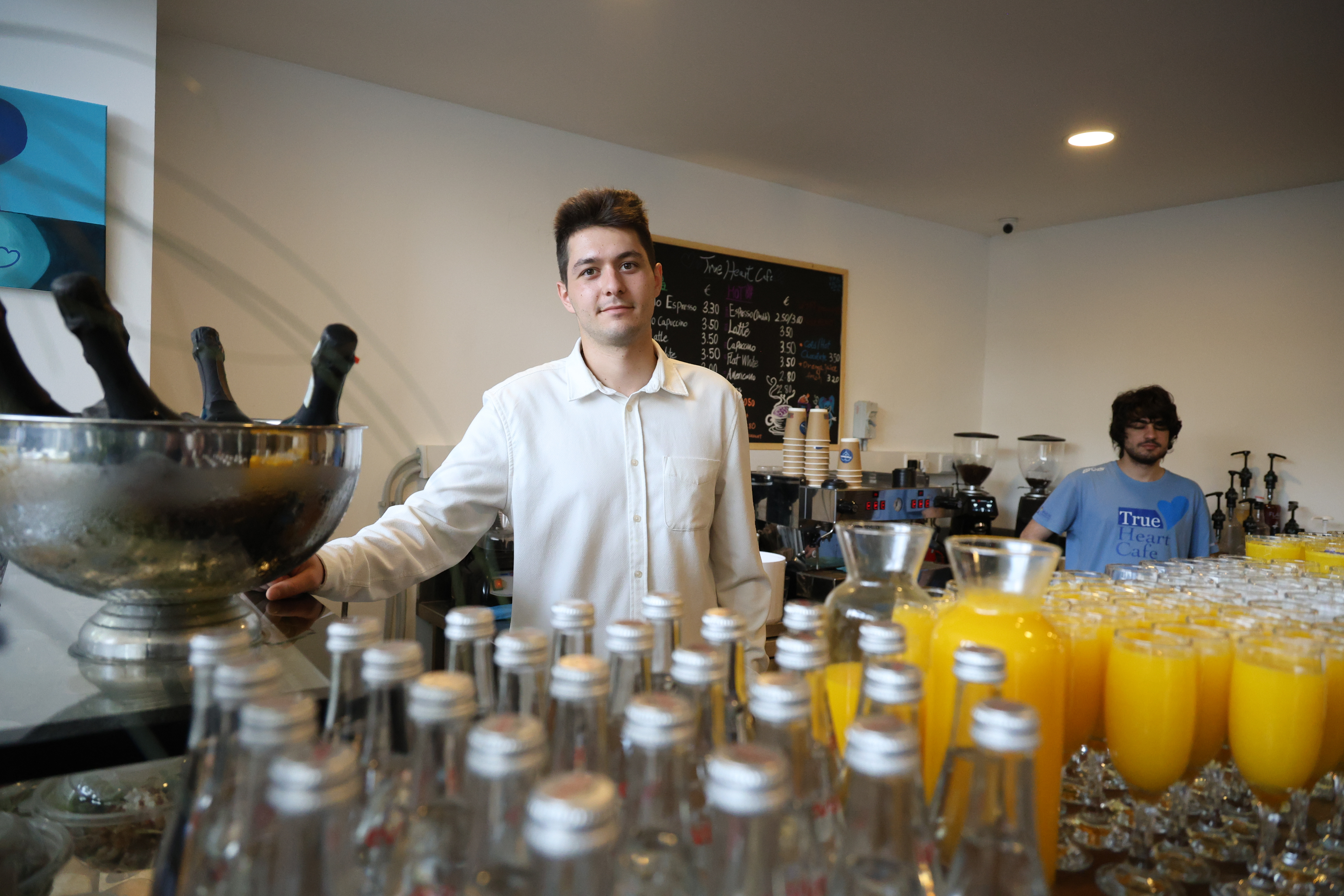
In the heart of Nicosia a café owned and staffed by people with autism shows it is not a barrier but a business model. And the workers are ‘living their best lilfe’
Manned by young adults with autism and dedicated to breaking down barriers, what has been billed as the island’s first social enterprise, the True Heart Café officially opened at the beginning of last month, run by and employing people with autism.
“Our business model has 18 kids with autism, and we’re at maximum capacity; there’s a waiting list of 12,” says the founder of the Voice for Autism NGO which is behind it, says Ellen Georgiou Pontikis. “And that saddens me because I know that there’s going to be another 12 and another 12.”
In Europe, there are 2.8 million social enterprises. In Cyprus, the True Heart Cafe is now officially the first one. Although there have been other attempts at setting up others, government bureaucracy and perhaps the challenges and risks of leading the way were major hindrances.
“There were huge challenges in the Cyprus context, number one, navigating the complex legal issues because the EU doesn’t have a template, it’s given to the member states. The legal costs was another issue,” adds Pontikis, who admits to wanting to give up on her vision on a couple of occasions. A social enterprise is a business that operates primarily to solve a social or environmental problem rather than to maximise profit, generating income by selling goods and services and reinvesting the vast majority of its profits back into its core mission.
“It’s more expensive to set up than a traditional business model. You need a lot of training. You may need an adaptive workspace. You need an in-house support team,” she says.
Once Pontikis’ vision aligned with guidelines of the deputy minister of social welfare, which has access to European funds, the project made ground. “They were very supportive,” says Pontikis. They’re now in a partnership and provide financial support for the carers in the home as well as two dedicated trainers in the cafe through the European Cohesion Policy welfare fund. But it took a while to get there, issues such as putting down how much the cafe’s employees would get paid without losing government support, working hours tailored to their capabilities but also finding the right support for them to learn the trade and offer the skills they have needed to be addressed.
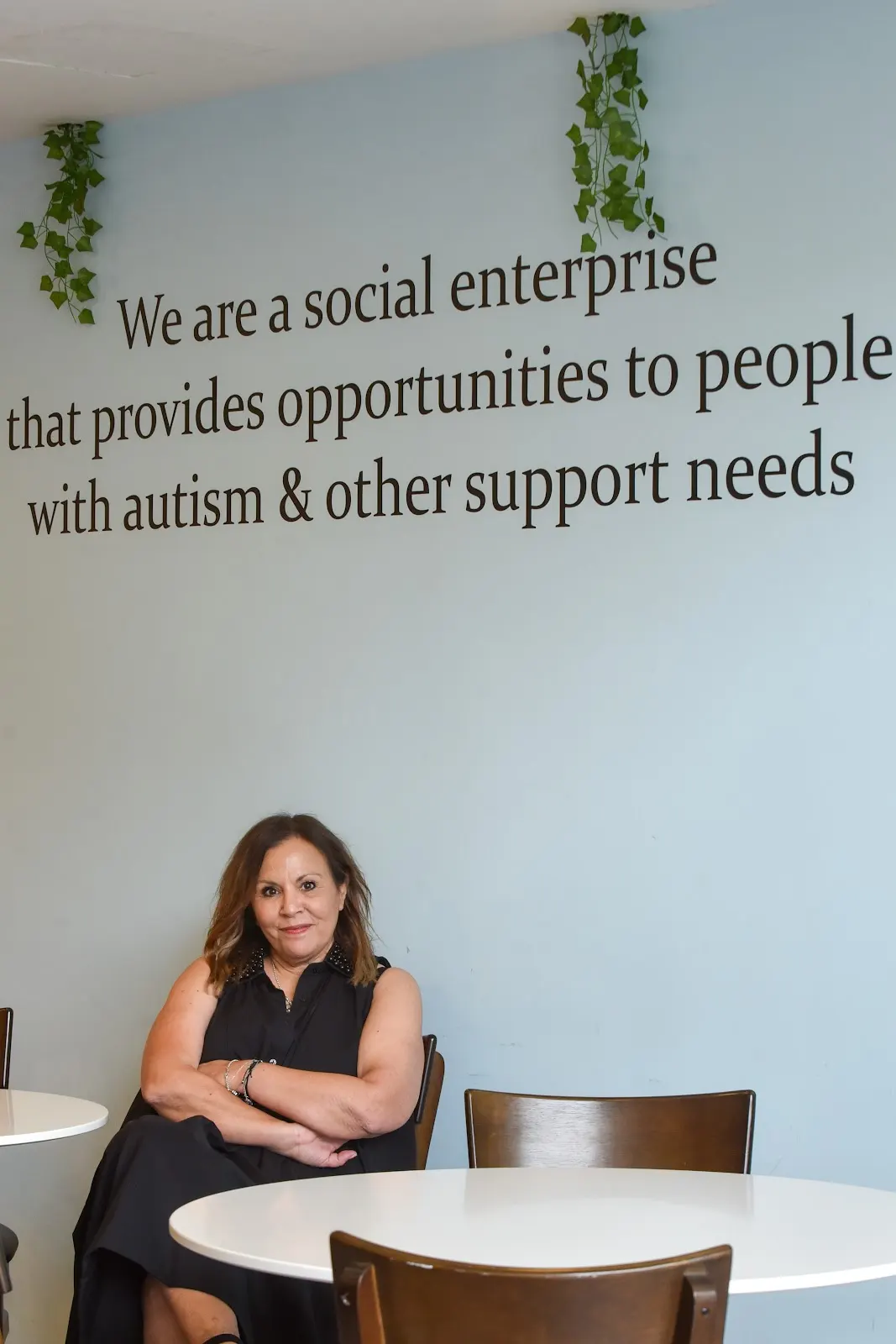
“The department actually said to me that it would be a good idea to have a couple of the youth as shareholders, and they provided them with a grant to invest in the business,” says Pontikis. Today, five of the young people with autism are shareholders. Pontikis is one of the guarantors, while most of staff live in the group homes. “It’s their business, so they have a sense of ownership, and as shareholders are, they’re active in the business and they work here.”
Three years ago, Voice for Autism set up two group homes in Lakatamia, Nicosia that provide independent and supported living services for young adults with autism. A pioneering venture by local standards, the community within a community in the homes helps young adults lead independent lives and reach their fullest potential through the assistance of professional, trained and caring staff that offer life skills and recreational activities.
One of the founding members of Voice for Autism, Pontikis returned to Cyprus from the United States some years ago with her autistic son. “Wherever you are, the challenges are the same, but (in the States) I did see the huge benefits of independent living, employment opportunity and inclusion,” says Pontikis. “I’ve always been an activist and been actively involved in the rights of young people with support needs, and I saw what could be done. And the very first call came to me, I had a clear agenda to set up an NGO,” she adds, referring to Voice for Autism.
But the two homes weren’t where Pontikis drew the line. “Independent living goes hand-in-hand with employment opportunities, my son lives in one of the group homes, and he’s living his best life. And I say that with all my heart, he’s living independently from his mother, and he lives with dignity and respect. But even though they have their own daily programmes, you can’t have them just sit in a group home.”
Constantinos, one of True Heart Cafe’s baristas was stuck at home for the last eight years. Stella, another champion at the cafe was at home for 12 years and couldn’t get a job. “That leads to depression, especially girls on the spectrum, they fall into a deep depression because there’s this pressure to belong; girls are very smart and mask their disability. A lot of them stay at home, have pressure from social media, pressure of not belonging, parents have to leave work and stay with them. There are other cases where kids self harm and there’s no recourse, there’s no crisis centre,” says Pontikis.
“Government should support us in addressing this, you need the government arm to sustain operations but you also need private enterprise,” says Pontikis, “and people stood up for us”.
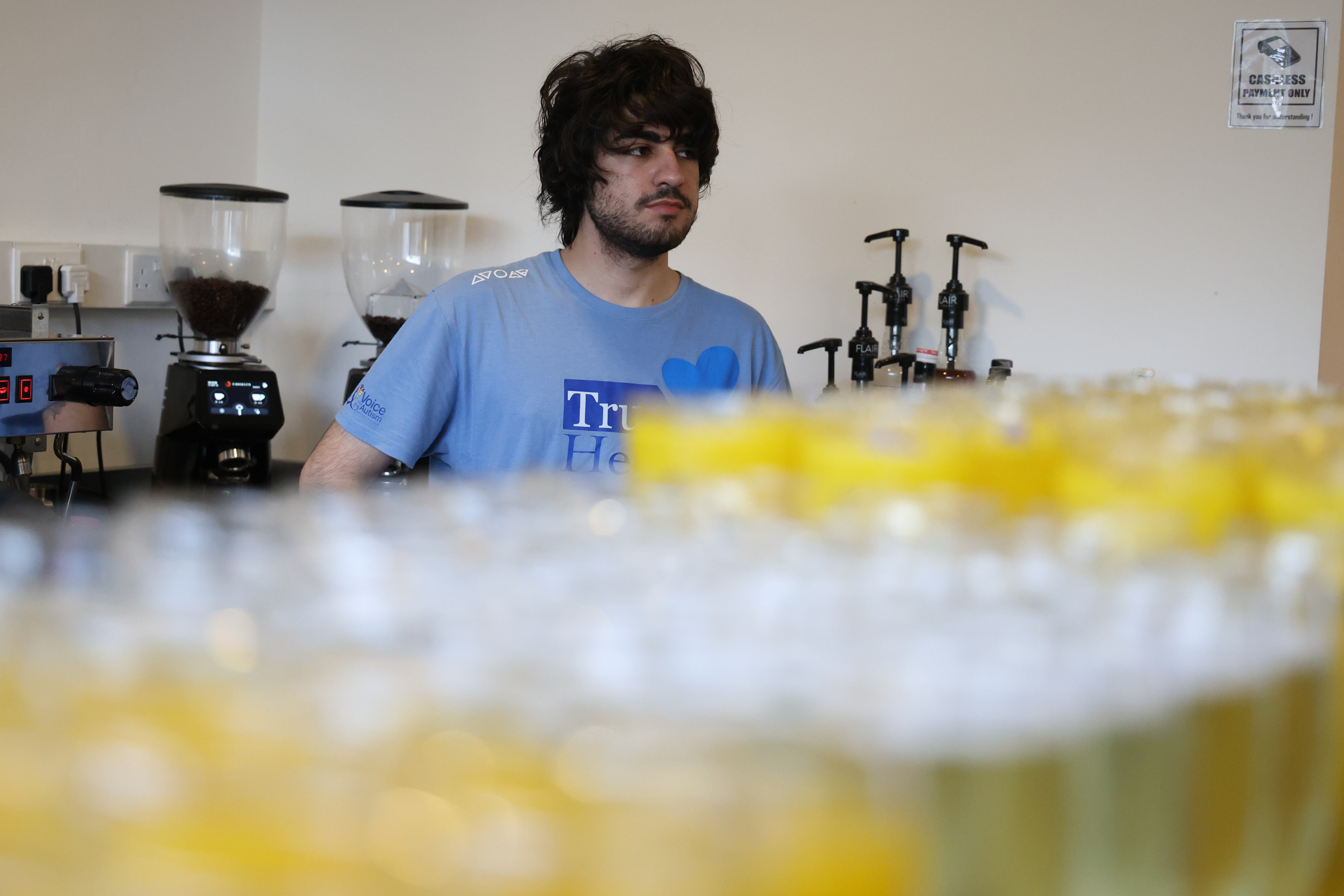
Having secured funding from private enterprises, the True Heart Cafe has also found support through others offering their services for free. Wolt offers it delivery service for free, Cablenet provides free internet.
“I think that Cyprus’ business economy is very ready for this kind of alternative business model. You need so many supporters for something like this, on all levels,” says Pontikis. “What’s social inclusion? It’s not giving someone a seat at the table, that’s not inclusivity; inclusivity is about creating a new table together, it’s about a sense of belonging, connection and ownership and having a voice. It’s about creating a new language, a new culture, and that’s what we’re doing here. Businesses, suppliers, even for our baristas and other people involved need to understand this isn’t a typical barista position, this is a role of guidance, you have to accept that something outside the regular work dynamic will be expected. We’re ahead in terms of the quality of our trained people, but we’re behind in terms of infrastructure”.
For Head of Operations at True Heart Cafe Alexandros Karpis, “this is hospitality merging with social activism; it’s a fusion that I haven’t been part of before, and I’m incredibly excited. The most fulfillment we have as a chef in hospitality is seeing clear plates. That’s always been the reward. Seeing inclusion take place is a whole other level.”
As with other job roles, not everyone at the café does the same thing. “Not all of them can make coffee, but we have an occupational therapist and a trainer who trains the youth. He’s developed jobs for everybody. For example, we didn’t print our paper cups, we have stickers that can be added on, and that’s a great job for people that can’t really make a coffee, or aren’t dexterous or need a little quiet time upstairs, they will put the stickers on. Cleaning the premises and the accounts aren’t carried out by the community; jobs are created based on ability rather than the needs of the company. Some kids are really adept in the kitchen, and that surprised us. And they need oversight. They need that support,” adds Pontikis. And today, “we have three people who are trained as baristas and can move on to another job right now if they wanted to. Once they gain the experience and the skills, they can apply them anywhere.”
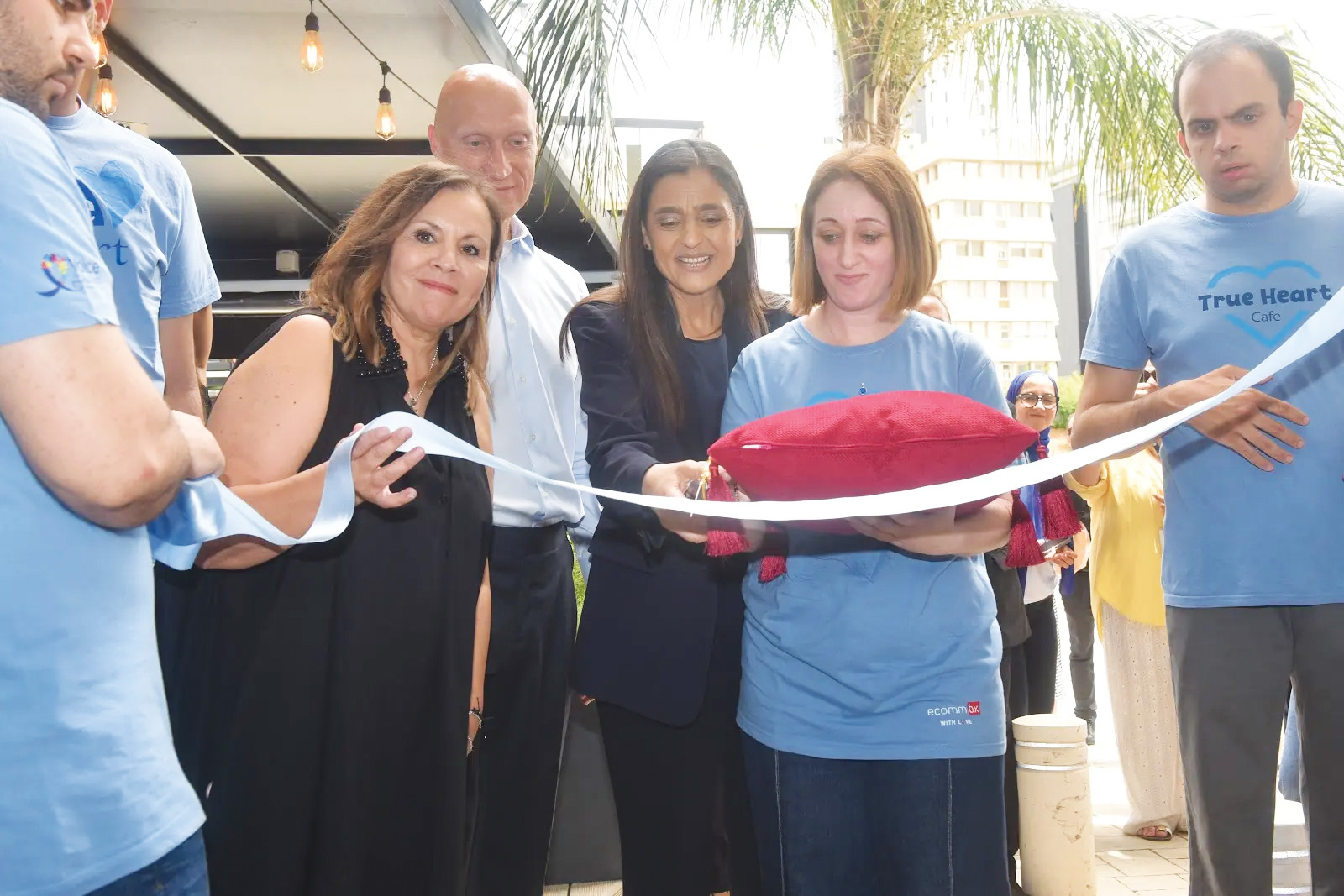
“One of my favourite moments was when we did the first payroll. It’s usually an annoying and arduous chore. Here, their work is such a celebration, they’ve never had money before, the work they do is something that others may take for granted so easily, but here, it changes lives,” says Karpis. “Staff issues are usually one of the biggest problems, that is actually surprisingly not an issue for us. We underestimated their ability to contribute. There are many things that are greatly suited to this unique workforce, because things like consistency, repetition and accuracy, attention to detail, a lot of these are strengths naturally found in this community. For example, in hospitality you always have prep work: polishing silverware, folding boxes, folding napkins. Most people would rather not do these tasks, but for the community, they’re proud to call it their job.”
The European Centre of Disease Control estimates that one in 40 people is on the autistic spectrum. “There’s a huge employment gap, and what I’m seeing already, after a few weeks, is it drives innovation. We’re talking about a training hub and opening pathways for other jobs, we have to train companies to accept our staff. We’ve paved the way because we had to fight for things to be changed and we’re clearing pathways for other opportunities so that businesses can work with our community. That’s the bigger picture, and we’ve got the people that can do it,” says Pontikis.
As in any business, the challenge is sustainability. “We also have the productivity challenge. Our kids are not as productive as the coffee shop across the road. They can’t make 500 coffees a day. We have to provide good coffee, good food, good music, we have to be on equal terms with everybody. We’re in a downtown location, and we pay a lot of rent but we wanted to be in a downtown location, because it’s all about inclusion. We wanted to put autism on the map,” says Pontikis.
“Usually starting out in hospitality takes anywhere between six months to two, three years to start first operations. We went very quickly. We’ve got help from government, we’ve got help from private investors, but the most important thing is the actual people coming in to interact, they’re a lot more forgiving and understanding from the get go. Right now, we’re trying to get the finesse and the excellence, but the basis of operations has been established. Now we have to refine and as that happens, you’re going to see these guys sing,” says Karpis.
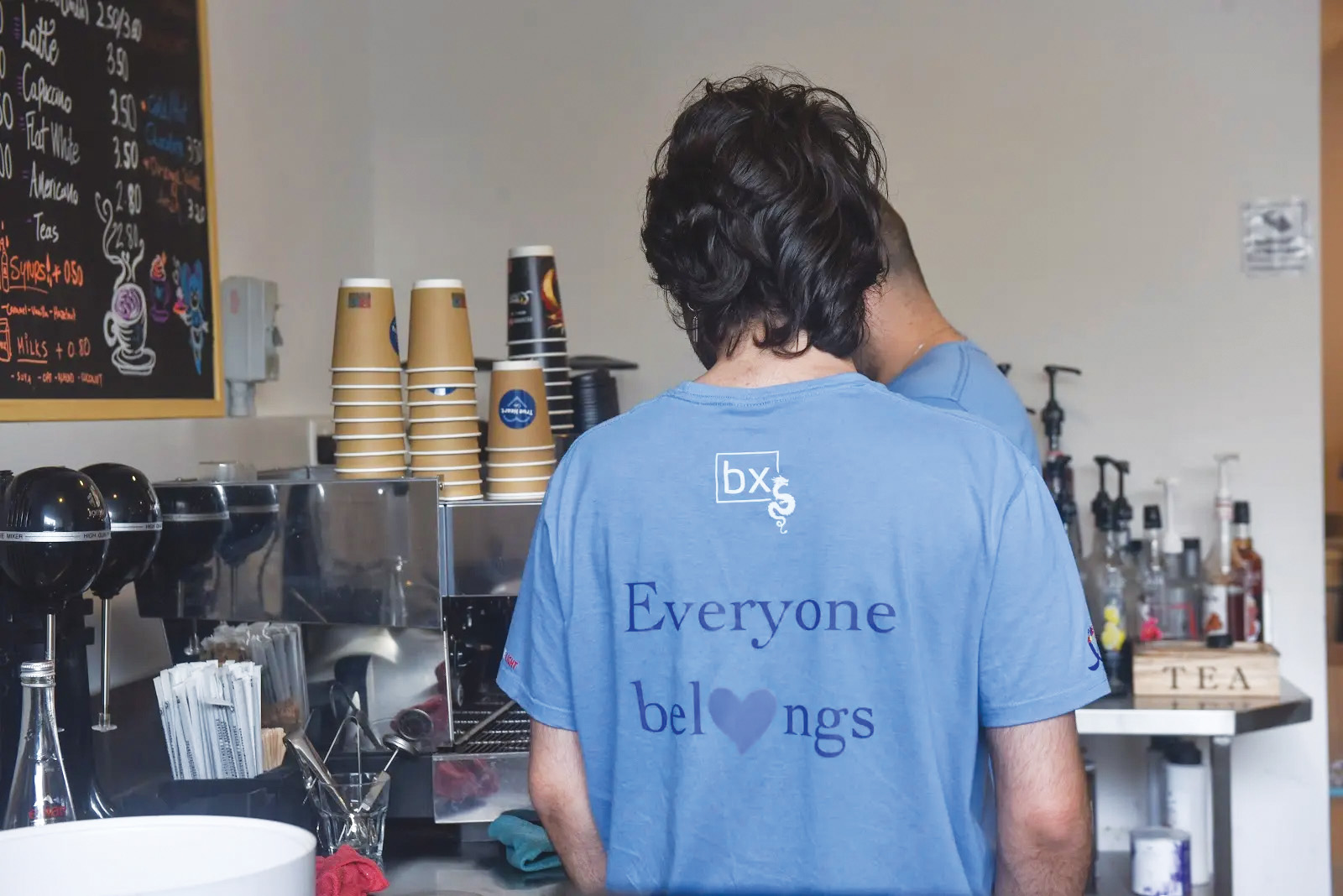
As Constantinos tells me: “I’m very proud and happy and content and I like being a barista, playing the guitar and piano and to sing. I like it when a lot of people come. I meet new people and make new friends. I can make cappuccinos, iced lattes, I make espresso, I like making all the coffees.” As he turns around the tend to his work, the slogan on his work T-shirt clearly sets the tone: ‘everyone belongs.
True Heart Café
Yiannis Kranidioti 10, 1065 Nicosia. Tel: 22 252441. Monday to Saturday 7am to 6pm
Click here to change your cookie preferences