
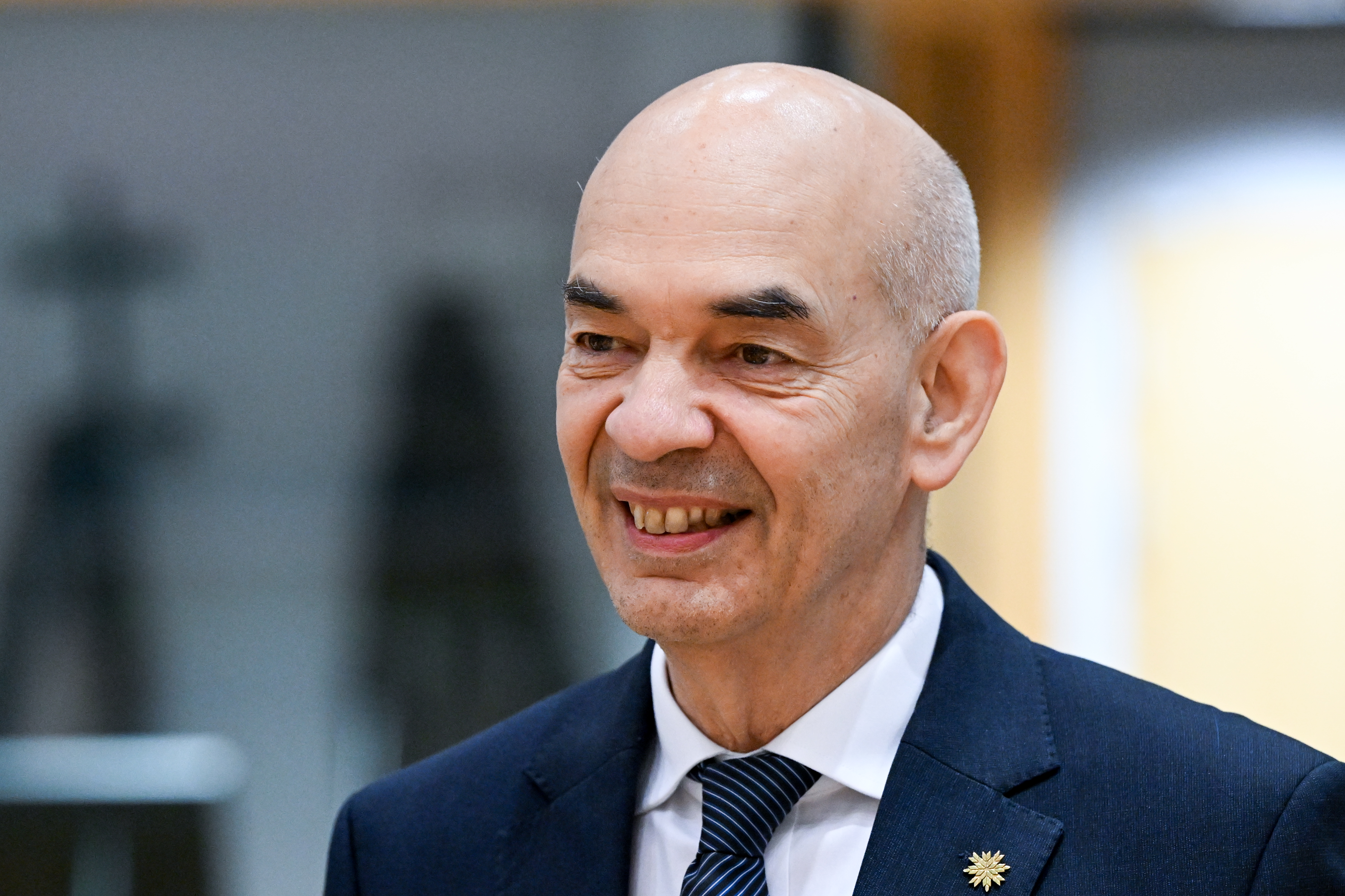
Transport Minister Alexis Vafeades on Tuesday accepted that there is the “possibility” of a fuel shortage, with maritime traffic at the Strait of Hormuz having once again come to a standstill after the Iranian government briefly announced its opening last week.
“We have before us the possibility, and I stress the word possibility, of a shortage in transport fuel. This evolving geopolitical crisis in the Middle East has highlighted that Europe may have a short-term issue in supply of fuel,” he said arriving at the informal conference of European Union transport ministers in Brussels.
He also stressed the need to “be aware” of a “demand issue” in terms of fuel consumption which “needs to ne neutralised” in the medium and longe term, in effect calling for fuel consumption rates across Europe to be better managed.
“To be clear: what I want to say is that we need to be ready to avoid queues at the gas stations, if this ever happens, but we also need to permanently do away with … the possibility of queues at the gas stations and this is part of the discussion I hope we will have today,” he said.
He added that Tuesday’s meeting is “timely”, coming just two days before the leaders of the EU’s 27 member states are set to convene in Cyprus.
Tuesday’s meeting, he said, will “feed that discussion”.
He was then asked about reports of potential jet fuel shortages, and stressed that despite the possibility of there being fuel shortages in the future, “we are not in any dangerous situation”.
“We are not treading that ground. We are facing the possibility, but you understand that if this ever happens, it will affect connectivity, it will affect every citizen in the union, so we need to be aware and we need to be ready. That is the point here,” he said.
Meanwhile, European Transport Commissioner Apostolos Tzitzikostas said that “the crisis in the Middle East is affecting all transport modes and all EU member states”.
He said to this end that the European Commission will on Wednesday present “an energy plan”, named “AccelerateEU”, which he said will “have a major focus on transport fuels with a clear emphasis on jet fuel, for obvious reasons”.
To this end, he said he would present the commission’s plans to the 27 transport commissioners on Tuesday, before stressing that a longer-term view is required.
“Of course, we need to work together to address the consequences of the crisis in the Middle East and to ease the impact of the rising costs on citizens and businesses, but we must also work hand in hand to make our transport systems and supply chains more resilient to future crises and disruptions,” he said.
Like Vafeades, he was asked about the possibility of jet fuel shortages, and referred to comments he had made at a press conference in Cyprus last week.
Then, he had said that reports that Europe may be on the brink of running out of jet fuel are “not an accurate reflection of the situation”.
“There is no indication today or for the next weeks and months that there is a supply problem of jet fuels … At this point, as of today, there is no indication of systemic fuel shortages that would lead to widespread flight cancellations,” he said.
He added, “Europe maintains emergency stocks in line with EU law, which can be released if needed in coordination with the market”.
The EU, he said, is “monitoring the situation”.




Click here to change your cookie preferences