
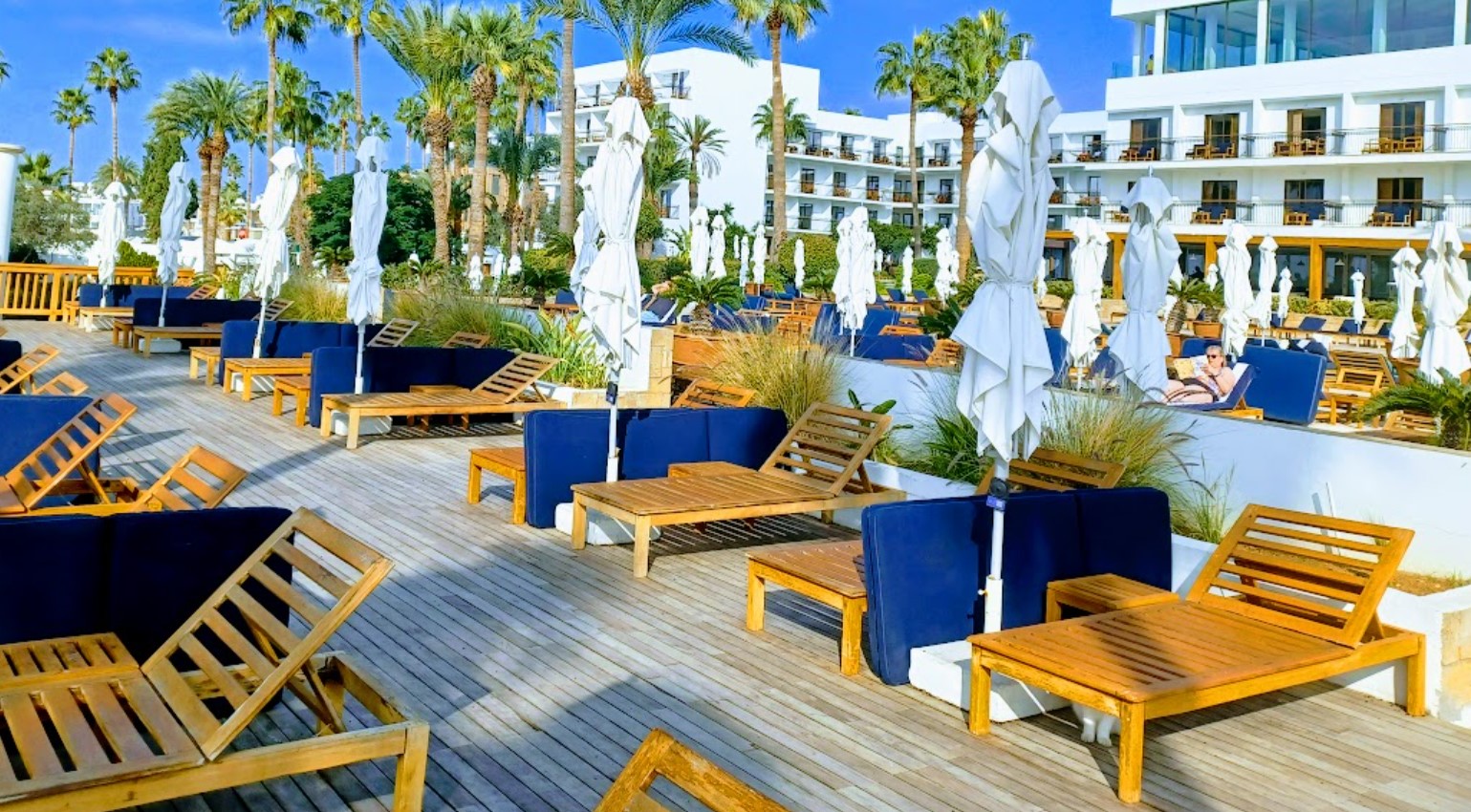
Tourist business turnover drops 50 per cent amid Middle East conflict, association says
Small shopkeepers’ association Povek on Wednesday announced that tourism stakeholders have requested an urgent meeting with Deputy Tourism Minister Kostas Koumis, citing mounting concerns over the sector’s condition.
The organisation said that the request aims to secure updates on government actions and intentions regarding support measures for the tourism industry.
It added that the decision followed a meeting held last Monday in Ayia Napa, where multiple industry representatives gathered to assess the situation.
Participants included the Famagusta leisure centres association, the Ayia Napa shopkeepers association, the water sports and recreation association, and the vehicle rental association.
During the meeting, stakeholders discussed what they described as “the tragic situation businesses in purely tourist areas have fallen into due to the consequences of the conflict in the Middle East”, according to Povek.
“The sharp decline in tourist traffic has caused a very significant reduction in turnover, in some cases exceeding 50 per cent, for businesses operating in purely tourist areas, with very bleak forecasts for the summer months,” the organisation said.
Within this context, Povek warned that risks to business viability are now clearly visible, alongside growing threats to employment.
It stressed that workers face the possibility of remaining out of work for the entire summer season, raising concerns about broader labour market stability.
The organisation also highlighted the risk of disruption to employment conditions, as businesses struggle to maintain operations.
“We address the government, the competent ministries, political and economic bodies, as well as trade unions, calling on them to respond immediately and responsibly, recognising the seriousness of the situation and contributing meaningfully to supporting businesses and employees in purely tourist areas, with specific measures and actions before it is too late,” Povek stated.
In addition, the association underlined the importance of ensuring that all sectors of the tourism industry are included in existing government support schemes.
It said that such inclusion is necessary to guarantee equal treatment for all stakeholders and safeguard jobs across the sector.
The developments come amid wider pressures on Cyprus’ tourism industry, with recent data pointing to a significant slowdown.
According to Hermes Airports, passenger traffic in April 2026 fell by 16 per cent, corresponding to 95,000 fewer arrivals compared with the previous year.
At the same time, average aircraft load factors declined to 76 per cent, while summer seat capacity has been reduced by 5 per cent, equivalent to approximately 600,000 fewer seats.
As a result, total passenger arrivals for the summer period are expected to decrease by around 9 per cent, or roughly 450,000 fewer travellers.
Further pressure is reflected in accommodation data, with Cyprus hoteliers association director general Christos Angelides reporting a 25 per cent drop in summer bookings.
He also stated that hotel occupancy rates currently range between 40 per cent and 50 per cent, down sharply from around 75 per cent last year.
“The industry remains cautious, as current demand does not justify optimism regarding revenue,” Angelides said.
He added that rising fuel costs have led airlines to favour closer destinations, reducing flight schedules to Cyprus.
Angelides also called for an extension of government subsidy schemes for May and June, warning of potential job losses without further support.
Taken together, the data underscores a rapid deterioration in tourism demand, reinforcing concerns raised by Povek and other industry stakeholders.
The coming months are expected to be critical in determining whether targeted interventions can stabilise the sector and prevent deeper economic impacts.




Click here to change your cookie preferences