
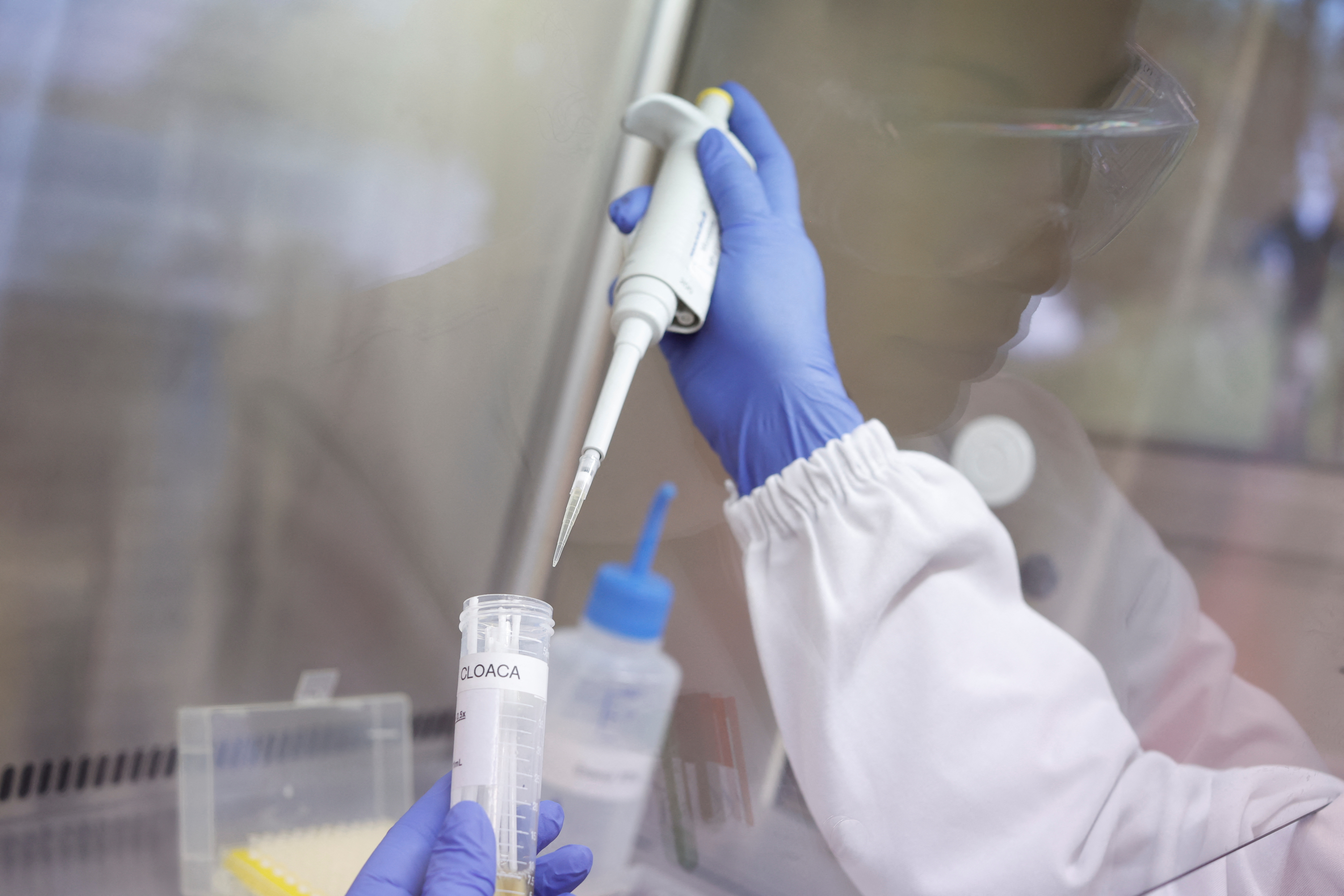
Αn advanced test that transforms how families plan for healthy pregnancies for those with genetic conditions has been developed by the Cyprus Institute of Neurology & Genetics.
The test has upgraded methodologies for preimplantation genetic testing for monogenic disorders, namely genetic conditions caused by pathogenic variations in a single gene, including beta-thalassemia, sickle cell anaemia, cystic fibrosis and neurofibromatosis.
Following many years of research, the institute’s blood disorder genetics and thalassemia department has moved closer to a robust universal PGT-M test able to assess every couple at risk.
“To put this in perspective, about 50,000 babies are born with beta-thalassemia every year worldwide, and this breakthrough applies to all monogenic disorders affecting millions of families globally,” the institute said in a press release on Thursday.
PGT-M allows couples undergoing IVF to test embryos before implantation, ensuring only healthy embryos without the genetic condition are transferred to the uterus.
“This breakthrough enables PGT-M in cases previously very difficult or impossible to assess, including couples with new (de novo) pathogenic variations, couples without family members available to track inheritance and couples carrying multiple monogenic disorders.”
The institute said that “using long-read sequencing, a cutting-edge technology of recent years, the PGT-M panels are much faster to set up, more universal, and deliver results with significantly reduced turnaround time and exceptional accuracy.”
“Imagine your DNA as a giant jigsaw puzzle. Traditional genetic testing could only look at tiny puzzle pieces that are hard to put together and look similar to many other pieces, requiring help from relatives. With long-read sequencing, scientists can now look at much bigger pieces of DNA, reading 10,000 or more DNA letters at once. The puzzle assembles so much faster without asking relatives for help.”
This technology works the same if one has inherited pathogenic variations from both parents or brand-new variations that appeared de novo in one parent.
The team tested this approach on 12 families at risk for β-thalassemia, with “extremely promising results”.
The test achieved 100 per cent accuracy, catching all types of pathogenic variations from small changes to large deletion.
“In 2025, the breakthrough has already been successfully implemented for actual PGT-M cases for different monogenic disorders and combinations of them, proving this is a practical, real-world solution ready to help families today.”




Click here to change your cookie preferences