
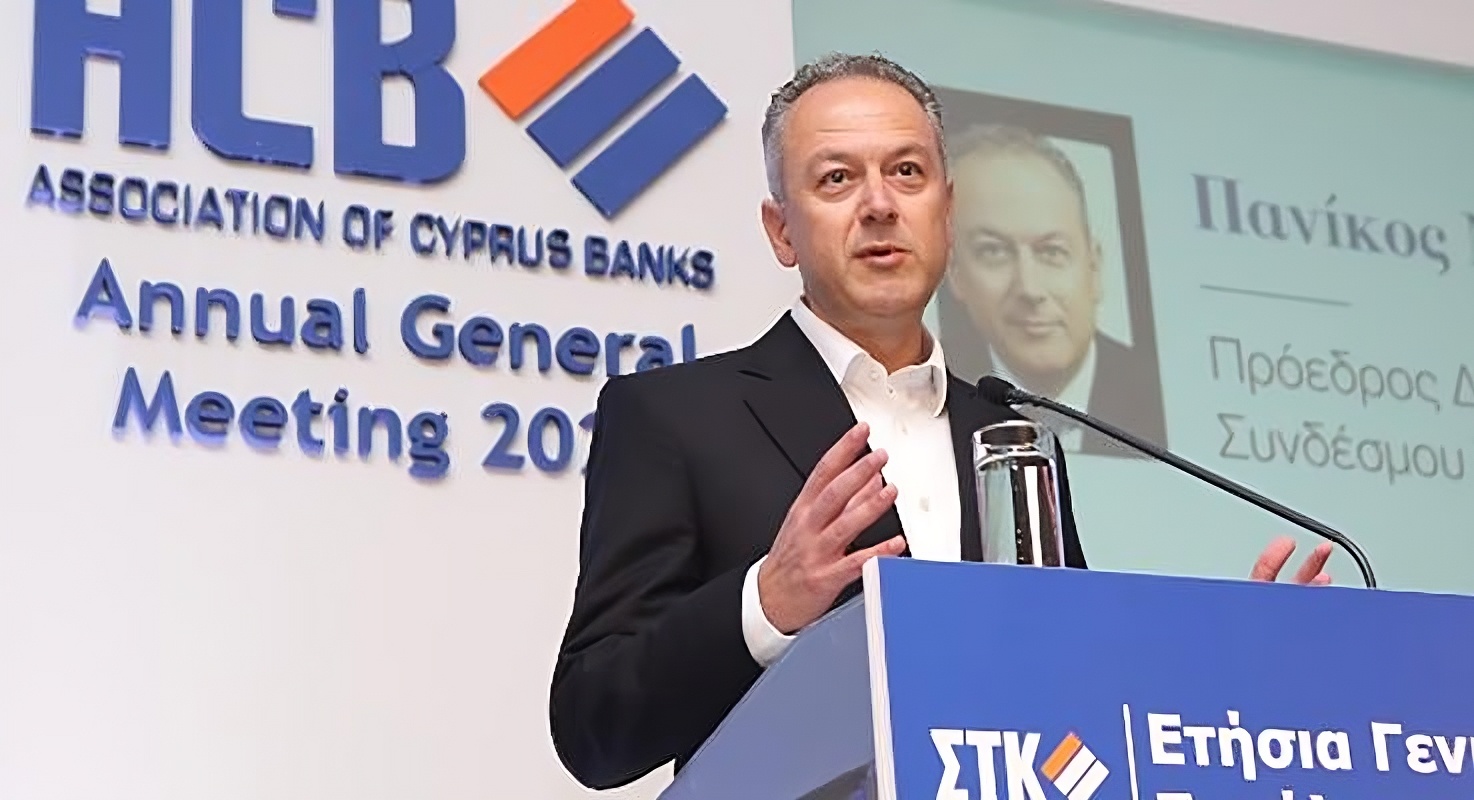
The Bank of Cyprus (BoC) on Monday presented its first-quarter 2026 financial results, with chief executive Panicos Nicolaou highlighting the resilience of the Cypriot economy and signalling further strengthening of shareholder returns in the coming years.
Speaking during a press conference on the bank’s first-quarter 2026 financial results, Nicolaou said that despite international crises and geopolitical instability, the Cypriot economy continues to record strong growth rates and compares favourably with the rest of the eurozone economies.
“There is economic activity even during periods of crisis,” Nicolaou said.
He added that the Cypriot economy today possesses sufficient “resilience” and adequate “buffers” to withstand possible future disruptions.
A future dividend policy aimed at the upper end of payouts formed a central part of the management’s remarks.
Nicolaou clarified that from 2026 onwards, the bank’s objective is to operate at the upper end of its ordinary dividend payout range, equivalent to 70 per cent of profits.
At the same time, he explained that the bank will annually examine the possibility of additional distributions in the range of 20 per cent to 30 per cent, depending on conditions and capital requirements.
He said that the bank’s future policy foresees ordinary distributions of between 50 per cent and 70 per cent of profits, while an additional distribution is also planned this year.
According to Nicolaou, the total capital allocated for the 2025 dividend has already been accounted for and amounts to €305 million.
Responding to questions regarding the level of dividend distributions during a period of heightened instability, the Bank of Cyprus chief executive argued that the payout levels are not higher than the eurozone average.
“Why should we be different when the bank’s capital exceeds 20 per cent, while the European average is around 15 per cent?” Nicolaou asked.
He added that the bank is a private organisation with foreign shareholders and does not apply a different policy from that followed by other European banks.
Referring to observations by the International Monetary Fund (IMF) regarding banks’ business models, Nicolaou argued that the financing provided by banks is sufficient and granted when there is a genuine need.
He stated that banks finance customers who have the ability to repay, stressing that proper credit risk assessment is a fundamental prerequisite for maintaining the stability of the banking system.
Geopolitical uncertainty and interest rates were also discussed during the press conference.
Nicolaou said that nobody can predict with certainty how international developments will evolve or how markets will be affected.
He mentioned expectations for higher interest rates internationally, although so far no particularly significant impact has emerged.
“What matters is having buffers so that you can make decisions at the right time,” Nicolaou said.
He expressed the view that the Cypriot economy is sufficiently flexible to manage new crises.
The credibility of the country is critical for investments, Nicolaou said while referring to upcoming political developments.
He stated that the most important issue for Cyprus is maintaining its stability and credibility abroad.
According to Nicolaou, foreign investments are a key pillar of the Cypriot economy and are not attracted “because they love us”, but because the country is considered stable, reliable and capable of offering satisfactory returns, particularly because it is a small country.
“The most important thing is to preserve the stability and credibility of our country abroad,” the BoC CEO said.
“This is an achievement that I want to believe political actors are obliged to protect,” Nicolaou added.
Asked about deposit rates, Nicolaou said that interest rates are determined by market conditions.
He stated that the average deposit rate for individuals in Cyprus stands at approximately 1.16 per cent, compared with 1.11 per cent in Greece.
According to Nicolaou, deposits in the Cypriot economy exceed €50 billion, while loans amount to approximately €25 billion, with 70 per cent of deposits held in current accounts.
“There are too many deposits,” Nicolaou said, arguing that this explains the current market behaviour regarding returns.
The bank’s Executive Director of Finance, Eliza Livadiotou, stated that the group’s financial results reflect for the first time the increase in corporate tax to 15 per cent from 12.5 per cent as part of the tax reform.
She said that this change entails an additional cost of approximately 2.5 per cent.
Nicolaou added that the bank is also burdened by an additional 0.15 per cent tax on deposits, something that does not apply to other European banks.
He said this constitutes additional taxation beyond the tax imposed on profits.
Elsewhere, Nicolaou said that tourism concerns exist but without pressure, primarily due to the robust performance of the sector in previous years.
He acknowledged that there is concern among market participants regarding tourism revenues in 2026, although he appeared reassuring regarding the sector’s overall picture.
According to Nicolaou, the previous two years were exceptionally strong for tourism, resulting in businesses currently holding substantial liquidity reserves and deposits of approximately €340 million.
“It may not be the same year as last year, but that is normal,” Nicolaou said.
He added that so far no support requests have been recorded from the sector.
Housing loans and foreclosures were also addressed during the briefing. Nicolaou stated that demand for housing loans continues to increase both in terms of number and total value compared with last year.
According to him, the problem of access to housing is mainly linked to the ratio between property prices and wages rather than banks’ willingness to lend.
He said that the complexity created around foreclosures acts as a deterrent to granting new loans.
Commenting on the new foreclosure legislation approved by parliament, Nicolaou expressed the opinion that the measures do not solve the problem of non-performing loans but instead postpone solutions to a later stage.
He further stated that the core issue is borrowers’ sustainability and their ability to repay loans, rather than the possibility of taking cases to court.
Nicolaou also estimated that several borrowers may find themselves in a worse position within two or three years, as loan balances will continue to rise.
At the same time, he argued that if the foreclosure framework had functioned effectively, the problem of non-performing loans would have been significantly reduced years ago.
He pointed out that most debt-to-property swaps at the Bank of Cyprus took place before 2018 and before changes to the legislative framework.
“If we want to solve the problem, we must focus on sustainability,” Nicolaou said, referring to solutions such as the “rent in exchange for instalment” scheme.
Careful international expansion and an opening towards India were also outlined as part of the group’s strategy.
Nicolaou said that the Bank of Cyprus has already submitted an application to the Central Bank of Cyprus (CBC) for the creation of a representative office in India.
Following approval from the Central Bank of Cyprus, a corresponding application will be submitted to India’s central bank, a process which Nicolaou said is expected to take between 12 and 18 months.
He added that the group’s international expansion strategy remains cautious, with the objective of gradually increasing the foreign loan portfolio from 13 per cent today to 15 per cent.
The acquisition of Cyprus Development Bank assets and the Wealthyhood investment were also discussed.
Referring to the bank’s investment in Wealthyhood, Nicolaou said that the new investment application leveraging synergies with the platform is expected to become available by June.
According to Nicolaou, the aim is for the bank’s customers to gain easy access to investments in shares and ETFs in international markets as well as in Cyprus and Greece.
He clarified that the new platform will operate as a separate application, although connected to the bank’s existing application.
Regarding the acquisition of a portfolio of performing loans and deposits from Cyprus Development Bank, Nicolaou said that the process is progressing normally and is expected to be completed by the end of the year, subject to securing all necessary approvals.




Click here to change your cookie preferences