
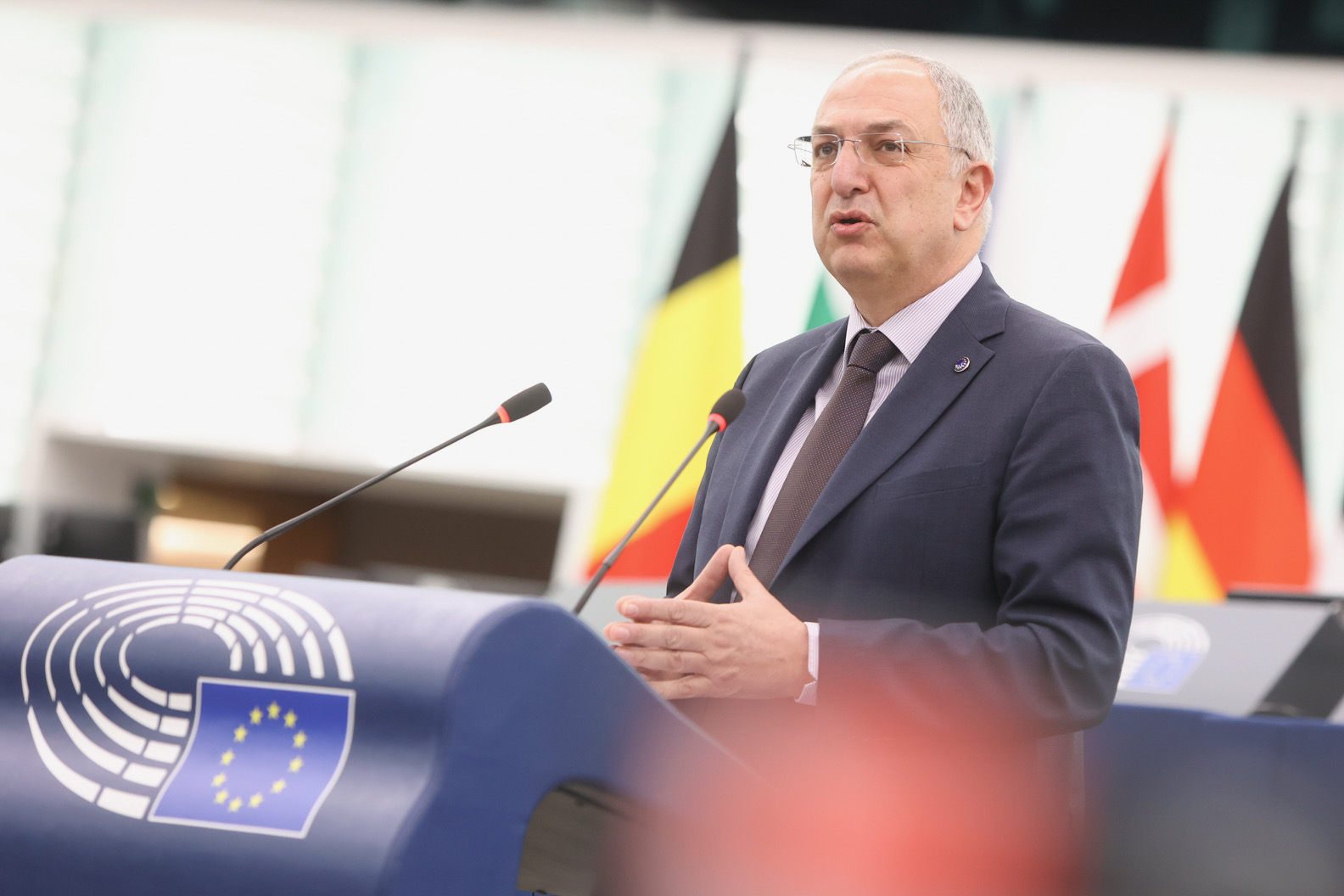
Science and innovation can help chart pathways to resilience and safeguard marine ecosystems, contributing to a productive and sustainable ocean, EU Commissioner for Fisheries and Oceans Costas Kadis said on Monday.
Speaking at a conference in Ayia Napa titled ‘From marine science to policymaking and from ocean research and development to the market’, held under Cyprus’ presidency of the EU Council, Kadis highlighted the bloc’s deep reliance on the sea.
Across the EU, he said, 70,000 kilometres of coastline and around 40 per cent of citizens, roughly 180 million people, live within 50km of the sea.
At the same time, rising ocean temperatures, acidification, pollution, biodiversity loss and extreme weather are putting food security and prosperity at risk, he warned.
Kadis referred to the European Oceans Pact, launched last year by the European Commission, which brings together all ocean-related policies under a single framework, spanning ocean health, competitiveness, maritime security, ocean diplomacy and coastal communities.
“To protect our ocean, we must first understand it,” he said, stressing that research and innovation are at the core of the pact. He added that later this year the Commission will present a dedicated strategy on ocean research and innovation aimed at closing knowledge gaps, integrating science into policymaking and strengthening the blue economy.
He also pointed to the OceanEye initiative, announced in March by Ursula von der Leyen, describing it as Europe’s flagship ocean observation effort. The Commission is expected to formally adopt the initiative on June 3.
At its core lies the Digital Twin of the Ocean, part of the EU mission to restore oceans and waters, combining real-time data, artificial intelligence and advanced modelling to simulate ocean conditions.
By 2030, the tool is expected to enable faster, evidence-based decision-making, allowing policymakers to predict how oceans respond to climate pressures and test policies before implementation, Kadis said.
He emphasised the need for broad collaboration, noting that challenges facing the ocean are too vast for any single group to tackle alone.
Efforts are underway to build alliances across all levels, he said, underlininig the importance of cooperation between coastal communities and international partners, stressing that ocean health is a shared responsibility beyond borders.
He added that marine space is increasingly crowded, with offshore wind farms, fisheries, aquaculture, shipping routes, subsea infrastructure and marine protected areas competing for space.
Balancing these demands while protecting ocean health requires a fundamental transformation of maritime spatial planning through dynamic, data-driven tools, he said.
The EU directive on maritime spatial planning is currently under review as part of a broader European Oceans Law.
“Science and innovation can help us chart pathways to resilience and save our marine ecosystems,” Kadis said, adding that success will depend on joint action by policymakers, researchers, industry, civil society and environmental organisations.



Click here to change your cookie preferences