
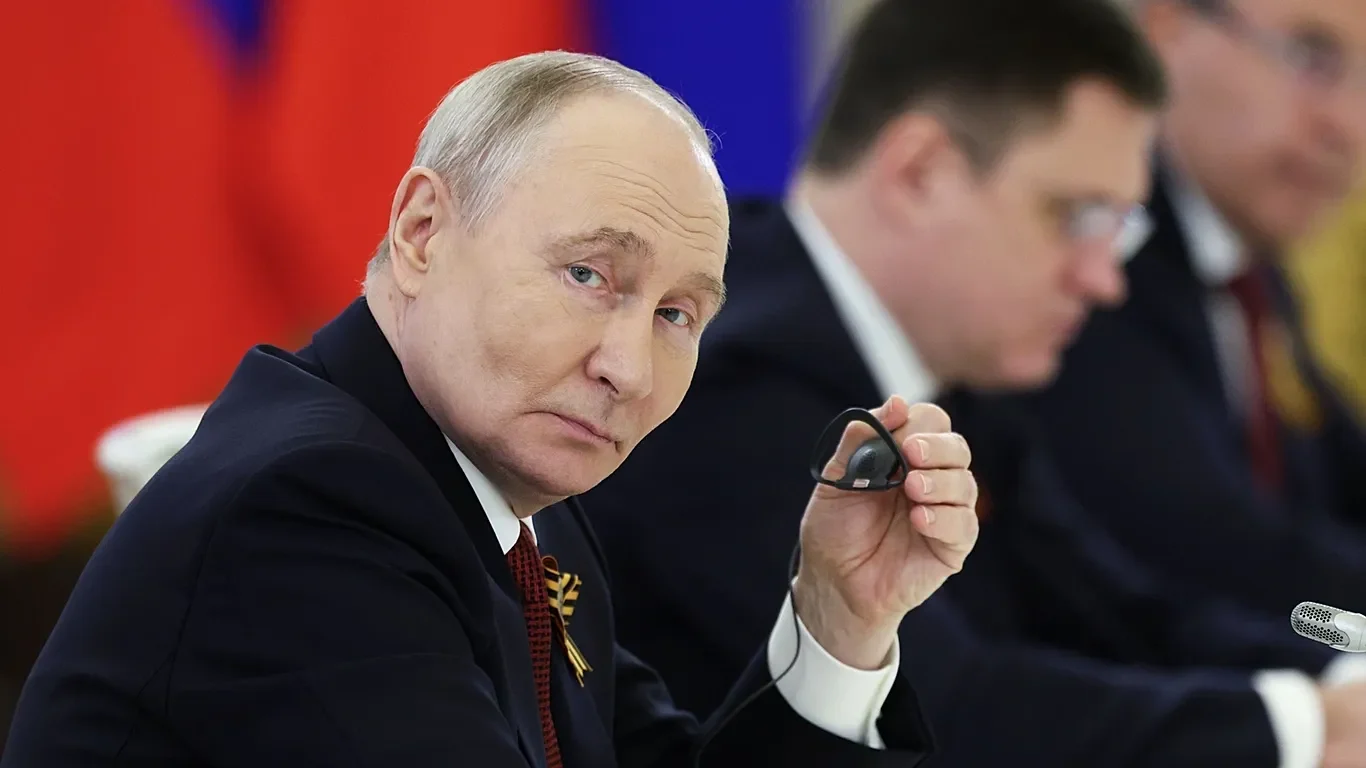
Cyprus joined 35 other countries on Friday in backing the creation of a special international tribunal aimed at prosecuting Russian President Vladimir Putin and other senior Russian officials for the crime of aggression against Ukraine.
The agreement was formalised during the annual meeting of foreign ministers of the Council of Europe, with the tribunal set to operate from The Hague.
The initiative seeks to address what participating states describe as a legal gap left by the International Criminal Court (ICC), which cannot prosecute the crime of aggression in relation to Russia because Moscow is not a signatory to the Rome Statute.
Ukrainian Foreign Minister Andrii Sybiha described the development as “the point of no return” in efforts to establish accountability for Russia’s invasion.
“The Special Court is becoming a legal reality. Very few believed this day would come. But it has,” he said, comparing the process to the post-war Nuremberg trials.
“Putin always wanted to go down in history. And this court will help him achieve that. He will go down in history. As a criminal,” Sybiha added.
The resolution adopted on Friday establishes the structure of a management committee that will supervise the tribunal’s operation, including approving budgets and appointing judges and prosecutors.
Participating countries also pledged to respect the independence of judicial proceedings.
Alongside Cyprus, signatories included Greece, France, Germany, Italy and the United Kingdom.
Australia and Costa Rica were the only non-European countries to support the initiative at this stage.
The European Union endorsed the tribunal, although four EU member states, Hungary, Slovakia, Malta and Bulgaria, did not sign Friday’s resolution.
Council of Europe secretary-general Alain Berset urged participating states to complete legislative procedures quickly so the court could begin operating.
The EU has already pledged €10 million towards its establishment.
The tribunal will focus on senior political and military figures accused of directing the invasion of Ukraine.
Proceedings against Putin and senior Russian ministers cannot move forward in absentia while they remain in office, though indictments may still be issued.
EU foreign policy chief Kaja Kallas said accountability remained essential to any future settlement.
“Russia must face justice and pay for what it has done,” she said.





Click here to change your cookie preferences