
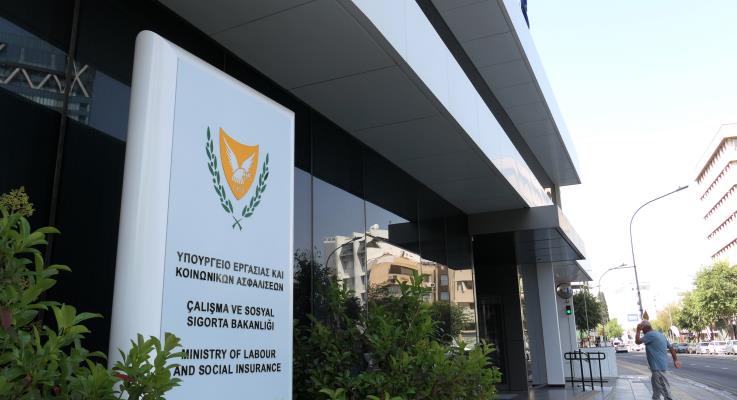
The total number of state employees in Cyprus reached 55,162 in June 2026, according to figures released by the statistical service (Cystat) on Monday, representing an increase compared with the same month a year earlier.
The latest data showed that the state workforce grew by 333 employees, equivalent to 0.6 per cent, from 54,829 in June 2025.
Employment in the civil service fell by 1.2 per cent, while the number of employees in the security forces declined marginally by 0.1 per cent.
By contrast, employment in the educational service rose by 3.5 per cent, accounting for the overall increase in state staffing.
The civil service remained the largest of the three services, employing 23,096 people, down from 23,366 a year earlier.
The educational service followed with 18,335 employees, compared with 17,714 in June 2025, while the security forces employed 13,731 people, slightly below the 13,749 recorded a year earlier.
Across the state workforce, permanent employees remained by far the largest employment category, with their number rising slightly from 32,813 to 32,852, an increase of 0.1 per cent.
Employees with contracts of indefinite duration increased by 1.2 per cent, reaching 9,544, compared with 9,431 in June 2025.
The largest increase among the main employment categories was recorded among employees on fixed-term contracts, described by Cystat as contracts of definite duration.
Their number rose by 2.9 per cent, from 5,835 to 6,007.
Hourly paid workers also increased slightly, rising by 0.1 per cent from 6,750 to 6,759.
As a result, none of the four main employment categories recorded an overall decline compared with June 2025.
Within the civil service, the number of permanent employees declined by 0.6 per cent, falling from 11,943 to 11,872.
Employees with indefinite-duration contracts recorded a sharper reduction of 3 per cent, with their number decreasing from 4,139 to 4,015.
However, civil servants employed on fixed-term contracts increased by 1.4 per cent, from 1,429 to 1,449.
The number of hourly paid workers fell by 1.6 per cent, from 5,855 to 5,760.
The educational service recorded the strongest overall growth, driven mainly by increases among employees working under indefinite-duration and fixed-term contracts.
Permanent employees in education declined marginally by 0.2 per cent, from 12,467 to 12,443.
However, the number of employees with indefinite-duration contracts rose by 24.7 per cent, from 951 to 1,186, representing the largest percentage increase recorded across all categories and services.
Fixed-term employees in the educational service increased by 9.8 per cent, reaching 4,557, compared with 4,151 in June 2025.
Hourly paid workers also rose by 2.8 per cent, from 145 to 149.
In the security forces, permanent employment increased by 1.6 per cent, from 8,403 to 8,537.
The number of employees with indefinite-duration contracts remained broadly unchanged, edging up from 4,341 to 4,343.
The sharpest decline was recorded among security force employees on fixed-term contracts.
Their number fell from 255 in June 2025 to just one employee in June 2026, a decrease of 99.6 per cent.
According to Cystat, the steep reduction mainly reflects the completion and non-renewal of specific fixed-term contracts in July 2025.
At the same time, hourly paid workers in the security forces increased by 13.3 per cent, from 750 to 850, the second-largest percentage increase among the individual categories.
For the period from January to June 2026, the average number of state employees increased by 0.2 per cent compared with the corresponding six-month period of 2025.
Average civil service employment fell by 1 per cent during the period.
Permanent employees declined by 0.5 per cent, employees with indefinite-duration contracts fell by 3 per cent and hourly paid workers decreased by 1.1 per cent.
Fixed-term employment increased by 1.4 per cent.
In the educational service, average employment rose by 2 per cent.
Permanent employment fell by 0.2 per cent, while indefinite-duration contracts increased by 24.8 per cent.
Fixed-term employees rose by 3.3 per cent and hourly paid workers increased by 2.7 per cent.
Average employment in the security forces remained unchanged overall.
Permanent employment increased by 1.7 per cent, indefinite-duration employment rose by 1 per cent and hourly paid workers increased by 6.8 per cent.
However, fixed-term employment declined by 88.9 per cent.
Across all services, average permanent employment increased by 0.2 per cent during the first half of the year, while employment under indefinite-duration contracts rose by 1.6 per cent.
Fixed-term employment declined by 1.1 per cent, while the number of hourly paid workers fell by 0.2 per cent.




Click here to change your cookie preferences