
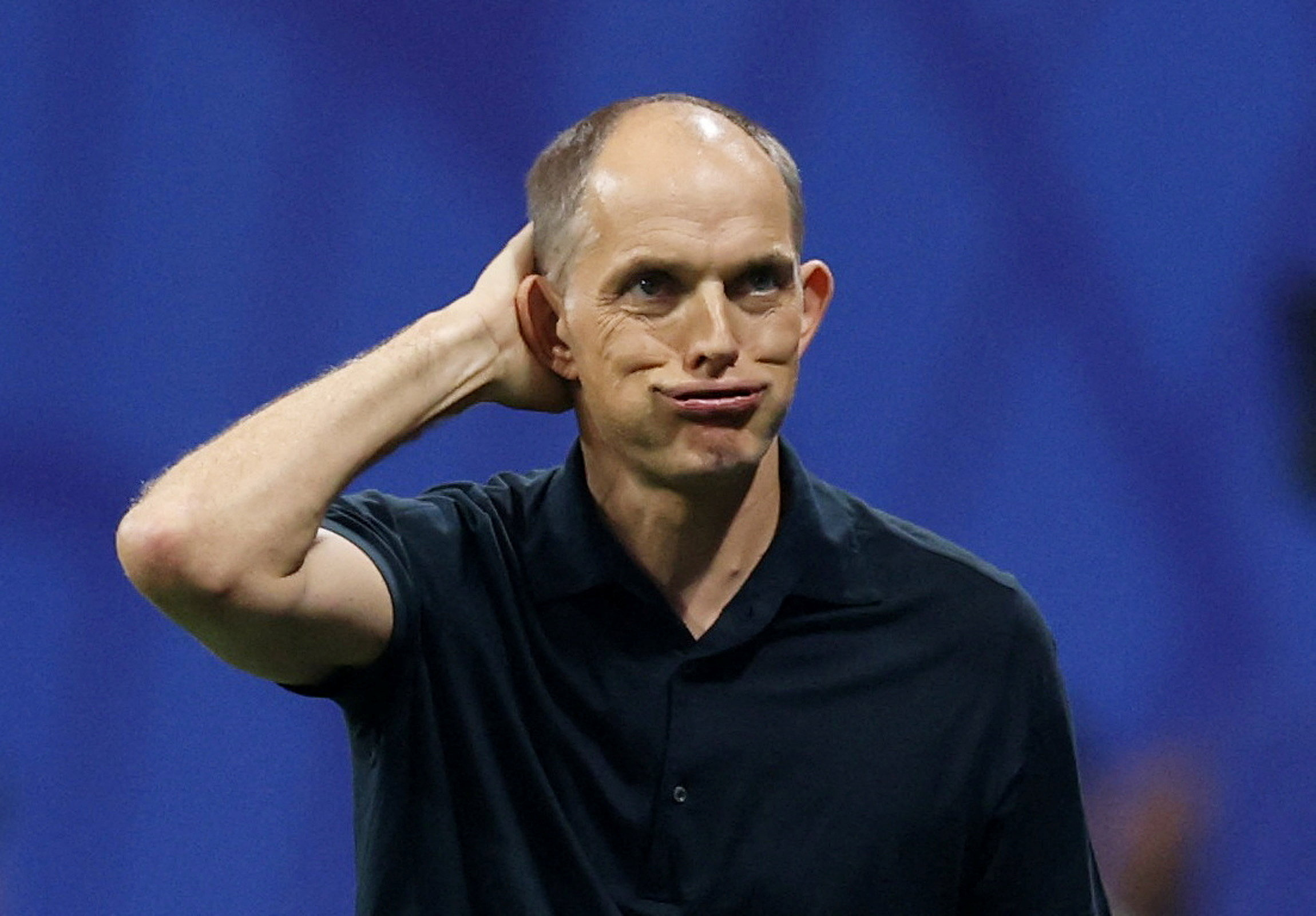
England’s long wait to win the World Cup—or even reach another final—will continue after holders Argentina came from behind to beat the Three Lions 2-1 in Wednesday’s semi-final in Atlanta.
England appeared on course to end a drought stretching back to their only World Cup triumph in 1966 when Anthony Gordon fired Thomas Tuchel’s side ahead in the 55th minute. But Argentina responded with two late goals in the 85th and 92nd minutes to snatch victory and book their place in the final.
Despite the heartbreaking defeat, Tuchel insisted he had “no regrets” over the tactical decisions that ultimately came under scrutiny.
“You can discuss this with a million coaches (but) I have to make a decision on the pitch,” Tuchel told the BBC. “I analyzed the match and I did it a certain way so that’s my responsibility. In the moment, no regrets. The team gave everything and we were very, very close.
“It’s not the moment to analyze the full tournament, we just went out because we lost a crucial match.”
After taking the lead, England dropped deeper and switched to a more defensive approach, with Tuchel introducing defender Ezri Konsa for goalscorer Gordon in the 72nd minute as Argentina piled on the pressure.
The England boss defended both the tactical change and his substitutions.
“We went to a back five to close the gaps inside and be strong in the air because straight after our goal, with no substitutions, we just conceded way too many crosses and way too many chances,” he said. “We tried to help but of course, the responsibility is on the coach and if it doesn’t go well, it’s easy to say it was wrong.”
Tuchel believed the match completely changed after England opened the scoring.
“I think at that point of the match, it was deserved that we take our moment and go 1-0 up,” he said.
“Unfortunately, and strangely enough, it marked then a complete momentum switch in the game.
“Argentina played with more risk, played with more rhythm, played with a feeling maybe that they have nothing to lose anymore, which freed them up and held us back because we obviously played suddenly with a feeling that we have a lot to lose.
“I think it’s two completely different matches. It’s until the goal and then after the goal.”
The defeat extended England’s decades-long World Cup frustration, but Tuchel dismissed suggestions the result was another chapter in an enduring national curse.
“I love to see these things in a football matter and not through football curses,” he told reporters. “I don’t believe so much in an English thing and in a curse or whatever, history repeating itself in these moments.
“It’s just like it’s different coaches, different players, different situations, different opponents. So I think basically I believe in the football thing.”
Tuchel, who earned praise for guiding England past DR Congo, Mexico and Norway to reach the semi-finals, accepted responsibility for the tactical calls that have since been criticised.
“That’s just the nature of the game. As soon as you lose, you get criticised,” the German said.
“No one knows what would have happened if you made different decisions. So it makes no sense to engage in that and lose my head. I’m responsible for them. I took them, so I take the criticism.”
England will now face France in Saturday’s third-place playoff, though Tuchel admitted neither side wanted to be playing for bronze.
“A lot of big football nations are eliminated before the semi-final, so it is an achievement,” he said.
“No one wants to hear that at the moment. Me neither, because we demand the most of ourselves.
“None of these players, none of the French players want to play this match. They want to play in the final. We gave everything to be in the final. Everyone plays to win the World Cup, but it is what it is.”





Click here to change your cookie preferences