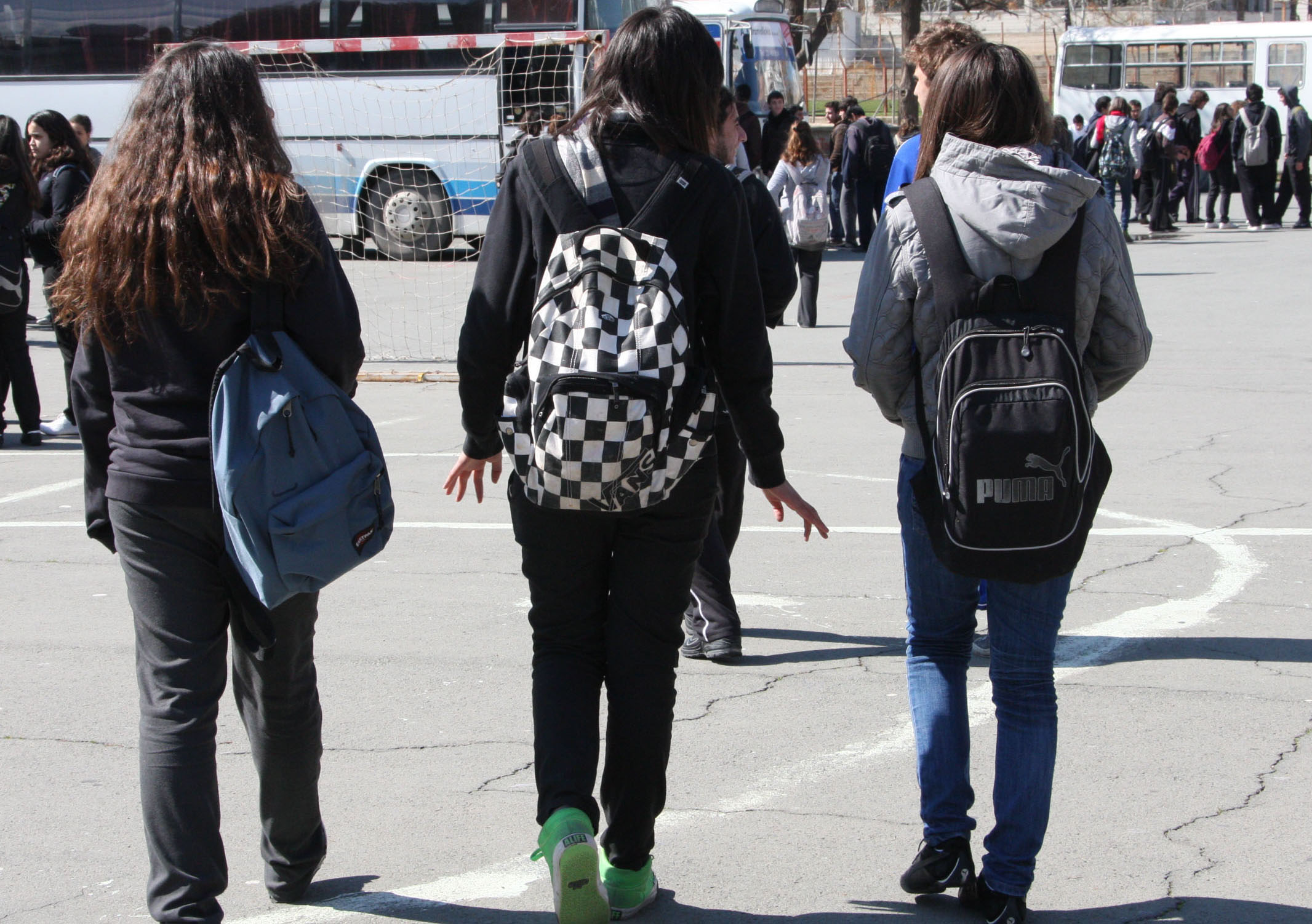
Pupils who attend state schools are treated as “second class” in comparison to those who attend private schools, auditor-general Andreas Papaconstantinou wrote in a report on fire safety in school buildings released on Thursday.
“The different institutional approach between state and private schools regarding health and safety obligations, in addition to creating conditions of unequal competition, gives the impression that state school pupils are treated as second class,” he said.
He added that the laws regarding fire safety in private schools are “particularly strict” and “even provide for the suspension of their operation” in the event that they are not adequately safe.
“Why, then, is the corresponding strictness and, by extension, the same level of safety not imposed on the environment in which state school pupils go to school?” he asked.
In this vein, the report stated that the education ministry “does not have a structured supervision system to ensure the quality and completeness” of written risk assessments and evacuation plans for cases of emergency.
“These weaknesses increase the risk of serous incidents, bringing about possible negative impacts on the safety of pupils and staff.”
To carry out this section of the audit, officials from the audit offices visited a total of 20 schools, and found that in only seven cases had a written risk assessment and evacuation plan been submitted to the education ministry.
In the remaining cases, it said, the schools either did not submit the documents to the education ministry or submitted documents which “did not meet the instructions” the ministry had set out.
As such, it said that the documents “function largely as a formal obligation and not as a dynamic risk assessment”.
In addition, the report found that the education ministry “does not have centralised, updated, and reliable information” regarding the question of whether the island’s state schools have a valid fire safety certificate, as it “does not maintain a centralised register”.
The absence of such information, it said, “makes it impossible to identify schools at increased risk in a timely manner”. As such, it recommended that a centralised register be created and maintained by the education ministry.
Of the 25 schools visited for this purpose, only 11 had valid reports listing the safety of their electrical installations, and not a single one had a fire safety certificate.
This, it said, would mean that in the event of an emergency “the risk of an uncontrolled development with a serious impact on human lives is increased”.
It also made explicit reference to the state of technical schools, given that their structure entails an automatic and inherent increased risk of fires.
On this matter, it found a similar lack of fire safety certificates, and found that in one case of a technical school in the Limassol suburb of Ypsonas, the fire brigade had carried out inspections last year and not issued a fire safety certificate “due to the deficiencies identified”.
The report found differences of opinion between the education ministry and teachers regarding whose responsibility the securing of a fire safety certificate or the writing of a risk assessment may be, with the ministry saying that headteachers “have the necessary knowledge of the school environment and must assume this responsibility”.
However, primary school teachers’ trade union Poed said that schools’ senior leadership teams “do not have the necessary administrative time or the specialised knowledge to prepare risk assessments”.
Later on Thursday, the education ministry said that the report was “an important tool for improvement” and that “its findings will be utilised in the context of planning which is already being implemented”.

Click here to change your cookie preferences