
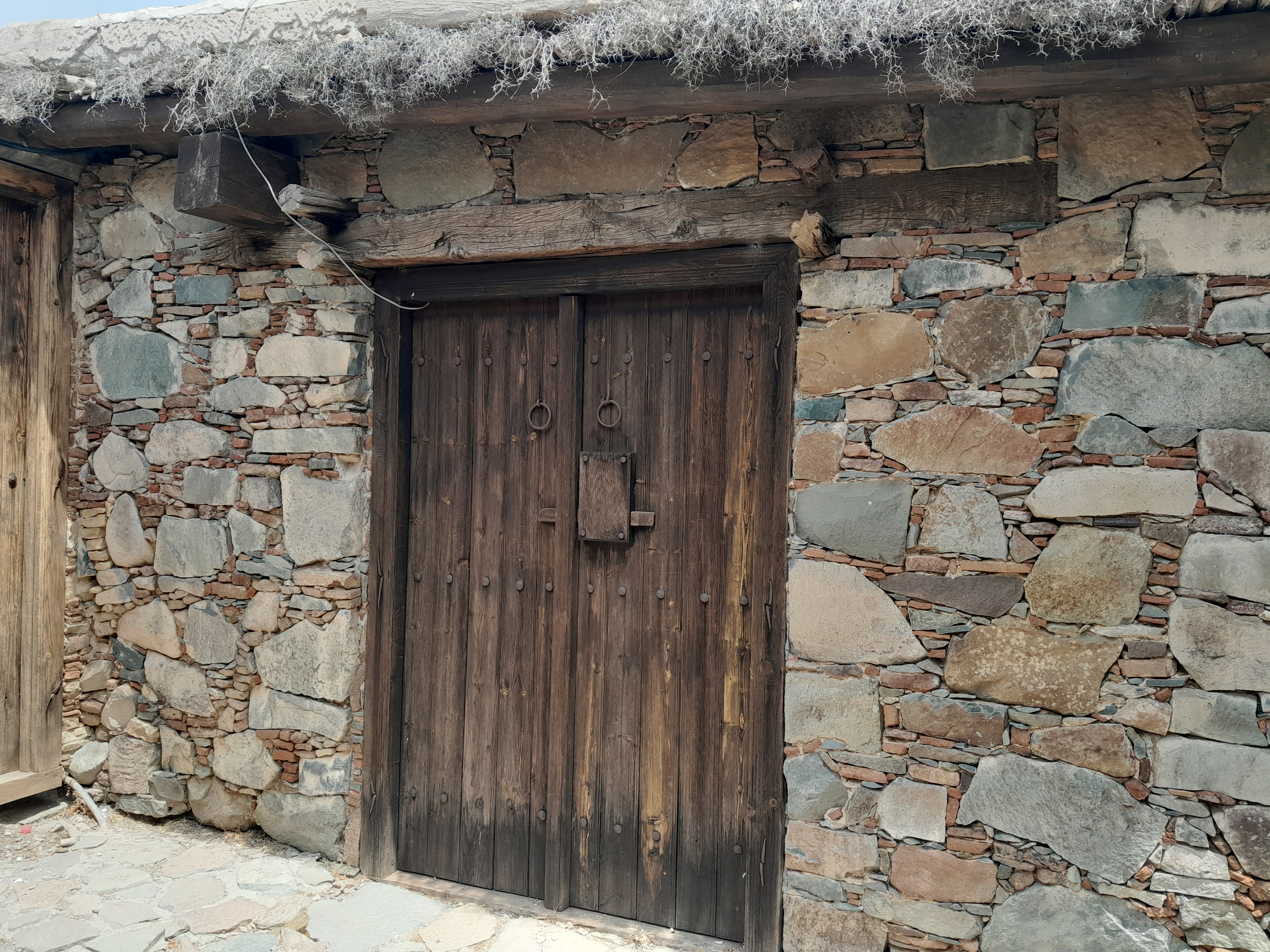
From simple timber to elaborate entrances with carved stone, their materials and construction reflect changing architecture, craftsmanship and social life
A large wooden door from a traditional Cypriot house may not have been designed simply for letting people in and out. In many vernacular homes, the main entrance, known as xoporti, connected the street with the private yard and was wide enough to accommodate both residents and livestock.
The size and construction of a door can also offer clues about the building itself. Architect Constantinos Nioulicos, who has worked on the renovation of traditional buildings in Cyprus, says a door can offer clues about the era in which it was made, the economic status of its owner and the use of the space behind it.
It would be easy to refer to the “traditional Cypriot door,” as if there was only one recognisable type. Carpenter and furniture maker Michalis Socratous says the reality was far more varied.
Boarded doors formed one of the most basic types, known to the older Cypriot craftsmen as skettes. These were constructed from solid timber boards held together by horizontal wooden members. Some doors were more complicated since they were framed doors using panels and mouldings and were sometimes made as double doors.
Affluence led to elaboration
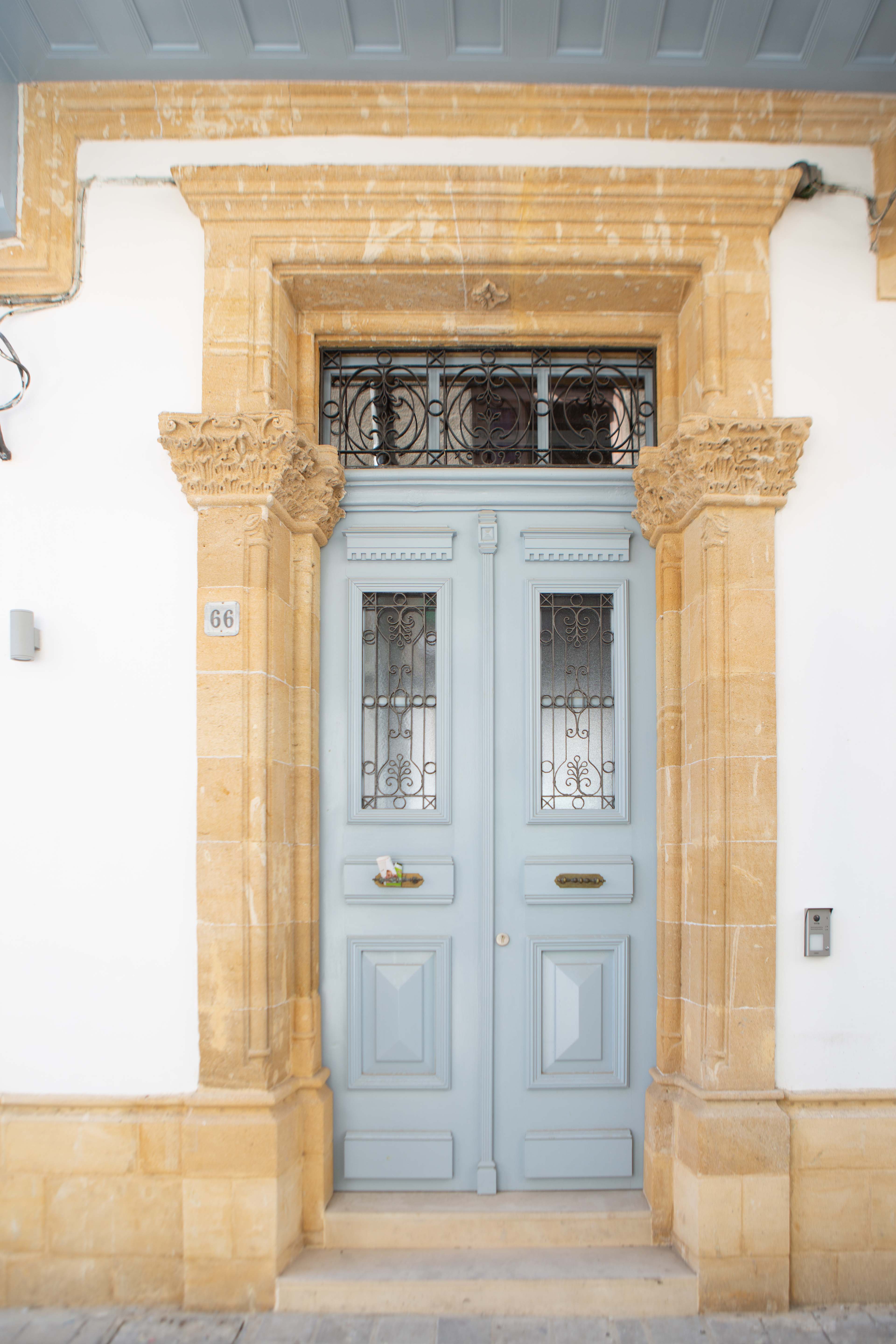
Maria Philokyprou, associate professor of architecture at the University of Cyprus, says rural vernacular entrances were generally simple in construction, often rectangular with a horizontal timber lintel. In more affluent buildings influenced by urban architecture, entrances could be more elaborate, with carved stone frames, arches, panelled doors, skylights and ironwork.
Materials also varied. Pine was common, according to Socratous, but other materials such as cypress were also used. In the Karpasia region for example, craftsmen sometimes used aoratos. The timber available locally, the area and the type of building all influenced how a door was made.
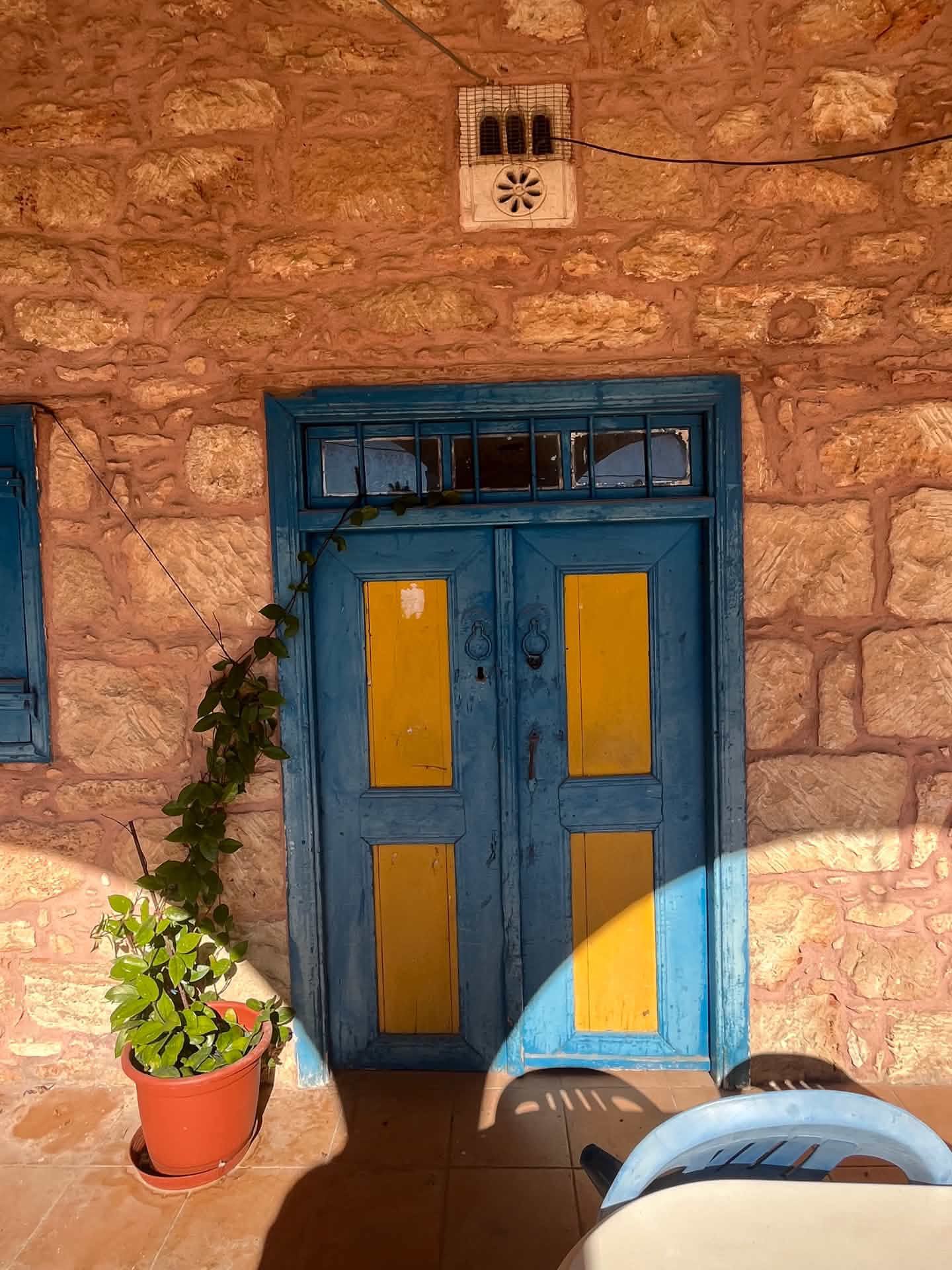
Much of the process was carried out manually. Saws, planes, chisels and specialised moulding planes were some of the tools used by the traditional Cypriot woodworker, known as a pelekanos. Working with solid timber required more than knowing how to handle the tools; Socratous says the craftsman also needed a deep understanding of the timber itself.
And it was not a job for one man alone. The hinges, grills and handmade locks would have been made by a komodromos, a craftsman specialising in metalwork.
Yet, as wood is not something that easily survives over centuries, many of these more traditional specimens have been lost.
It’s not just houses
Director of the Larnaca Archives – Phivos Stavrides Foundation Iosif Hadjikyriakos says points out that earlier examples can be found in churches and fortifications, while the majority of old domestic doors that remain in Cyprus date from the late Ottoman and British periods. Over time, door styles changed with fashion and preferences of those commissioning them. “A door is the focal point of a house’s façade and, in many ways, an emblem of the image of the people who live behind it,” Hadjikyriakos says.
Its craftsmanship, materials and decoration, he adds, can provide clues about the social standing of its owners and, in some cases, their religious or cultural identity. Nioulicos has noticed these differences through his work on listed and traditional buildings. The combination of a large door with delicate metal elements, he says, is more likely to indicate the colonial neoclassical period, while a large and arched entrance surrounded by heavy sandstone or limestone masonry may indicate the Lusignan or Ottoman period.
Deciding what to do with a door during restoration can be as complicated. For Nioulicos, the first question is whether restoration is worth it. Something like a simple plank door may be remade and allow for improved mechanism, improved sealing, insulation, soundproofing and fire protection. A more complex door with elaborate craftsmanship is more likely to be preserved.
Rotten sections of timber, malfunctioning locks and broken handles are some of the issues he deals with, but the solid wood used in well-crafted older doors can often be repaired. A greater challenge, he says, is usually not the lack of carpentry skills but the cost involved.
Philokyprou takes a more conservative approach. Where original timber elements survive, she says intervention should only be kept to a minimum, replacing only the most severely deteriorated parts. Original timber shutters and mechanisms should be preserved with particular priority given to carved wooden elements.
Not just a question of authenticity
Preserving these elements, she says, is not just a question of authenticity. Often, the original timber construction is also more durable than a modern reconstruction.
Socratous explains that the knowledge that once accompanied the craft is becoming more difficult to preserve: working with solid timber, traditional joints and hand tools, reproducing old profiles by hand and knowing how to repair instead of replace.
“Perhaps most importantly, we are losing the old way in which knowledge passed directly from master craftsman to the younger generation,” he says. Even the word pelekanos is heard less frequently today.
Socratous emphasises the importance of documenting this knowledge while older craftsmen are still around to pass it on. He says this is also behind an idea for an interactive museum of Cypriot woodworking, which would preserve not only old tools but how they were used, the knowledge behind them and the stories of the people who worked with them.





Click here to change your cookie preferences