
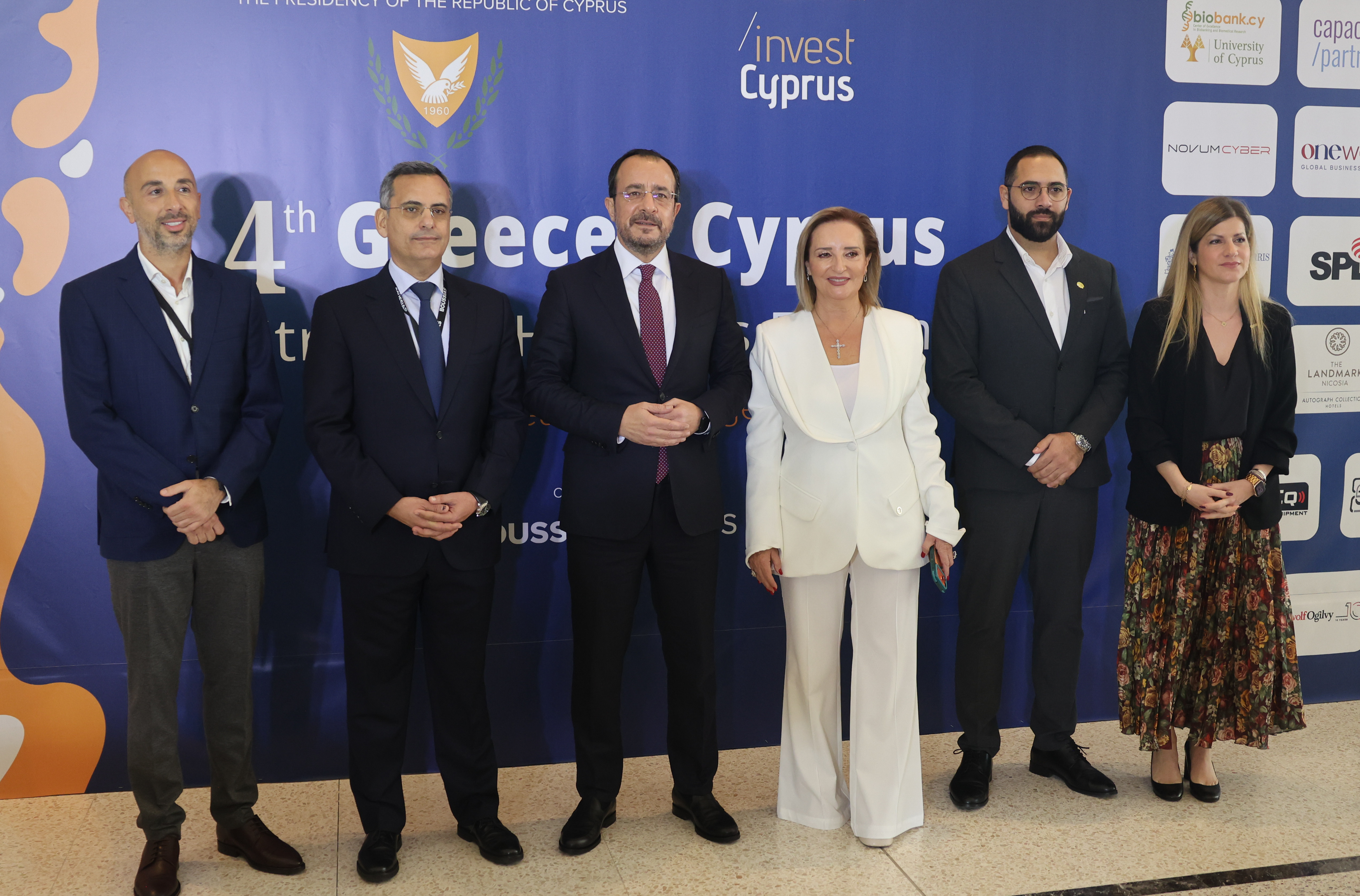
The stock of Greek direct investment in Cyprus rose by nearly two-thirds to €9.2 billion in June 2026 from €5.6bn in 2024, Invest Cyprus chairman Evgenios Evgeniou said on Wednesday.
He put Cypriot investment in Greece at about €2.7bn and announced a meeting with Greek businesses in Cyprus in early December to identify where they could invest next.
Speaking at the fourth Greece-Cyprus Strategic Horizons Forum in Nicosia, Evgeniou said more than 1,500 businesses with Greek interests operate in Cyprus. Trade in goods between the two countries reached €3.3bn in 2025, while exports to Greece of goods produced in Cyprus rose 12 per cent, he added.
Evgeniou said “those ties could help both countries attract investment from elsewhere.” Cyprus has business links in the Middle East and eastern Mediterranean, while Greece has an established presence in the Balkans and south-eastern Europe.
By combining those networks, he said, the two countries could give international investors access to a wider range of markets.
Invest Cyprus and Enterprise Greece renewed their cooperation agreement in April, laying the groundwork for joint investment initiatives, business delegations and exchanges of expertise.
Evgeniou said a recent meeting with Greece’s deputy foreign minister and the chairman of Enterprise Greece produced an agreement to turn the memorandum into a joint action plan with specific initiatives and targets.
The first closed-door working session with Greek businesses operating in Cyprus will be organised with the Greek embassy in early December. Cyprus’ energy, commerce and industry minister and the chairman of Enterprise Greece are due to take part.
Evgeniou identified energy, defence manufacturing and defence technology as areas for cooperation and pointed to the proposed Cyprus-Greece electricity interconnector as an example of the coordination large cross-border projects require.
That question of scale also came up in remarks by Vicky Makrygianni, director of international relations at the Hellenic Federation of Enterprises. She said “EU trade agreements with partners such as Mercosur, India, Canada and Japan offered opportunities in markets whose demands could exceed what an individual company could handle.”
Greek and Cypriot firms could “join forces, make use of our business networks and gain the scale we need to claim a larger share of international markets”, she said.
Makrygianni pointed to opportunities in energy, agri-food, construction, technology and high-value services, as well as in artificial intelligence and cybersecurity. She added that “Greece could build on Cyprus’ work on competitiveness, simpler regulation, energy security and trade when it takes up the EU Council presidency in the second half of 2027.”
Andreas Demetriades, vice-president for the economy at the Cyprus Chamber of Commerce and Industry (Keve) and chairman of the Cyprus Association of Large Investment Projects, made a similar case for pooling the two countries’ strengths.
Greece could bring its industrial base and access to European and Balkan markets, he said, while Cyprus could bring its financial and professional services, shipping industry and ties to the Middle East and Gulf.
“Together we can create a strong business network that connects three continents,” he said, calling for more joint ventures and for chambers on both sides to share investment leads and help businesses deal with practical barriers.
For Nicosia, the pitch to Greek investors included hotels and a major redevelopment in the east of the city.
Nicosia mayor Charalambos Prountzos said, “the capital aims to lift its share of Cyprus’ tourist arrivals to 10 per cent from 5.7 per cent and more than double tourism revenue to €400 million by 2029, from about €170m.”
He expects hotel investments worth more than €250m to double the city’s tourist bed capacity by 2027, with investment also going into the historic centre.
Prountzos also outlined plans to redevelop 1.4m square metres in the Sopaz area of eastern Nicosia, with space for businesses, housing and research.
“We are essentially talking about a new city within the city of Nicosia,” he said. The municipality is working with the government on the project, he added, and is open to working with Greek businesses and research organisations on investments that would also benefit the city’s neighbourhoods.


Click here to change your cookie preferences