
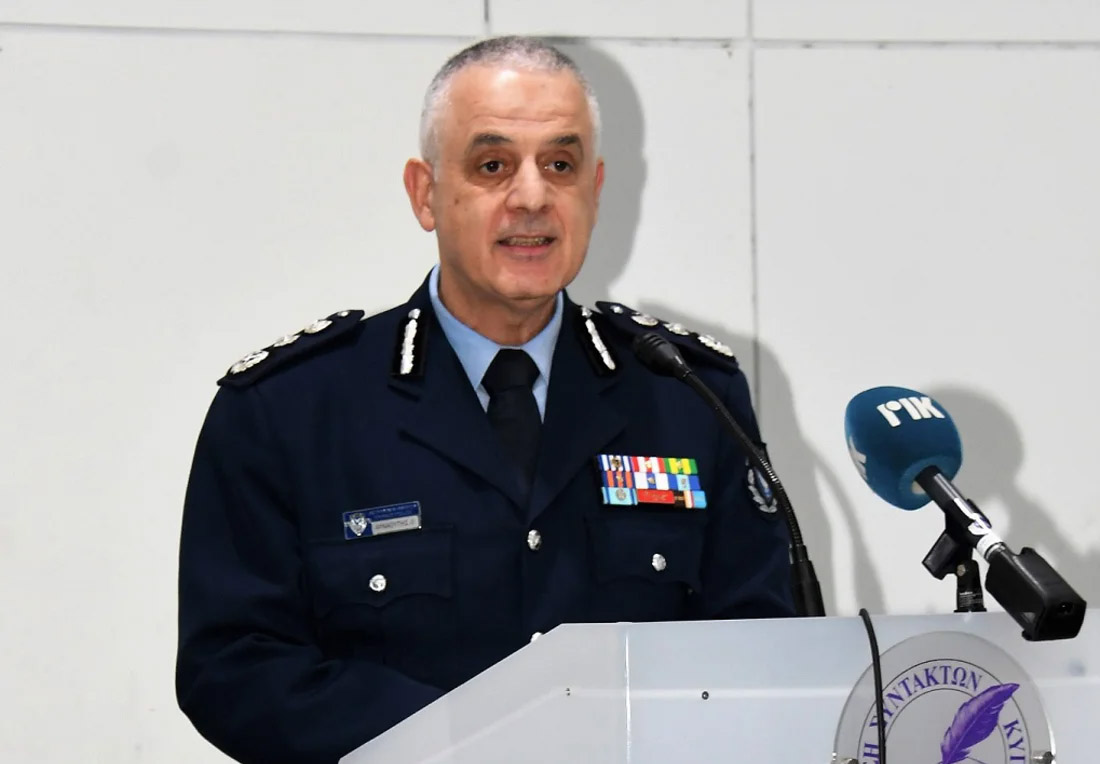
Cyprus police unveiled their modernisation programme on Wednesday, setting out plans for a more technologically advanced and effective police force by 2030.
Presenting the Police 2030 programme to journalists, police chief Themistos Arnaoutis outlined a vision of a force better equipped to respond more quickly to incidents and tackle organised crime.
The programme goes beyond technological upgrades, envisaging changes to operational procedures, organisational structures and personnel management, with the aim of creating a police force capable of adapting to increasingly complex security challenges.
“We want to be strong against crime and humane towards the citizen,” Arnaoutis said, emphasising the importance of transparency and accountability.
Central to the reforms is an integrated Command, Control and Communications system, known as C3, designed to provide a common operational picture of incidents and available resources across police districts in real time.
Officers could also be equipped with official smartphones or tablets, enabling them to access relevant databases while on patrol and obtain information without relying on separate communications with headquarters.
The reform programme brings together five major initiatives: the C3 command and control system, intelligence-led policing, a comprehensive assessment of the police’s technological infrastructure, the reorganisation of its IT department and the strengthening of the Directorate for Combating Organised Crime.
The proposed IT reorganisation will introduce a new structure with clearer roles and responsibilities, while the assessment of existing systems will identify technological gaps and the changes needed to connect information more effectively.
The presentation also emphasised that no single technological project would be sufficient on its own, with operational improvements, organisational changes and investment in personnel expected to progress together.
Cooperation with Europol has already begun, Arnaoutis said, with the aim of securing additional expertise and operational tools.
The police chief acknowledged, however, that modernisation was overdue, pointing to the considerable gap between technological advances in everyday life and the systems still used by the force.
“Technology, society and the private sector are moving much faster. In the end, the police have been left behind,” he said.
He illustrated the problem by comparing the convenience of smartphones and banking applications with police procedures that continue to involve fragmented information systems, repeated data entry and, in some cases, handwritten records.
Arnaoutis also highlighted the changing nature of organised crime, noting that criminal networks increasingly have access to advanced technology and substantial resources.
“They have no financial restrictions and no bureaucracy,” he said.
The need for better coordination was another recurring theme, referring to incidents occurring within the same police district, Arnaoutis questioned how officers could be expected to respond effectively without immediate access to connected information.
“It is unthinkable for the police in 2026 that two incidents can occur in the same district, an hour apart, and we cannot connect them or have a single picture of what is happening,” he said.
Beyond technology, the programme envisages improved training and more consistent procedures, with an emphasis on reducing administrative burdens and giving officers the tools they need to work more effectively.
For the public, the intended improvements include faster responses as well as better handling of incidents.
The first phase of Police 2030 is already under way, addressing immediate staffing and equipment needs, while the second phase awaits a Council of Ministers decision.
Arnaoutis stressed that the programme represented a broader change in the organisation’s culture rather than a series of isolated projects.
“If you don’t change yourself, nobody else will,” he said.





Click here to change your cookie preferences