
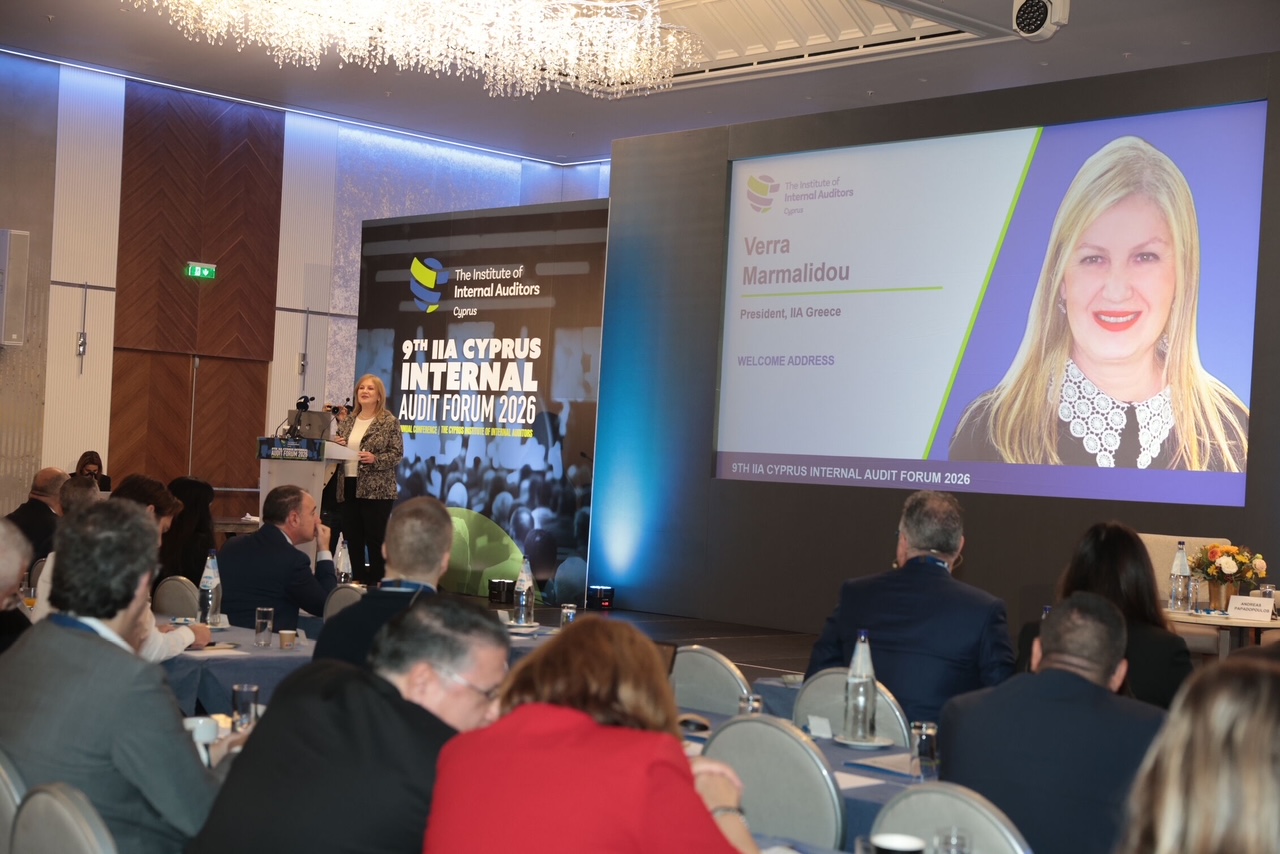
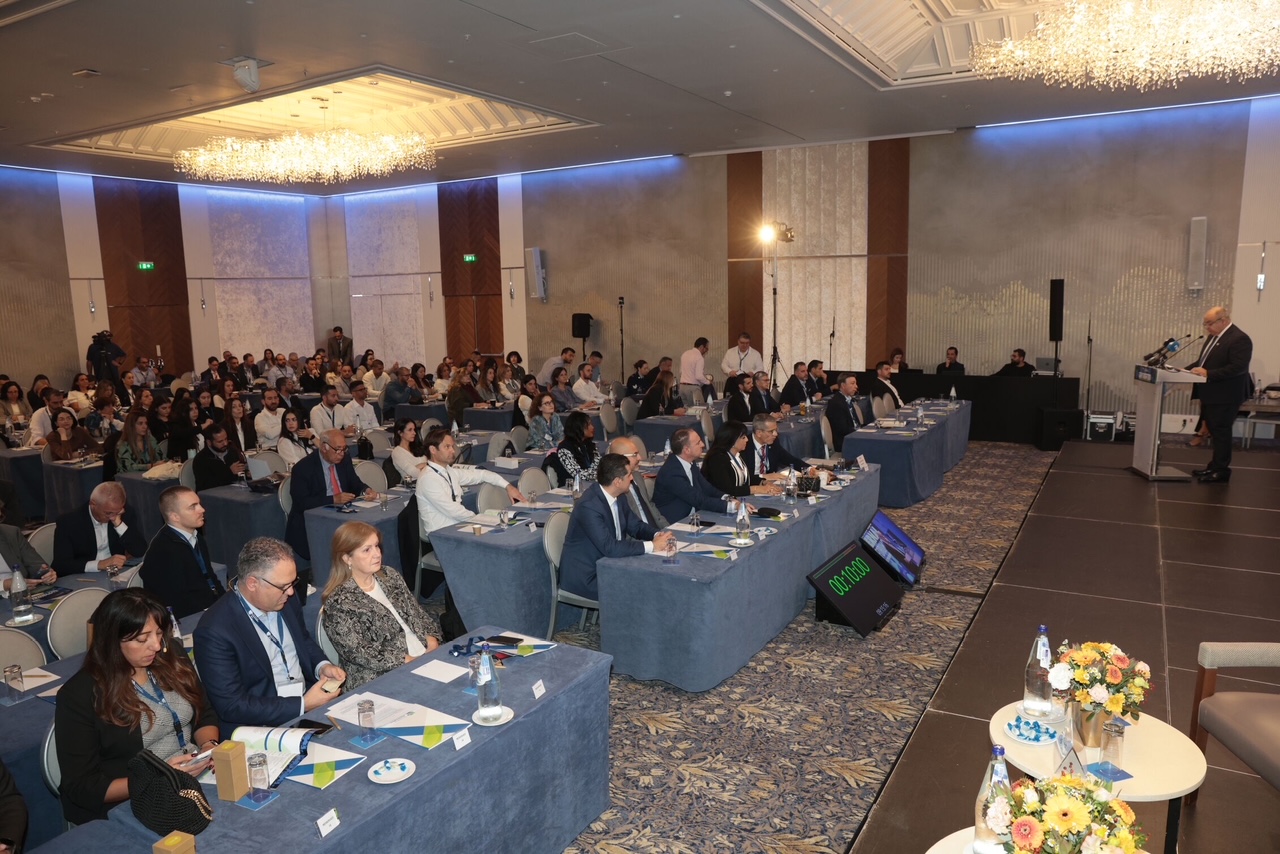
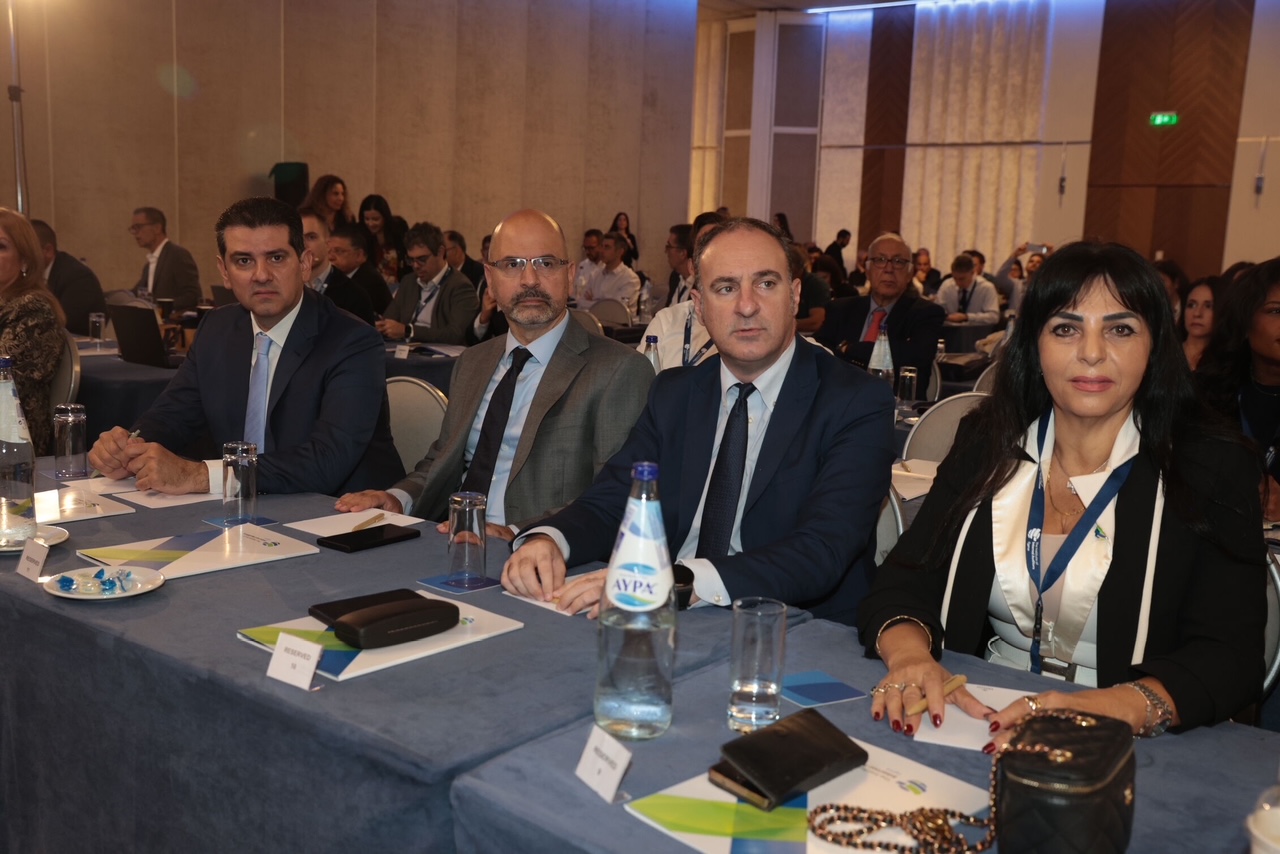
More than 200 executives from the private and public sectors gathered on Monday, 16 November 2026, at the Hilton Nicosia for the 9th Cyprus Internal Audit Forum, the annual conference of the Institute of Internal Auditors Cyprus (IIA Cyprus). Among them were internal auditors, senior executives of companies and organisations, and members of Audit Committees and Boards of Directors.
The question of the day was a practical one: what does an organisation expect from its Internal Audit function today? Risks are multiplying, technology keeps moving at full speed and the demands for governance and accountability are constantly growing. The speakers discussed how internal audit helps management handle risks so that the organisation can achieve its strategic objectives. There was extensive discussion on Artificial Intelligence and how its use affects the internal audit profession.
A strategic pillar of good governance
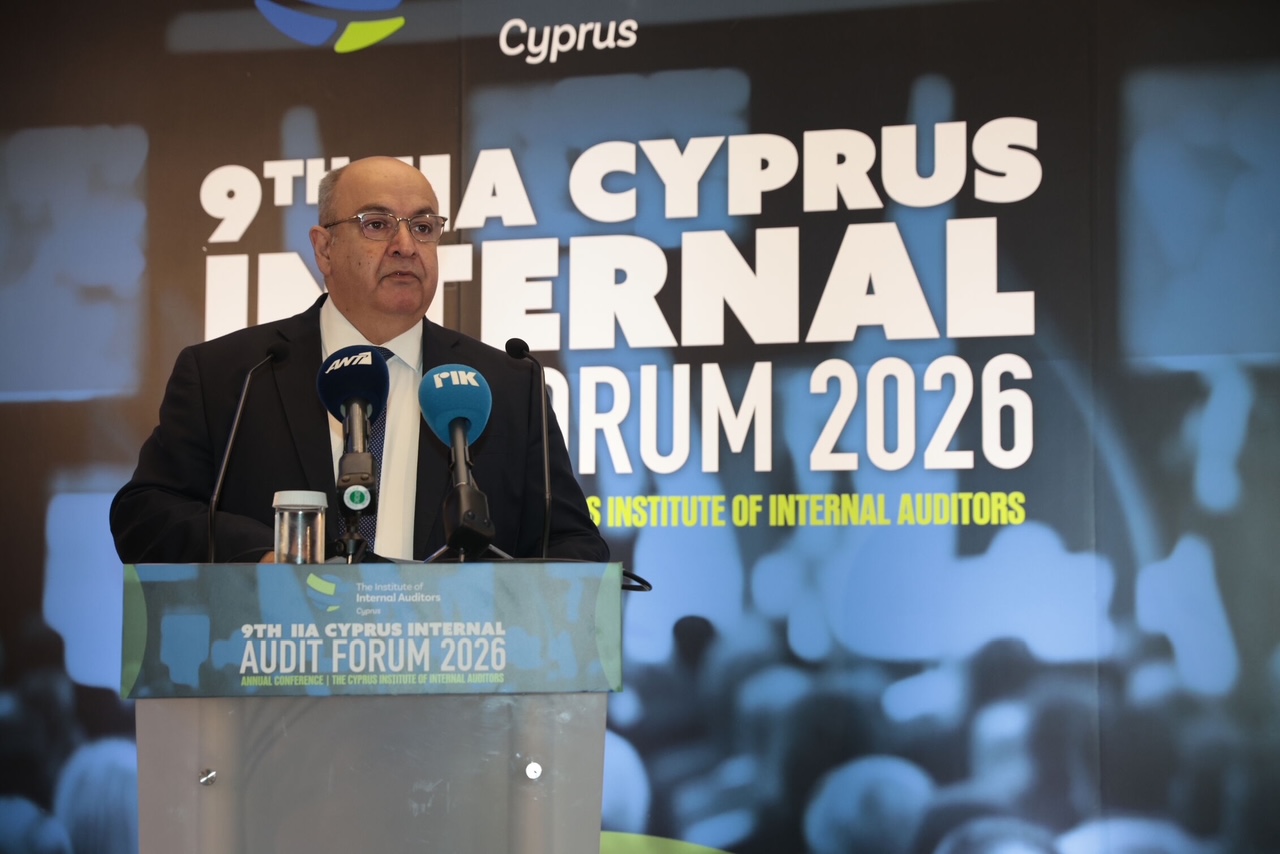
The President of IIA Cyprus, Dr Aristodemos Yiannakas, welcomed the participants. “At a time when organisations are called upon to recognise risks early, understand their impact and be properly prepared to respond effectively, Internal Audit takes on an even more substantial role. As the independent third line in the governance framework, it has a unique view across the entire organisation, helping to identify trends and weaknesses, strengthen accountability and continuously improve the control environment,” he said.
Dr Yiannakas also referred to the preventive and deterrent effect of a strong and independent Internal Audit function. “Its presence can help reduce the opportunities for fraud, manage risks more effectively and promote greater accountability across the organisation. Internal Audit needs to keep adapting to the changing needs of the organisations it serves, preserving its independence while increasing the value it offers,” he noted.
The Minister of Energy, Commerce and Industry, Mr Michael Damianos, addressed the Forum on behalf of the President of the Republic, Mr Nikos Christodoulides. As he said, internal audit, as the third line of defence in risk management and corporate governance, plays an especially important role in an environment of rapid change, uncertainty and emerging risks. “Internal audit should therefore be seen not as a narrow compliance requirement, but as an investment in better governance, stronger institutions and sustainable growth,” he stressed.
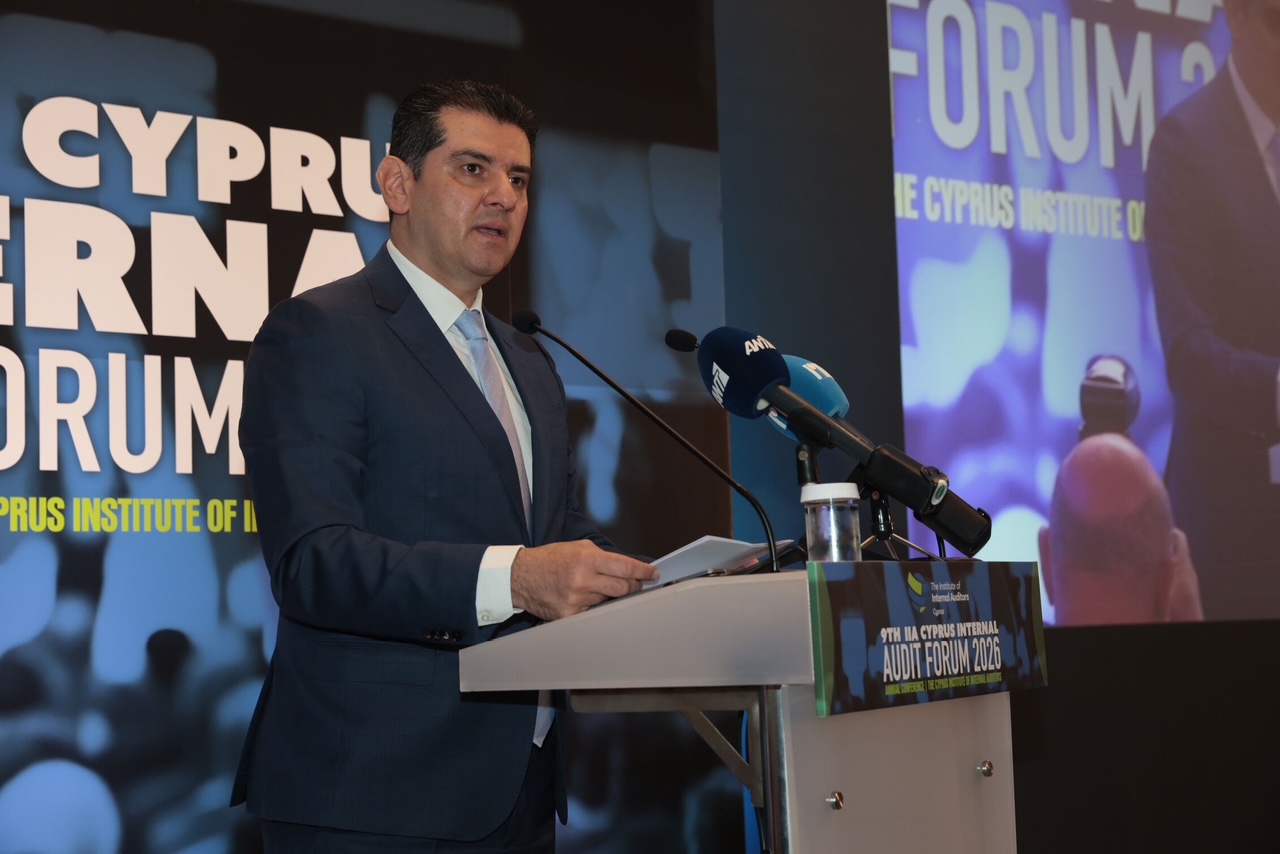
Referring to digitalisation and Artificial Intelligence, he said that they are fundamentally changing the way organisations operate. They also bring new challenges related to cybersecurity, data protection and the responsible use of technology, which call for continuous learning and adaptation on the part of internal auditors. “Strong governance cannot depend on legislation and institutional structures alone. It requires a culture in which risks are identified early, shortcomings are addressed openly and organisations are willing to learn and improve,” he noted. The Minister congratulated the Institute of Internal Auditors Cyprus on its contribution to promoting high professional standards.
The President of the House of Representatives, Ms Annita Demetriou, in a video message, described Internal Audit as “a strategic pillar of good governance, transparency and accountability”. As she said, “the role of internal auditors is decisive in strengthening citizens’ trust and ensuring that organisations operate effectively and responsibly, in both the public and the private sector”.
Referring to technology, Ms Demetriou said that “artificial intelligence, cybersecurity and digital transformation create new challenges for Internal Audit” and that “innovation must go hand in hand with strong oversight mechanisms, effective risk management and institutional accountability”.
Of the Institute of Internal Auditors Cyprus she noted that, with more than 550 members, it “plays an essential role in upgrading the profession and promoting high professional and ethical standards”. She added that the House of Representatives “recognises and supports its important work, as well as the initiatives that strengthen good governance and institutional credibility”.
From small audit departments to Artificial Intelligence
The programme opened with two presentations. Mr Andreas Papadopoulos, Internal Audit Leader at PwC Greece, spoke about Internal Audit’s communication with stakeholders, beyond standard reporting. Mr Alfie Duffen (Data Protection and Governance Manager, Grant Thornton UK) spoke about auditing Artificial Intelligence systems and about using AI as an audit tool.
This was followed by the panel on the challenges facing small Internal Audit departments, moderated by Mr George Zornas, Internal Audit Director of Bank of Cyprus and Vice President of the ACFE Cyprus Chapter. The panellists were Mr Giancarlo Millo (Group Chief Internal Auditor, Mizzi Organisation, Chairperson of IIA Malta), Ms Nora Kelani (Group Chief Audit & Risk Officer, Trust Holding, President of IIA Jordan), Ms Elena Dourou (Group Chief Internal Auditor, Bank of Valletta) and Ms Annita Ritter, Head of Internal Audit at the State Health Services Organisation (SHSO). The discussion focused on setting priorities, access to specialised knowledge, the use of technology and maintaining the quality of audit work.
Artificial Intelligence and technology took up a large part of the conference. Mr Fady Sameh (Director, Enterprise Risk, Deloitte Middle East) described the modern, digital and agile Internal Audit unit, while Mr Mariusz Witalis, head of EY’s Forensics services in Central Europe, asked whether the time has come for “Financial Precrime” departments, that is, investigations that detect financial crime before it happens.
The second panel was devoted to technology risks for the auditor without a technical background, with executives from Mastercard, OTP Bank Serbia and the Digital Security Authority, moderated by the President of the ISACA Cyprus Chapter, Mr Constantinos Koumides.
Mr Erik van Bekkum (KPMG Netherlands) explained how culture and human behaviour can be methodically built into internal audits. Mr Jamie Lyon, Global Head of Skills, Sectors, Technology at ACCA, presented the global talent trends for 2026.
The Forum closed with a talk by Mr Markos Daskalakis, Audit Committee Chair, titled “The Other Side of the Table”: what he himself needed from assurance when he became the one being assured.
Those who supported the Forum
The Forum would not have been possible without its sponsors and supporters. The Board of Directors of IIA Cyprus thanks them warmly.
The Platinum Sponsor was Bank of Cyprus and the Educational Sponsor was the Human Resource Development Authority (HRDA). The Gold Sponsors were Deloitte, KPMG, EY, PwC, Grant Thornton and ACCA. The Silver Sponsors were CMS Systems Solutions and Nexia Poyiadjis, and the Bronze Sponsor was GnosisNet. The Forum was supported by the Institute of Certified Public Accountants of Cyprus (ICPAC), the ISACA Cyprus Chapter, the ACFE Cyprus Chapter and the Internal Audit Service of the Republic.
The Institute also thanks the speakers, the panel moderators and everyone who took part in the conference.
The Institute of Internal Auditors Cyprus
The Institute of Internal Auditors Cyprus was founded in 1998 and today has more than 550 members. Its aim is to represent, promote and upgrade the internal audit profession in Cyprus and to strengthen the knowledge and skills of its members through education and training.
For more information
Institute of Internal Auditors Cyprus Tel.: 22680868 | Email: [email protected] | www.iiacyprus.org.cy





Click here to change your cookie preferences