
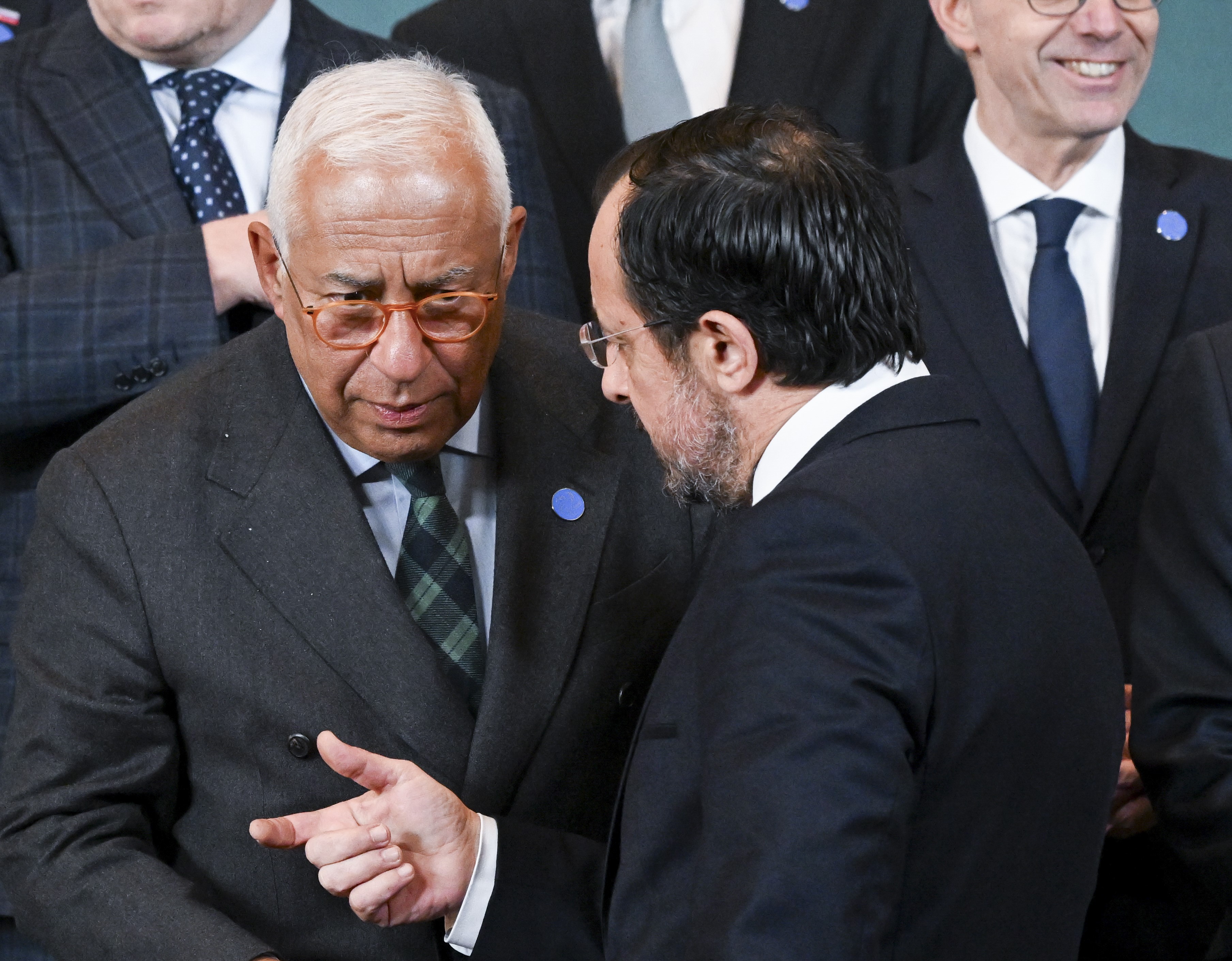
Cyprus is one of 17 European Union member states which has signed a letter demanding that no further cuts be made to the bloc’s national and regional partnership plans – funds allocated directly to member states to spend on matters such as agriculture and infrastructure – be made in the next long-term budget proposal.
“We firmly reject any reductions to the national and regional partnership plan national envelopes in the forthcoming negotiating box. Any such cut would undermine core EU policies enshrined in the treaties,” the letter stated.
European Council spokesman Patrick McCullough told the Cyprus Mail on Thursday that it is expected that the next budget proposal for the next multiannual financial framework – its long-term budget for the period covering the years between 2028 and 2034 – will be made by European Council President Antonio Costa on Saturday.
That proposal, known as a “negotiating box”, will be the third so far for the next multiannual financial framework, and will come ahead of an extraordinary European Council summit in Brussels next week.
In both of the negotiating boxes put forward so far, firstly by the Cypriot government in June, and then by the Irish government last month, the funding allocated to national and regional partnership plans has been reduced compared to the original budget proposal put forth by the European Commission last year.
The commission had initially allocated a little over €771 billion in 2025 prices to the plans, which the Cypriot government then reduced that amount by a single billion, before the Irish government suggested an allocation of just shy of €747 billion over the course of the seven years.
Leaders of 17 EU member states demand end to budget rebates
National and regional partnership plans constitute funding disbursed to nations and regions in the EU to support matters such as “cohesion” projects, the word used to describe efforts to reduce regional inequality across the continent, and agricultural funding linked to the bloc’s common agricultural policy.
Alongside Cyprus, the letter was signed by Bulgaria, Croatia, the Czech Republic, Estonia, Greece, Hungary, Italy, Latvia, Lithuania, Malta, Poland, Portugal, Romania, Slovakia, Slovenia and Spain, with the group of 17 states known as the “friends of cohesion”.
It made reference to a previous letter signed by the leaders of the same 17 countries last month, which demanded an end to the EU’s budgetary rebate system, saying that “we reaffirm our strong support” for that position.
Last month’s letter had said that “preferential gross national income-based corrections have no place in a modernised and fair EU budget”, with EU contributions, and therefore rebates, based on GNI.
At present, Austria, Denmark, Germany, the Netherlands and Sweden receive rebates, with Germany the largest rebate recipient, at over €3.6 billion per year, and the Netherlands and Sweden both also taking over a billion euros per year in rebates.
Mitsotakis warned against further cuts
The letter’s publishing came after Greek Prime Minister Kyriakos Mitsotakis had warned against potential further cuts to the multiannual financial framework, describing next week’s European Council summit, and another planned summit next month, at which EU leaders will attempt to reach a budget agreement, as “critical”.
“Both [Cypriot President] Nikos [Christodoulides] and I have stated many times that if we, as Europe, have ambitious goals, across various areas, ranging from competitiveness and defence to the climate crisis, we must also possess the financial resources necessary to achieve these goals,” he said.
He also stressed that by the end of next month’s summit, which is scheduled to take place on December 17 and 18, “we will be called upon to reach a political agreement regarding the size of the European budget”.
‘No Christmas’ for EU leaders if budget agreement is not reached
Likewise, Christodoulides last week told the Cyprus Mail that Costa has made it clear that come what may, a budget must be agreed upon by the end of that summit at the absolute latest.
“He told us that when we meet in December, there is no leaving and there will be no Christmas until and unless we have the budget decided and ready. There is no question of negotiations going on into next year. It will not be accepted. The hard deadline for the budget to be devised is the end of this year,” he said.
It has been long understood that the EU and its 27 member states have been seeking to finalise the next multiannual framework by the end of this year so as to ward off the risk of elections next year in France and Poland – and the possible election of the far right in both countries – derailing efforts to reach an agreement.




Click here to change your cookie preferences