
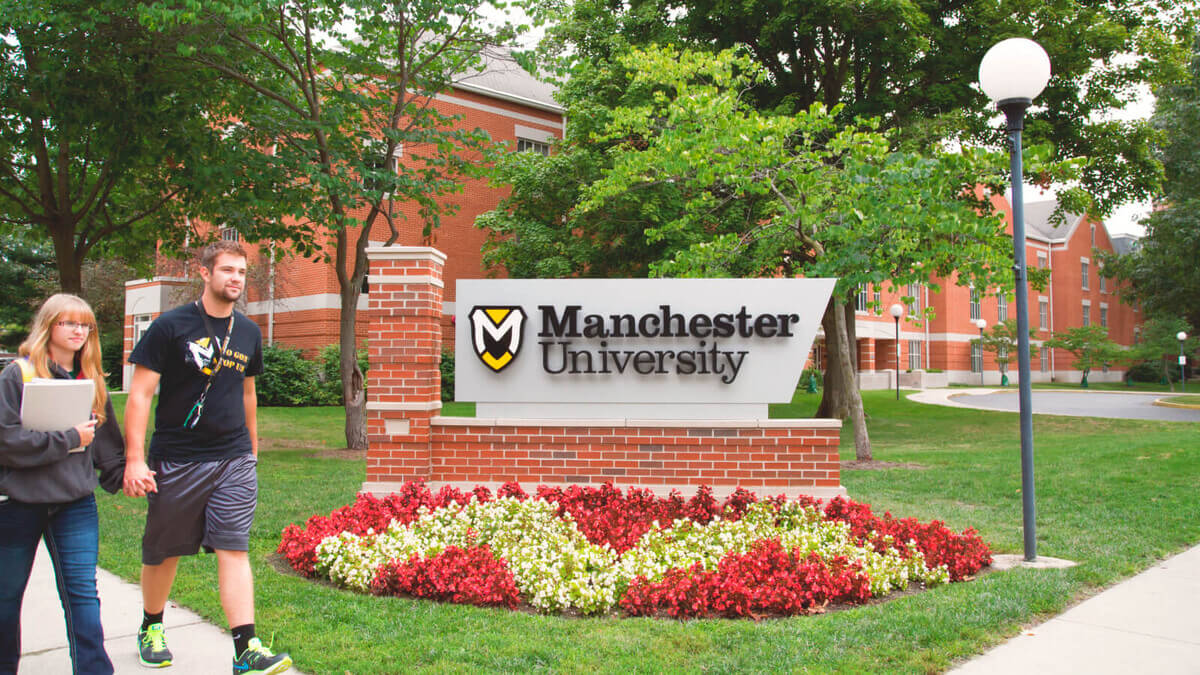
The European Union will enter Friday’s summit with the United Kingdom hoping to ensure that European students who attend British universities will not pay a penny more for their tuition than British students, the Cyprus Mail understands.
Sources familiar with the matter informed the newspaper that when European Council President Antonio Costa and European Commission President Ursula von der Leyen sit down with British Prime Minister Andy Burnham on Friday, they will do so with that intention.
At present, British nationals pay a maximum fee of £9,790 (€11,748) per year to take undergraduate courses, while non-Brits can pay as much as £35,000 (€41,998) per year for classroom-based degrees, up to £47,000 (€56,398) per year for laboratory-based courses, and sometimes more than £70,000 (€83,997) per year for clinical and medical degrees.
Until the UK left the EU and the European single market in 2020, citizens of the EU’s other 27 member states, as well as citizens of Iceland, Liechtenstein, Norway, and Switzerland, were entitled to pay the same fees as British nationals, but this agreement ended upon the UK’s departure from the bloc.
Since then, the more than 20,000 Europeans who enrol at British universities each year have been required to pay may times more than their British counterparts for the same courses.
In the intervening years, many in Europe have been exerting effort with the aim of ensuring a return to reduced fees for Europeans studying in the UK.
Cyprus’ Fourlas had complained of ‘endless fees’ for EU students in UK
Among them has been Cypriot member of the European Parliament Loucas Fourlas, of Disy, who sits on the parliament’s education committee (Cult).
He lamented in January that Europeans who study in the UK are required to pay “endless fees”, and added that “education cannot be transformed to a tool of exclusion, nor can it be collateral damage in geopolitical tensions”.
“A stronger and more autonomous Europe cannot be built only with defence and geopolitical strategies, it is built with knowledge, with young people, with equal opportunities in education,” he said.
He added that “if the United Kingdom wishes to re-examine its relationship with the European Union, and this relationship cannot be one-sided, it must give something back as well, and a tangible good-will step is the reduction of tuition fees for European students”.
However, the UK has thus far appeared reluctant to offer European students a full return to home fees, with Euronews reporting on Wednesday that a draft statement to be released at the end of Friday’s summit contains two options.
The first, it reported, entails “equal treatment” for EU nationals, while the second only goes as far as offering “significantly reduced undergraduate fees”.
Home fees for EU students will cost UK govt €540m per year
British newspaper the Guardian reported that allowing European students to pay home fees at British universities could cost the country’s government as much as £450 million (€540m) per year, and that the British government is willing to consider the prospect should it be allowed access to the “Made in EU” scheme.
The “Made in EU” scheme stems from the EU’s planned industrial accelerator act, which was proposed by the European Commission in March.
Part of the proposal includes a stipulation for “Made in EU” and low-carbon preferences in public procurement and public support initiatives taken by member states across the bloc, and by the EU itself.
As such, were the proposal to be passed into law, businesses based outside the EU could lose access to public procurement projects inside the bloc.
Youth experience scheme delayed until 2030
Another scheme which may in the future be offered to young people on either side of the English Channel appears to be somewhat postponed and watered down, with the “youth experience scheme”, first proposed by the European Commission in 2024, now, according to Euronews, not set for implementation in 2030.
It reported that “the aim” is for an agreement on the scheme to be reached in 2028, while differences remain over whether the number of participants should be limited to a maximum of 80,000, as is the UK’s preference, or 100,000, as is the EU’s preference.
Should the scheme be implemented in 2030 and, as is currently planned, be open for people aged between 18 and 30 years old, it will mean that people who were children at the time of the referendum which saw the UK leave the EU too old to qualify for it.





Click here to change your cookie preferences