
Parliament on Thursday unanimously approved a new water management law, which, among other things, will empower the water development department to order the termination of water abstraction projects which begin before permits are issued.
The new law also stipulates that fines for offences on this front will be determined “according to the seriousness of the offence and its impact on water resources”, taking into account “the nature, extent, and duration of the violation, the size of the intervention, and the condition of the affected water system”.
However, at the same time, it does provide for the retroactive issuing of permits in cases where the water development department deems it appropriate, though contractors will be required to pay the equivalent of twice the prescribed permit fee.
Additionally, it mandates “frequent periodic reviews” of inspections on surface and groundwater abstractions and allows for the authorities to require “measures to redress damage” in the event that illegal construction projects or water abstraction projects negatively impact natural watercourses, such as streams or rivers.
It is hoped that the law’s passing will relieve some of the pressure placed on the Cypriot government by the European Union in recent years, with the European Commission last year having threatened to take the Cypriot government to court over its failure to implement the water framework directive.
EU directive first implemented 26 years ago
The directive was first implemented in 2000, four years before Cyprus joined the EU, but in the intervening 26 years, the commission had been of the opinion that it had failed to fully implement it, on account of the lack of “periodic reviews” of water abstraction permits.
“Member states are required to periodically review these control measures, including any permits granted, to determine whether they still achieve their objectives and, if necessary, update them. In Cyprus, national legislation does not impose any periodic review, which demonstrates a situation of bad transposition of [the directive],” it said.
Despite the law’s unanimous passing by parliament, MPs were less than impressed by it, with Diko leader Nicholas Papadopoulos saying that “there is no law with a more incorrect name” than it, given that its full, official name is “the Integrated Water Management Law”.
“In practice, we do not have unified water management because all issues related to water are fragmented into various services and departments. This is a schizophrenic state policy in a country with a very serious water problem,” he said.
Koulias calls for more maintenance staff
Likewise, House agriculture committee chairman and Akel MP Yiannakis Gavriel said that “in conditions of water crisis, the existence of unlicenced projects undermines the competent of the water development department to expand its control” of the situation.
Diko MP Zacharias Koulias, meanwhile, said that “under [late president] Spyros Kyprianou, when all the dams were built, there was a maintenance team of 40 people”, but that now, “there are only two of these people”.
This, he said, “results in incidents like the one at Mavrokolympos, with the loss of millions of cubic metres of water”, though it is not true that “all” Cyprus’ reservoirs were bult under Kyprianou.
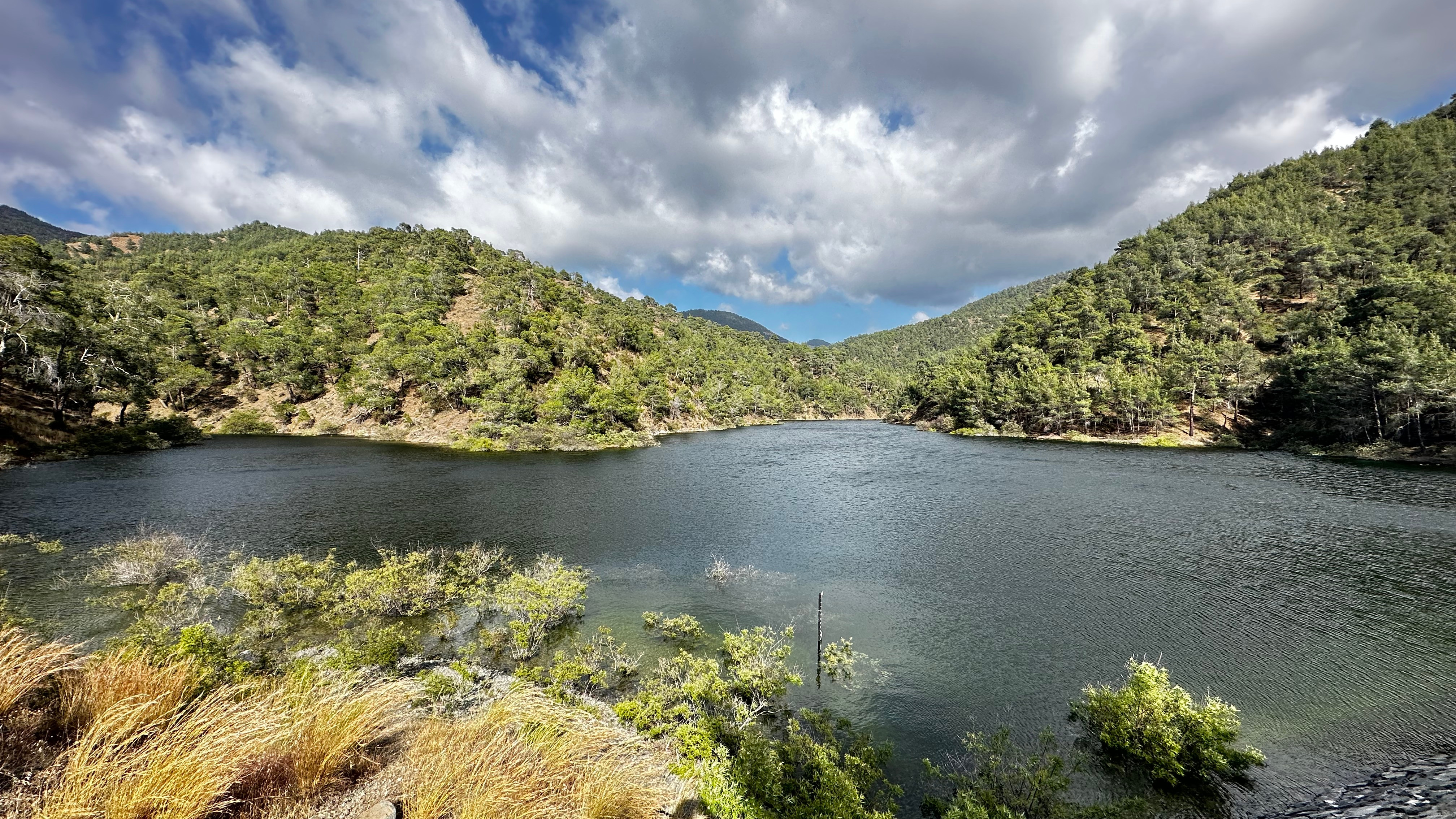
The Mavrokolympos reservoir, near Paphos, had in January last year been entirely drained of its 1.4 million cubic metres of water, with experts saying at the time that the reservoir’s pipes, which were installed in 1966, would have to be replaced.




Click here to change your cookie preferences