
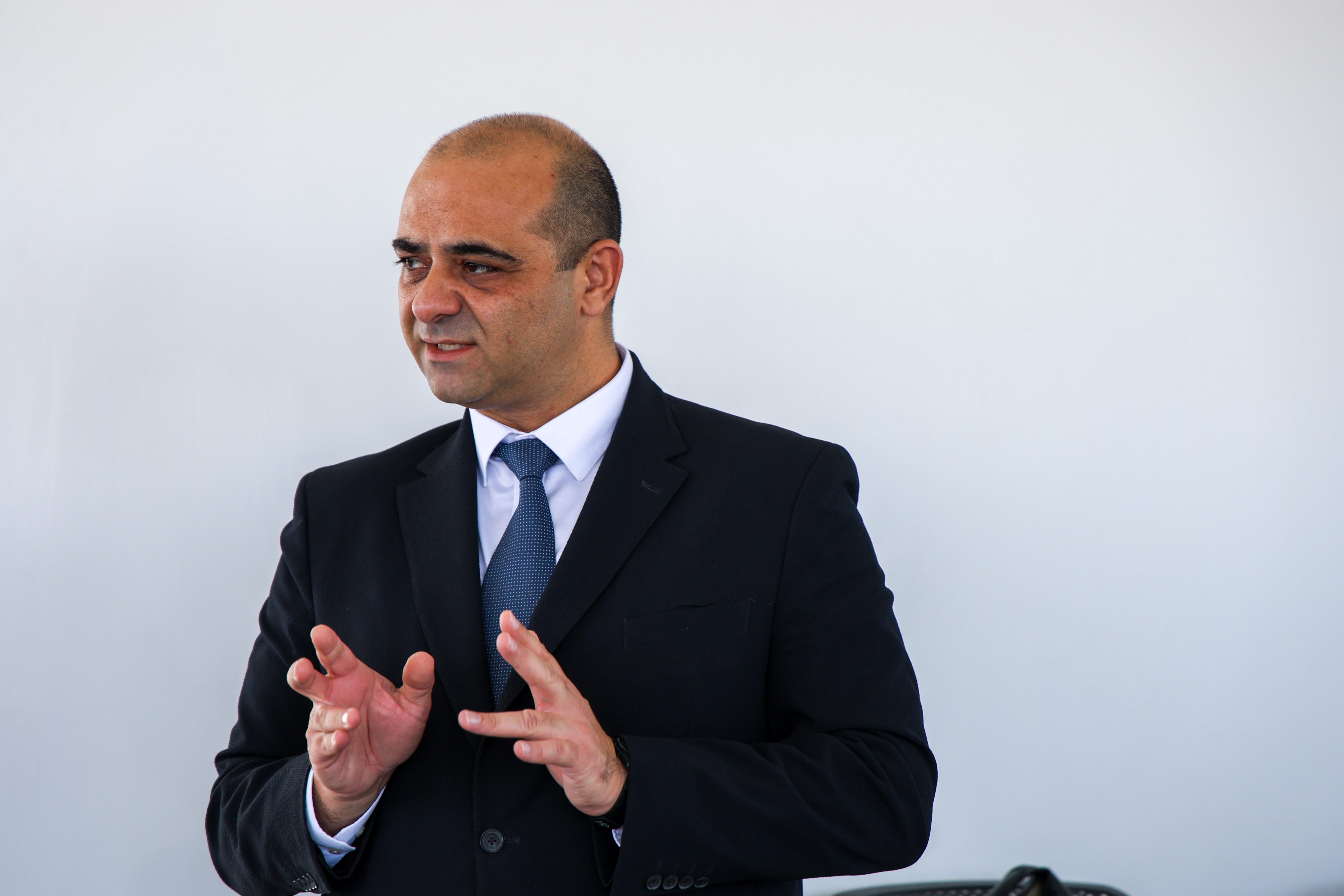
Former labour minister Yiannis Panayiotou confessed in an interview on Thursday that his removal from the government was not anticipated.
Taking to the dais on Sigma television following the recent cabinet reshuffle, Panayiotou said that anyone who assumes a cabinet posting understands that both appointment and removal depend solely on a phone call from the president.
“We must be ready at all times to leave as we came,” he said.
He confirmed that he had received no advance warning that he would be replaced.
Rejecting suggestions that his dismissal amounted to a political “beheading”, Panayiotou said the characterisation was not his own, while acknowledging that the decision took him by surprise.
“The constitution does not provide for deadlines or bells for ministers,” he said.
“We are not employees with labour rights, we are political figures who serve the country.”
Panayiotou said he respected the president’s authority to appoint and dismiss ministers at his discretion, emphasising that the head of state has no obligation to anyone “other than the public who elected him”.
Asked whether his departure was linked to friction with specific interest groups, including employers and football clubs, Panayiotou said the policies pursued during his term inevitably caused dissatisfaction among those required to shoulder higher costs.
He cited measures related to wage increases, admitting resistance from such quarters was expected.
“That is precisely why there is a labour ministry, especially for those who are called upon to pay debts or raise salaries,” he said.
Panayiotou strongly defended his record, saying he was satisfied with the work carried out during his tenure.
He said the past three years had seen conditions of full employment, and the highest employment rate recorded to date.
Unemployment, he insisted, had fallen to its lowest level in two decades.
He also pointed to a sharp increase in participation in training programmes and said groundwork had been laid to strengthen wage adequacy.
Addressing income disparities, Panayiotou argued that inequality could only be tackled through sustained wage support.
Turning to reforms that remain unfinished, Panayiotou highlighted pension reform as the most significant outstanding issue.
He said preparatory work had been completed and that progress should continue regardless of changes in personnel.
On the minimum wage, he reiterated that government policy had followed EU directives, with a benchmark of 60 per cent of the median wage.
Based on current data, he said this would place the minimum wage at or above €1,125, contrary to the level currently in force at €1,088.
Panayiotou concluded in his remarks that “public office should never be viewed as an entitlement”, but solely as a service to the nation.




Click here to change your cookie preferences