
For hikers arriving from places that rely on constant visual reward or curated experiences, this can feel unsettling at first. But the absence of entertainment is not a flaw in Norway’s hiking culture. It is the point. Norway works precisely because it does not try to fill the space for you.
The landscape offers space, not distraction
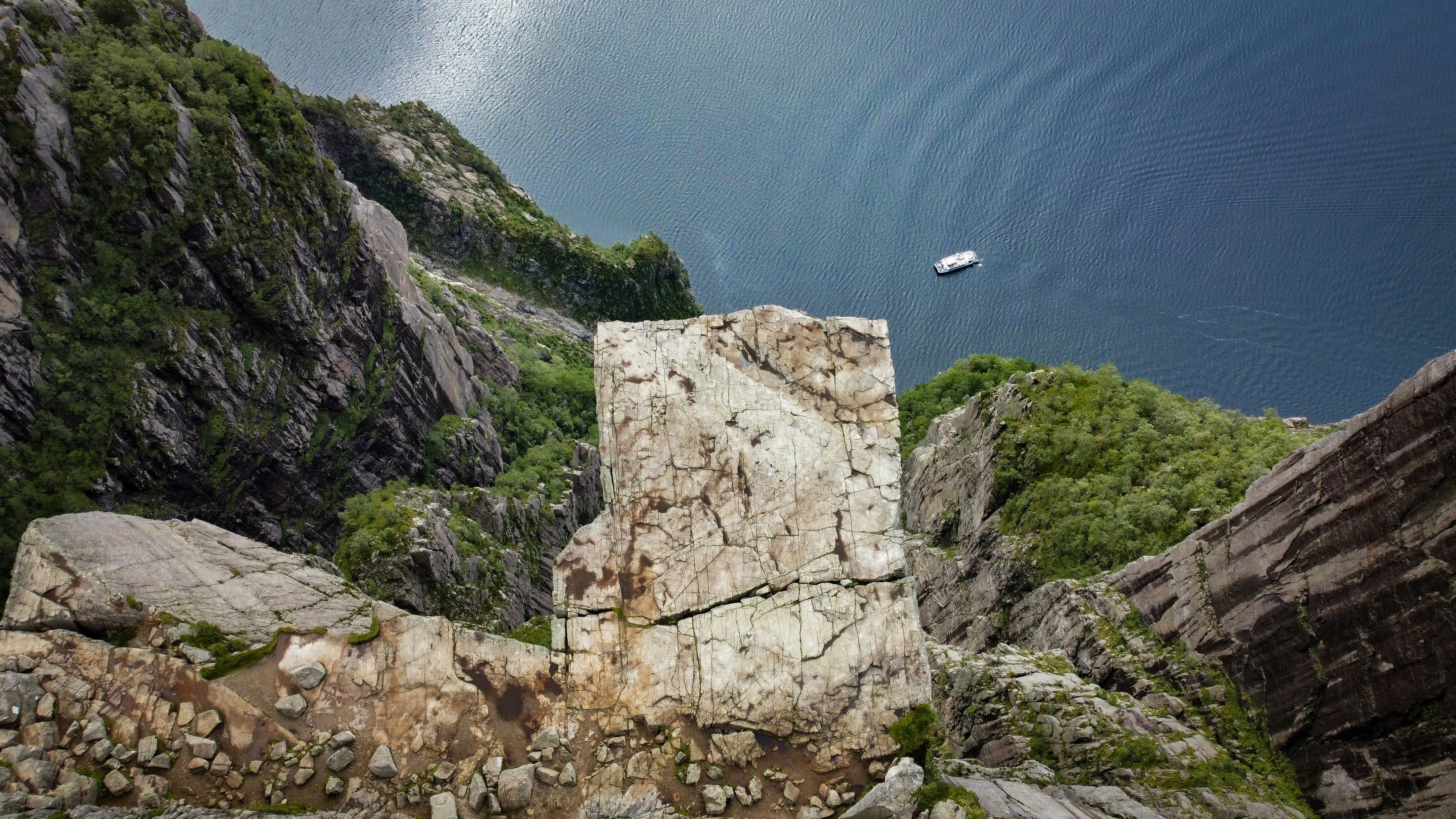
Norway’s defining feature is not its peaks or fjords, but the space between them. Trails often move through wide plateaus, long valleys, and open ground where very little competes for attention. The views are large but not busy. You are not fed a sequence of scenic moments. You are given room.
This openness changes how you walk. Without constant stimuli, your pace becomes steadier. You stop rushing from one “good section” to the next because the landscape does not present itself in pieces. It unfolds continuously, and you move through it without being pulled forward by spectacle.
Routes are built to pass through, not perform
Norwegian hiking routes rarely feel designed. They follow natural ground, old paths, and practical lines across the land. They are not arranged to create a narrative arc or deliver a payoff at a specific moment.
This lack of choreography can feel anticlimactic for hikers used to highly curated environments. But it also removes pressure. There is no sense that you are supposed to be impressed at a certain point. The trail exists to be walked, not to be admired on cue.
Difficulty is quiet and unadvertised
Norway does not announce its challenges. Steep sections, long distances, and weather exposure appear without warning signs or framing. The difficulty is real, but it is not presented as an achievement to pursue.
This approach shifts responsibility onto the hiker. You are not being dared or encouraged. You are simply moving through terrain that does not adjust itself to your expectations. The result is a calmer relationship with effort. You respond to conditions rather than performing against them.
The absence of crowds amplifies everything else
In many regions, you can walk for long stretches without seeing anyone. Even popular routes spread people out quickly once you move beyond access points. This emptiness is not accidental. Norway does not concentrate hikers into corridors or attractions.
The lack of crowds removes a major source of stimulation. There is no comparison, no pace-setting, no sense of being watched. You walk as slowly or as steadily as you like, and nothing pushes back.
Rest comes from stillness, not stops
Norway’s landscape provides few formal rest points. There are fewer huts, cafés, or designated stopping areas compared to more structured hiking countries. Instead, rest happens wherever the land allows it. A flat rock. A lakeshore. A quiet rise in the ground.
This forces a different relationship with breaks. You don’t stop because you reached something. You stop because you need to. That simplicity reinforces self-awareness and reduces reliance on external structure.
Weather is part of the experience, not an interruption
Norway does not shield hikers from weather. Wind, cloud, and rain are normal conditions, not problems to be managed away. Trails remain open and readable, but the environment does not soften itself for comfort.
Because weather is expected rather than dramatized, it becomes another neutral element. You adjust clothing, slow down, or change direction. The day continues. This normalization removes emotional reaction and replaces it with practical response.
Time loses its usual shape
Without scheduled highlights or destinations, time stretches differently in Norway. Hours pass without obvious markers. Days feel longer without feeling fuller. This can feel uncomfortable for people used to measuring progress through achievements.
Over time, many hikers stop checking distance and start noticing how their energy moves. Time becomes something you inhabit rather than manage. This shift is subtle, but it changes the walking experience profoundly.
Norway assumes you don’t need to be entertained
Underlying all of this is an assumption that surprises many visitors: Norway assumes you are capable of being alone with the experience. It does not fill gaps. It does not distract. It does not reassure.
This can feel demanding, but it is also respectful. The landscape trusts you to engage with it without assistance. For some hikers, this feels freeing. For others, it feels exposed.
Why this makes Norway feel difficult to describe
People often struggle to explain why hiking in Norway feels different. There are no obvious moments to point to. No single image defines the experience. What remains is a mood rather than a memory.
That mood is shaped by space, silence, and repetition. It doesn’t peak. It settles.
Where guidance fits in
For hikers who want structure layered onto this openness, Norway hiking tours offer guidance without changing the nature of the landscape. They don’t add entertainment; they add support. The environment remains quiet either way.
What Norway leaves you with
Norway does not entertain hikers because it does not need to. It offers something harder to manufacture than excitement: sustained presence. The walking is not about collecting moments or conquering routes. It is about staying with the terrain as it unfolds, without commentary.
For hikers willing to accept that absence of stimulation, Norway becomes deeply absorbing. Not because it asks for attention, but because it leaves enough space for it to arise on its own.
DISCLAIMER – “Views Expressed Disclaimer – The information provided in this content is intended for general informational purposes only and should not be considered financial, investment, legal, tax, or health advice, nor relied upon as a substitute for professional guidance tailored to your personal circumstances. The opinions expressed are solely those of the author and do not necessarily represent the views of any other individual, organization, agency, employer, or company, including NEO CYMED PUBLISHING LIMITED (operating under the name Cyprus-Mail).





Click here to change your cookie preferences