
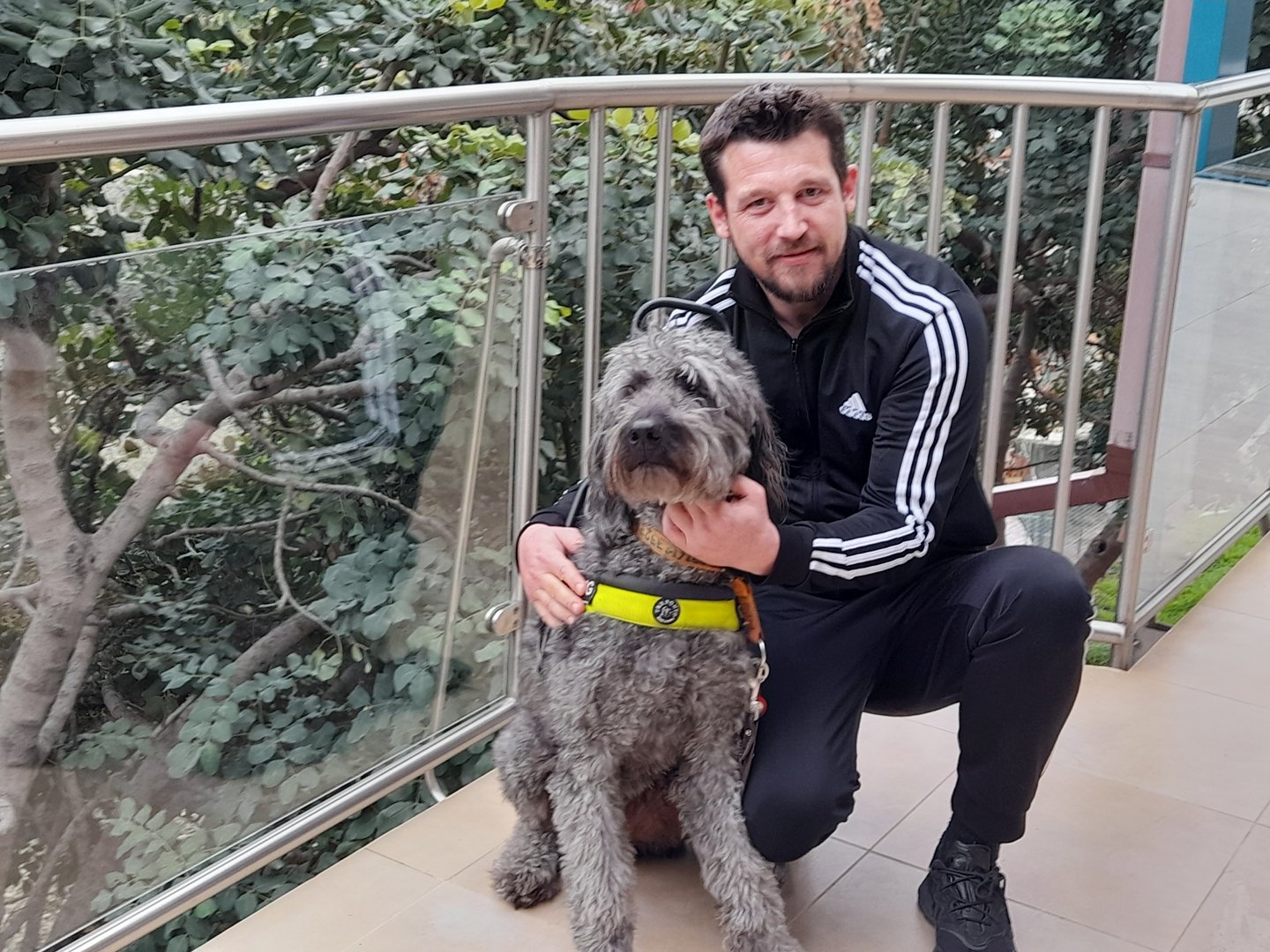
Only five of the more than 2,000 visually impaired people currently living in Cyprus have a guide dog, MPs at the House human rights committee heard on Monday as they discussed two legislative proposals giving greater rights.
“We have 2,000 of our fellow human beings with vision problems, who will benefit greatly from guide dogs. A guide dog costs a lot. And it needs training and certification. I believe that the state has an obligation to contribute to the maximum extent so that all our fellow human beings who need a guide dog can obtain one,” committee chairwoman and Akel MP Irini Charalambides said.
While Cyprus is home to around 2,000 visually impaired residents, only five assistance dogs are currently registered on the island, indicative of the high costs involved, as well as a lack of relevant registration and certification, MPs heard.
The first proposal, by Diko MP Christos Senekis, stipulates the right to a guide dog, as well as their universal access to public spaces.
He said the right to a dog for people with disabilities needed to be granted in accordance with the UN convention on the rights of people with disabilities, ratified by the Republic in 2011.
“Being accompanied by an assistance dog is not an option or a convenience. It is a necessary means for the daily mobility, accessibility, autonomy and meaningful social participation of people with disabilities. Therefore, the assistance dog is, in practice, an extension of the independence, safety and dignity of the person who needs it,” he said.
In a second proposal, the Ecologists Movement’s MP Charalambos Theopemptou called for the creation of a certification and evaluation system for assistance dogs, as well as penalties for those who deny access to them and their owners.
Senekis’ proposal was approved and is set to be forwarded for an article-by-article discussion at the committee next Monday before heading to the House plenum.
Meanwhile, Theopemptou’s bill will be submitted to the plenum either this Thursday or the next.
According to a representative of the School for the Blind, the costs for the two-year training of a special assistance dog amount to €25,000.
As dogs can currently only be trained in private facilities, the representative suggested cooperating with training centres abroad.
The matter had been at the centre of another human rights committee meeting in October, in which Charalambides emphasised the need for the creation of a legal framework on assistance dogs, urging close cooperation between legislative and executive branches to ensure the effectiveness of a relevant legislation.




Click here to change your cookie preferences