
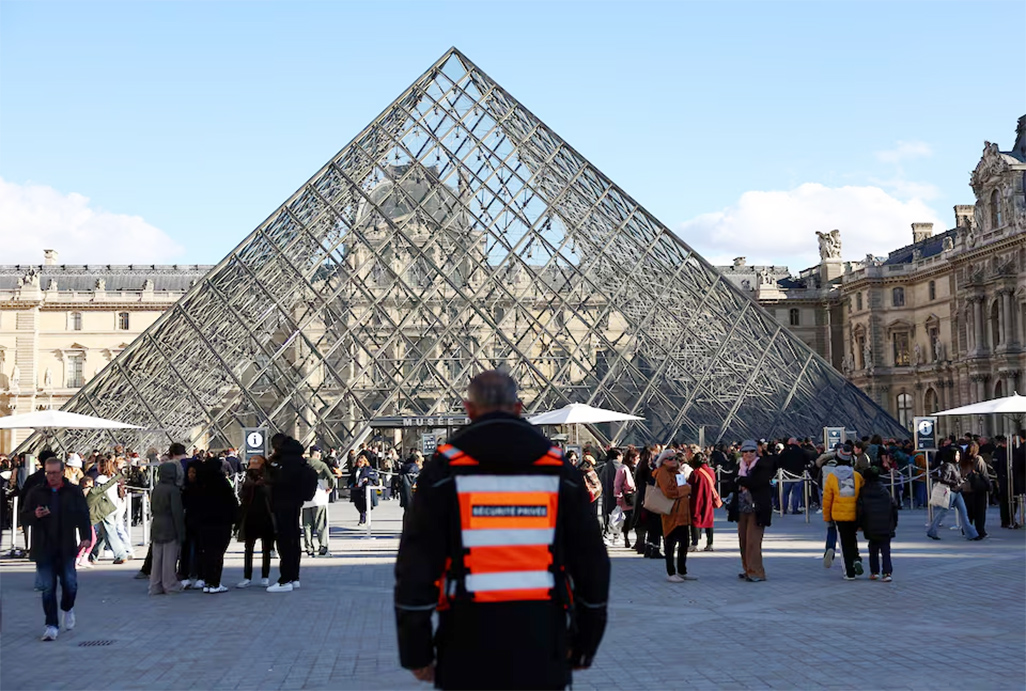
France on Wednesday appointed Christophe Leribault as the new head of the Louvre, bringing in the director of the Palace of Versailles to turn around the world’s most-visited museum after a humiliating jewellery heist and staff strikes.
He will succeed Laurence des Cars, who resigned on Tuesday, government spokesperson Maud Bregeon said. Des Cars has faced intense criticism since burglars made off in October with jewels worth an estimated $102 million that are still missing, exposing glaring security gaps at the museum.
“Leribault’s priority will be to strengthen the safety and security of the building, the collections, and people, to restore a climate of trust, and to carry forward, together with all the teams, the necessary transformations for the museum,” the Culture Ministry said in a statement about President Emmanuel Macron’s pick for the job.
Leribault, 62, is an 18th‑century art historian who previously led Paris’ Musée d’Orsay and the Orangerie before taking over at Versailles in 2024. He will leave the Versailles job to take up the Louvre role.
He was deputy director of the Louvre’s department of graphic arts from 2006 to 2012, the ministry said.
SECURITY LAPSES HIGHLIGHT FUNDING NEEDS
As well as the heist, strikes over pay and work conditions have repeatedly shut the Louvre since mid‑December, while water leaks and a ticket‑fraud probe that prosecutors say siphoned more than 10 million euros over a decade have also cast a shadow over one of Paris’ top tourist attractions.
A state auditors’ report last year urged management at the Louvre, home to Leonardo da Vinci’s Mona Lisa, to redirect spending from acquisitions to overdue security and infrastructure upgrades.
During Leribault’s first year at Versailles, which hosted the Olympics equestrian events, the institution secured nearly 8 million euros ($9 million) in philanthropic contributions, according to an annual government report.
The Louvre’s new chief told a parliamentary inquiry on museum security last Thursday that Versailles had “stepped up vigilance” under him, leaning on cutting-edge technology while flagging new risks from drone overflights and cybersecurity.
Unions welcomed the appointment, citing Leribault’s willingness to work collaboratively with staff.
Alexis Fritche, general secretary of the CFDT-Culture union, told Reuters that the new director must listen to the museum’s 2,200 employees and secure funding for renovations and security improvements.
“Fundamentally, what was lacking with the previous leadership is that we didn’t know where we were going,” Fritche said. “We expect a lot from him.”




Click here to change your cookie preferences